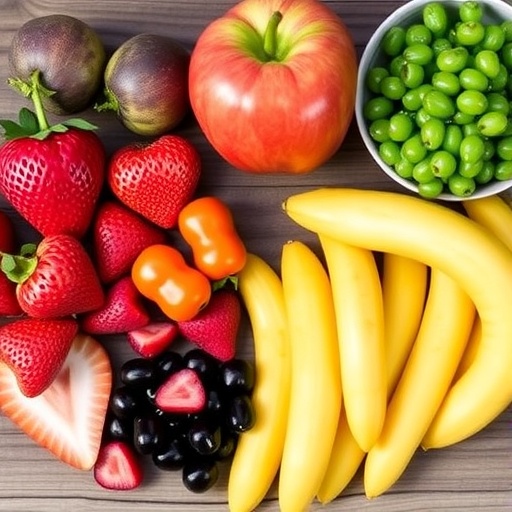
A groundbreaking collaborative study conducted by leading experts from the University of Reading, Harvard Medical School, the University of California Davis, and Mars, Inc. has recently shed new light on the complex relationship between diet and cardiovascular health. Published in the respected journal Food & Function, this research critically evaluates the role of flavanols—naturally occurring compounds found in a variety of fruits, vegetables, and teas—in mitigating heart disease risk. The study’s findings suggest that merely adhering to general fruit and vegetable intake recommendations may not suffice to yield the cardioprotective benefits previously attributed to these nutrients.
Flavanols, a subcategory of flavonoids, are polyphenolic compounds recognized for their antioxidant properties and their ability to exert beneficial effects on endothelial function, inflammation, and lipid metabolism. These molecules are increasingly understood as potent modulators of cardiovascular health, capable of reducing oxidative stress and improving vascular flexibility. The research conducted by this multinational team meticulously assessed the habitual dietary patterns of over 30,000 participants in the UK and United States, utilizing biomarker analyses to quantify actual flavanol intake rather than relying solely on self-reported food frequency questionnaires, which can be notoriously imprecise.
An intriguing revelation from this comprehensive survey is the widespread inadequacy in flavanol consumption among the general population. Despite adherence to widely endorsed dietary frameworks like the NHS Eatwell Guide and the generic “five-a-day” fruit and vegetable mandate, less than 20% of individuals achieved flavanol intake levels comparable to those shown in clinical trials to confer a meaningful reduction in cardiovascular mortality. This discrepancy underscores a critical gap between public health guidance and the biochemical realities of nutrient absorption and efficacy.
The study draws heavily on data from COSMOS, the largest randomized clinical trial focusing on flavanols, which demonstrated that a daily intake of approximately 500mg of flavanols can significantly decrease the risk of fatal cardiovascular events. However, the current research suggests that without deliberate selection of flavanol-dense foods, typical dietary behaviors fall short of this therapeutic threshold. The implications are profound, challenging existing nutritional paradigms that emphasize quantity of produce over qualitative nutrient profiling.
Among the most flavanol-rich foods identified were plums, cranberries, and blackberries, each delivering substantial flavanol quantities per standard serving that approach or even exceed 250mg. These fruit varieties, often overlooked in mainstream dietary recommendations, appear pivotal in augmenting flavanol status. Green tea also emerged as a key source, with a single 250ml cup providing roughly 200mg of flavanols. The inclusion of legumes, such as broad beans and pinto beans, further broadens the spectrum of flavanol-rich options beyond conventional fruit-centric guidance.
The analysis implicates that the singular focus on eating five portions of fruits and vegetables daily may be overly simplistic. Flavanol content varies dramatically across different produce, influenced by factors such as species, ripeness, and preparation methods. For example, the flavanol concentration in an apple varies according to whether its skin is consumed, emphasizing that not all servings are nutritionally equivalent. Thus, dietary guidance must evolve from a volume-centric to a nutrient quality-centric approach to maximize health benefits.
Professor Gunter Kuhnle from the University of Reading, a senior author on the study, emphasized the necessity for tailored dietary policies. “Our research advocates for specificity in nutritional recommendations,” he explained. “While the overarching message of five-a-day remains correct, future guidelines should incorporate flavanol-rich food choices to optimize cardiovascular outcomes. This nuanced understanding can drive more sophisticated public health campaigns and personalized nutrition strategies.”
The ramifications of this investigation ripple through many intersections of nutritional science, public health policy, and clinical practice. For clinicians, the findings encourage dialogue with patients about food selection, highlighting that heart-healthy diets need precision rather than generic adherence. For policymakers, these insights present an opportunity to re-evaluate food labeling, dietary guidelines, and educational materials to reflect the critical importance of bioactive compounds like flavanols.
Moreover, the methodology of using biomarkers to objectively assess nutrient intake offers a more reliable alternative to traditional self-reporting instruments. This precision nutrition approach allows researchers and healthcare practitioners to better identify deficiencies and devise targeted interventions. It simultaneously accounts for the bioavailability and metabolism of flavanols, recognizing that ingestion does not always translate directly to physiological benefit.
Future research trajectories inspired by this work may focus on mechanistic studies exploring how flavanols interact at the molecular level with cardiovascular tissues. Understanding these pathways can illuminate new therapeutic avenues. Additionally, intervention studies incorporating diverse populations and longer durations are necessary to validate and refine dosage recommendations, especially considering genetic and environmental variability in flavanol metabolism.
In sum, this landmark study propels the nutritional sciences community toward a more sophisticated comprehension of diet-heart interactions. It highlights the imperative to move beyond monolithic dietary guidelines toward embracing complexity and individualization. A strategy that prioritizes the selection of flavanol-rich foods—such as plums, berries, green tea, and certain legumes—could herald a transformative shift in cardiovascular disease prevention, aligning scientific insight with practical dietary choices.
As the proliferation of chronic cardiovascular diseases continues to impose a global health burden, these findings offer a beacon of hope. They advocate for harnessing the therapeutic potential of natural dietary compounds through informed, evidence-based dietary patterns. The path to a healthier heart is increasingly paved with precision and specificity, underscoring that when it comes to nutrition, the devil is truly in the details.
Subject of Research: Dietary Flavanol Intake and Cardiovascular Disease Risk
Article Title: Adhering to dietary guidelines does not yield flavanol intake levels associated with beneficial cardiovascular effects
News Publication Date: 8 June 2026
Web References:
COSMOS Study DOI: https://doi.org/10.1093/ajcn/nqac055
NHS Eatwell Guide: https://www.nhs.uk/live-well/eat-well/food-guidelines-and-food-labels/the-eatwell-guide/
Published Research DOI: http://dx.doi.org/10.1039/D6FO00867D
References: COSMOS clinical trial data, biomarker analyses of flavanol intake, dietary guidelines literature
Keywords: flavanols, cardiovascular disease, heart health, nutrition, polyphenols, dietary guidelines, biomarkers, fruit and vegetables, epidemiology, public health policy
Tags: cardiovascular effects of flavonoidschallenges in dietary self-reporting accuracydietary flavanols and inflammation reductionendothelial function improvement by flavanolsflavanol biomarkers in nutrition researchflavanols and heart health benefitsflavonoid-rich foods for cardiovascular protectionimpact of polyphenols on vascular functionlimitations of fruit and vegetable intake guidelinesmultinational diet and heart disease studyoxidative stress reduction through dietrole of antioxidants in heart disease prevention