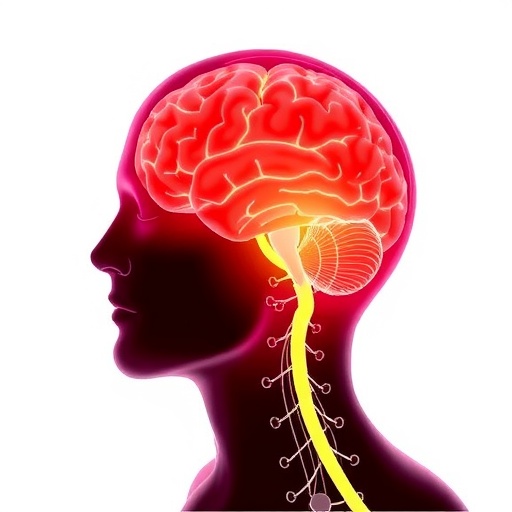
In a groundbreaking NIH-funded investigation, Cleveland Clinic researchers have unveiled a surprising interplay between male hormones and brain tumor dynamics, pointing toward a novel therapeutic avenue for glioblastoma—a notoriously aggressive brain cancer more lethal in men. Contrary to longstanding assumptions that male androgens exacerbate cancer progression, this study reveals that the depletion of hormones like testosterone may, in fact, accelerate tumor growth by unleashing a cascade of neuroendocrine disruptions and immunosuppressive mechanisms within the brain’s microenvironment.
Glioblastoma, characterized by rapid proliferation and extensive infiltration into surrounding brain tissues, disproportionately affects men, raising critical questions about the biological underpinnings of this sex disparity. Historically, androgens have been implicated as drivers of cancer risk in various tissues, but their precise role within the cerebral context remained elusive. The Cleveland Clinic team, led by Dr. Justin Lathia, employed sophisticated preclinical glioblastoma models to dissect how androgen levels influence tumor biology within the brain’s uniquely guarded milieu.
Their experiments demonstrate that androgen depletion triggers hyperactivation of the hypothalamus-pituitary-adrenal (HPA) axis, a neuroendocrine system integral to stress responses. This overdrive leads to surges in circulating stress hormones such as cortisol, which in turn promote increased segregation of the brain’s immune interface. The consequence is a fortified immunosuppressive environment that substantially impedes immune cell infiltration, allowing tumor cells to evade immune surveillance and proliferate unchecked. Remarkably, this phenomenon was pronounced in male mice subjected to androgen loss but was absent in females, underscoring a sex-specific endocrine-immune crosstalk critical to glioblastoma progression.
At the mechanistic core, the researchers identified inflammation localized within the hypothalamus of androgen-deficient subjects as a key instigator of HPA axis hyperactivity. This inflammation appears tumor-induced yet operates remotely, indicating complex interregional signaling networks within the brain that modulate systemic neuroendocrine responses. Future studies aim to elucidate the molecular signals and cellular mediators bridging the distant tumor site with hypothalamic activation, potentially uncovering new targets to disrupt this deleterious feedback loop.
Complementing these preclinical findings, a robust epidemiological analysis leveraging the NIH/NCI Surveillance, Epidemiology, and End Results (SEER) database assessed testosterone supplementation among over 1,300 men diagnosed with glioblastoma. Data revealed that men receiving exogenous testosterone, for indications unrelated to cancer, exhibited a notable 38% reduction in mortality risk compared to their non-supplemented counterparts. While these correlations do not establish causality, they provide compelling observational support that androgen presence could confer a survival advantage in glioblastoma patients.
The implications of these discoveries are manifold. First, they challenge the prevailing therapeutic paradigm where androgen deprivation is commonly employed for hormone-sensitive cancers, suggesting that such an approach might inadvertently exacerbate glioblastoma outcomes in male patients. Second, this research advocates for a nuanced understanding of hormone-cancer interactions contingent on tissue-specific contexts and sex-dependent factors. Third, it opens the door to clinical trials evaluating androgen supplementation as an adjunctive strategy to conventional glioblastoma treatments, potentially transforming management protocols for this devastating disease.
“Our research shifts the perspective on androgens in brain cancer biology by revealing a protective role mediated through neuroendocrine-immune regulation,” explained Dr. Lathia. The study’s findings highlight the brain’s distinct evolutionary adaptations to immune cell entry, positing that androgen loss disrupts this delicate balance and inadvertently fosters an environment favorable to tumor proliferation. This nuanced insight underscores the need for personalized treatment regimens considering hormonal status and sex as pivotal determinants of cancer progression and therapy response.
Notably, the study involved multidisciplinary expertise encompassing cancer biology, neuroendocrinology, immunology, and clinical epidemiology, supported by a comprehensive portfolio of NIH grants from the National Cancer Institute, National Institute on Aging, and National Institute of Neurological Disorders and Stroke. This collaborative effort exemplifies the integrative approach required to decode complex biological phenomena underlying cancer disparities.
While the study propels the field forward, essential questions remain unanswered. Determining the molecular triggers of hypothalamic inflammation, delineating the downstream effects of stress hormone surges on different immune cell populations within the brain, and clarifying the differential impact of androgen manipulation across sexes are paramount. Additionally, translating these findings from preclinical models and observational cohorts into therapeutic strategies necessitates rigorously designed clinical trials assessing safety, dosage, timing, and efficacy of androgen modulation in glioblastoma patients.
The Cleveland Clinic team’s observations may also prompt reevaluation of broader clinical practices. Patients undergoing androgen deprivation therapy for prostate or other cancers might require monitoring for potential adverse effects on brain tumor susceptibility or progression. Furthermore, these insights contribute to the broader narrative of sex hormones as integral regulators of immune and endocrine interfaces influencing oncogenesis beyond classical reproductive tissues.
In conclusion, this pioneering research redefines the role of male sex hormones in brain cancer, revealing that androgen loss paradoxically fuels glioblastoma growth by activating the HPA axis and fostering an immunosuppressive brain environment. These discoveries hold transformative potential for developing targeted hormone-based interventions to improve survival outcomes in men afflicted with this formidable cancer. As we await clinical trials to confirm these promising leads, the findings underscore the critical importance of considering sex-specific biology in cancer research and treatment design, ultimately advancing precision oncology.
Subject of Research: Hormonal regulation of glioblastoma growth and neuroendocrine-immune interactions
Article Title: Androgen loss accelerates brain tumor growth via HPA axis activation
News Publication Date: 6-May-2026
Web References: https://seer.cancer.gov/
References: Juyeun Lee et al. Androgen loss accelerates brain tumor growth via HPA axis activation. Nature. 2026. DOI: 10.1038/s41586-026-10451-5
Keywords: Brain cancer, Glioblastoma, Androgen signaling, Testosterone, Hormone therapy, Neuroendocrine regulation, HPA axis, Immunosuppression, Cancer treatments, Endocrinology
Tags: androgen depletion and tumor progressionCleveland Clinic glioblastoma studycortisol and brain tumor immune responseHPA axis hyperactivation in glioblastomaimmunosuppressive mechanisms in glioblastomamale hormones and cancer growthneuroendocrine disruption in brain cancerNIH-funded glioblastoma researchpreclinical models of brain cancersex differences in brain cancer survivaltestosterone as potential glioblastoma therapytestosterone effects on brain tumors