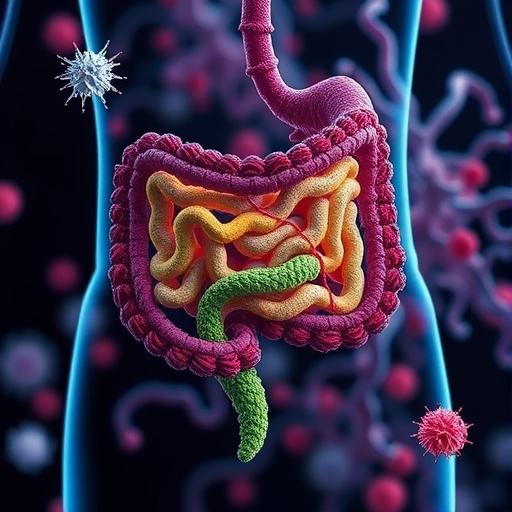
The human gut is home to a staggering multitude of microorganisms, collectively known as the microbiome, consisting of trillions of bacteria that play indispensable roles in digestion, immunity, and metabolic regulation. For years, microbiome research has predominantly categorized these bacteria by species or broader genetic similarities. However, recent groundbreaking research led by the University of Vienna challenges this traditional framework, revealing that these species are far more complex and nuanced than previously understood. By employing an innovative ‘reverse ecology’ approach, scientists have uncovered that many gut bacterial species are actually composed of several evolutionarily distinct populations, each adapted to unique ecological niches within the gut environment.
This revelation is transformative, as it suggests the bacterial populations within a single species may differ profoundly in how they function and interact with the host, and consequently, how they influence health and disease. Traditional classification methods tend to obscure these critical distinctions, lumping together populations that are evolutionarily and functionally divergent. This lack of granularity has often hindered efforts to pinpoint which bacteria contribute to health or pathology and which are neutral or even protective. By transcending the species-level taxonomy, the new research establishes a biological framework that more precisely reflects bacterial adaptation and niche specialization, promising a paradigm shift in microbiome science.
The study harnessed an extensive dataset, including thousands of isolated gut bacterial genomes alongside vast metagenomic sequences obtained from diverse global populations spanning various ages and health statuses. Metagenomics, the sequencing of all genetic material in a microbial community, allows scientists to capture a comprehensive snapshot of the gut’s microbial inhabitants without depending solely on cultivation methods. The researchers applied a novel computational method rooted in the principles of reverse ecology—a technique that infers ecological and evolutionary adaptations directly from genomic data—to detect genetic signatures indicative of recent natural selection and adaptation within gut bacteria.
A particularly striking feature identified by this methodology is the phenomenon of genome-wide selective sweeps. These occur when a beneficial mutation arises in an individual bacterium and rapidly proliferates through the population, effectively displacing genetic variants and reducing diversity across the genome. This process generates highly homogeneous but distinct bacterial populations that can be readily distinguished in genomic analyses. The team discovered that what were traditionally categorized as single bacterial species actually consist of multiple such lineages, each defined by its unique evolutionary trajectory and ecological specialization within the gut milieu.
These evolutionarily distinct bacterial populations are not randomly distributed but show clear associations with specific human conditions. For example, some populations correlate strongly with advanced age, while others have been linked to chronic inflammatory bowel diseases, colorectal cancer, and type 2 diabetes. This finding underscores the profound interaction between microbial evolution and human health, suggesting that the microbiome’s impact on disease may depend on the presence or absence of particular bacterial lineages rather than broad species categories.
Moreover, the research reveals a dynamic global landscape of gut microbiota evolution and dispersal. Contrary to previous assumptions that strains remain relatively localized, evidence points to certain bacterial populations rapidly spreading worldwide within mere decades. This observation previously was well-documented in pathogenic bacteria but had not been appreciated to the same extent among commensal gut species. Such rapid global dissemination suggests that ecological units within the microbiome are capable of adapting to new environments and hosts with remarkable agility.
These findings carry profound implications for our understanding of microbial ecology and biogeography. They challenge the conventional wisdom that lifestyle factors alone—diet, medication, or hygiene—shape the human gut microbiome. Instead, the transmission of specific bacterial populations between individuals and communities emerges as a critical driver of microbiome composition and evolution, emphasizing the microbiome’s social and environmental interconnectedness across populations.
From a clinical perspective, these insights open exciting avenues for more precise diagnostics and therapeutic interventions. Current microbiome-based medical strategies often fall short because they target entire species without recognizing the heterogeneity of functional adaptations among bacterial subpopulations. By distinguishing the biologically relevant evolutionary units, it becomes feasible to identify specific lineages that contribute to disease or promote health. This precision offers the potential to develop tailored microbiome therapies, such as selectively augmenting beneficial strains or suppressing harmful ones, thereby enhancing treatment efficacy and minimizing unintended consequences.
Looking forward, the University of Vienna team plans to delve deeper into the genetic underpinnings that differentiate these bacterial populations. By elucidating which genes are subject to selection and how they confer ecological advantages, researchers aim to uncover the molecular mechanisms driving adaptation and functionality in the human gut. Such knowledge could lead to targeted manipulation of microbial functions, further refining microbiome-based therapies and personalized medicine approaches.
The methodological advances exemplified by this work represent a significant leap in microbiome science, blending evolutionary biology, ecology, and genomics in a holistic framework. This interdisciplinary synergy enables a more accurate picture of microbial diversity and its relationship with the host, overcoming the limitations of traditional taxonomic systems and unlocking new layers of insight into the microbiome’s complexity.
In sum, the University of Vienna’s research shines a spotlight on the dynamic evolutionary landscape within our own gastrointestinal tract. It reveals a mosaic of specialized bacterial populations shaped by natural selection and ecological opportunity, many of which have direct implications for human health. This newfound understanding elevates our ability to diagnose, monitor, and modulate the microbiome with unprecedented precision, ushering in a new era of microbiome research and medicine that celebrates the intricate evolutionary ecology of our microbial companions.
As the scientific community continues to unravel the human microbiome’s mysteries, the integration of evolutionary adaptation into microbial classification promises to refine how we interpret the roles of gut bacteria in health and disease. Far beyond cataloging microbial species, this approach shines a light on the ecological units that truly matter, offering hope for transformative advances in healthcare informed by the subtle but powerful forces of evolution within the human body.
Subject of Research: Human gut microbiome, bacterial population genetics, microbiome adaptation and ecology, disease association.
Article Title: Genome-wide sweeps create ecological units in the human gut microbiome.
News Publication Date: 6-May-2026.
Web References:
https://doi.org/10.1038/s41586-026-10476-w
References: Published in Nature, DOI: 10.1038/s41586-026-10476-w.
Keywords: human gut microbiome, reverse ecology, genome-wide selective sweeps, bacterial evolution, microbial adaptation, metagenomics, microbial populations, disease association, microbiome therapy, ecological niches, bacterial lineage dispersal, microbiome diagnostics.
Tags: bacterial adaptation in gutbacterial community dynamicsbacterial populations in gutgut bacteria ecological nichesgut bacteria evolutionary divergencegut microbiome and healthhuman gut microbiome evolutionmicrobiome and metabolic regulationmicrobiome functional diversitymicrobiome research innovationsmicrobiome species complexityreverse ecology in microbiome