Credit: NIAID
WHAT:
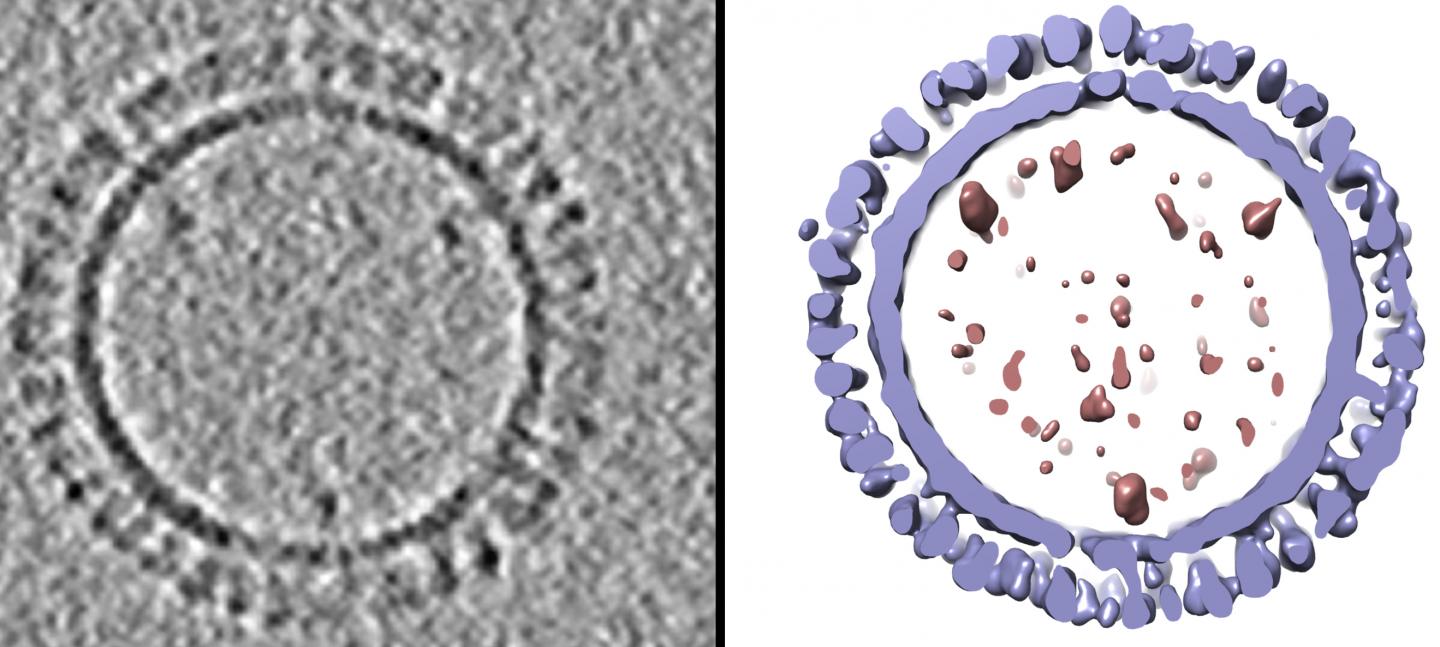
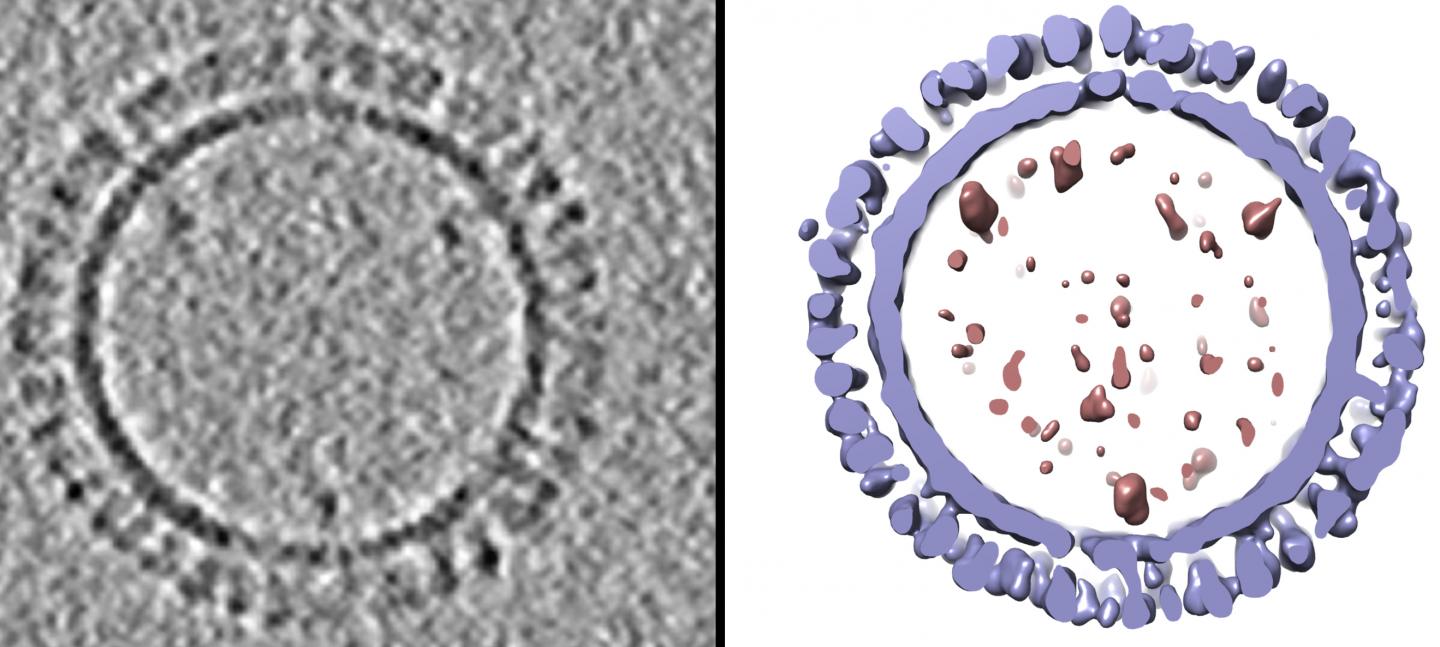
Virus-like particles (VLPs) are protein-based structures that mimic viruses and bind to antibodies. Because VLPs are not infectious, they show considerable promise as vaccine platforms for many viral diseases, including influenza. Realizing that fine details about influenza VLPs were scant, a team of researchers who specialize in visualizing molecular structures developed a 3D model based on the 1918 H1 pandemic influenza virus. They say their research, which appears online in Scientific Reports, could benefit VLP vaccine projects, targeting a range of viruses from HIV to Ebola and SARS coronavirus. The research was conducted by scientists at the National Institute of Allergy and Infectious Diseases (NIAID), part of the National Institutes of Health.
Other researchers had produced VLPs for 1918 H1 influenza that successfully protected animals from different influenza viruses. The NIAID group prepared hundreds of such VLP samples and analyzed their structure with a technique called cryo-electron microscopy, which quick-freezes samples with glass-like clarity. They then sliced through those VLP 3D structures–like slicing through a loaf of bread–to analyze their internal structure, using computers to document the size and placement of key molecules. After averaging all their data, the group then created a 3D 1918 influenza VLP model.
The scientists found that about 90 percent of the VLPs are hemagglutinin (HA) proteins (by weight) found on the VLP surface. In contrast, HAs comprise less than half of the viral proteins of natural influenza viruses. The number and location of HA molecules may influence the efficacy of VLP vaccines, influencing the binding of antibodies to specific epitopes on the HA protein. Those antibodies can similarly bind live influenza viruses, preventing them from infecting cells.
The research group, in NIAID's Laboratory of Infectious Diseases, is continuing its work by comparing its VLP data to data from other natural influenza viruses. They believe the more that is understood about the molecular organization of influenza VLPs, the better scientists will be able to develop effective seasonal and universal influenza vaccines.
###
ARTICLE:
DM McCraw et al. Structural analysis of influenza vaccine virus-like particles reveals a multicomponent organization. Scientific Reports DOI: 10.1038/s41598-018-28700-7 (2018).
WHO:
Audray K. Harris, Ph.D., chief of NIAID's Structural Informatics Unit in the Laboratory of Infectious Diseases, is available to comment about this study.
CONTACT:
To schedule interviews, please contact Ken Pekoc, (301) 402-1663, [email protected].
NIAID conducts and supports research–at NIH, throughout the United States, and worldwide–to study the causes of infectious and immune-mediated diseases, and to develop better means of preventing, diagnosing and treating these illnesses. News releases, fact sheets and other NIAID-related materials are available on the NIAID website.
About the National Institutes of Health (NIH): NIH, the nation's medical research agency, includes 27 Institutes and Centers and is a component of the U.S. Department of Health and Human Services. NIH is the primary federal agency conducting and supporting basic, clinical, and translational medical research, and is investigating the causes, treatments, and cures for both common and rare diseases. For more information about NIH and its programs, visit http://www.nih.gov/.
NIH…Turning Discovery Into Health®
Media Contact
Ken Pekoc
[email protected]
301-402-1663
@NIAIDNews
http://www.niaid.nih.gov
Original Source
https://www.niaid.nih.gov/news-events/niaid-scientists-create-3d-structure-1918-influenza-virus-particles http://dx.doi.org/10.1038/s41598-018-28700-7