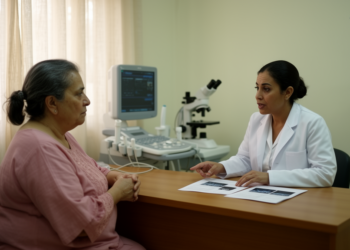
A large population-based study in South London reveals that NHS mental health services diagnose a small fraction of young people who meet the criteria for mental health disorders. The research, which analyzed data from 2009 to 2024, indicates that while diagnosis rates have increased over time, significant gaps remain between the estimated prevalence of disorders and the number of formal diagnoses recorded in specialist health records. This finding challenges the assumption that increased service use equates to adequate clinical recognition and treatment access for adolescents.
The study focused on 17-year-olds living in four South London boroughs: Croydon, Lambeth, Lewisham, and Southwark. Researchers utilized electronic health records from the South London and Maudsley NHS Foundation Trust, which serves as the primary provider of state-funded specialist mental healthcare for this region. By comparing these clinical records with population census data and epidemiological estimates, the team calculated diagnosis provision rates across three nested samples: the general population, those estimated to have a disorder, and those estimated to have both a disorder and health service use.
In the general population of 17-year-olds, the rate of diagnosis provision for any of 15 specific mental health disorders was 4.0%. Although this figure represents a 1.7-fold increase from 2.6% in 2009 to 4.4% in 2024, it remains low relative to the estimated burden of mental health conditions. The most common diagnoses recorded were depressive disorder, attention-deficit/hyperactivity disorder (ADHD), and autism spectrum disorder. However, when the researchers narrowed the focus to five specific disorders assessed in the epidemiological data, the diagnosis rate among those estimated to meet clinical criteria dropped to just 6.3%.
This means that fewer than one in 15 young people estimated to have a mental health disorder received a formal diagnosis from NHS specialist services. The gap was even more pronounced for specific conditions; for instance, only 2.0% of those estimated to have generalised anxiety disorder were diagnosed, whereas 9.8% of those estimated to have ADHD received a diagnosis. Depressive disorder accounted for the highest number of undiagnosed cases due to its high population prevalence, highlighting a critical shortfall in recognizing one of the most common mental health challenges among adolescents.
The study further examined whether diagnosis rates improved among young people who had already sought help. Among those estimated to have a disorder and to have used any health service for mental health problems, the diagnosis provision rate was 23.8%. This indicates that even when young people navigate the initial barriers of help-seeking and service access, nearly three-quarters do not receive a formal diagnosis from specialist services. This finding suggests that the bottleneck in mental healthcare is not solely at the point of help-seeking but persists within the specialist assessment and diagnostic process itself.
Sociodemographic biases were also evident in the diagnosis provision rates. In the sample of young people who had a disorder and used health services, girls were less likely to be diagnosed with any disorder, conduct disorder, or ADHD compared to boys. Additionally, young people with Black, Asian, Mixed, or Other ethnicities were less likely to be diagnosed with any of the five studied disorders than their White peers. These disparities suggest that systemic inequities affect not only access to care but also the likelihood of receiving a formal diagnosis once within the healthcare system.
The researchers acknowledged several limitations, including the potential for recording errors in electronic health records and the use of epidemiological estimates from a 2012-2013 cohort to represent the 2009-2024 period. They noted that disorder prevalence may have increased during the study period, which could mean that diagnosis rates in recent years are underestimated. Despite these constraints, the authors argue that the substantial gaps observed in a region with internationally recognized mental health services suggest that such under-diagnosis is likely a broader issue across the UK and potentially other high-income countries.
The implications of these findings are significant for healthcare policy and clinical practice. Diagnosis is a crucial step in the pathway to evidence-based treatment, as it guides the selection of disorder-specific interventions. Without a formal diagnosis, young people may not meet the threshold for recommended treatments, potentially delaying or preventing access to effective care. The study underscores the need for increased investment in specialist services, improved clinician training, and strategies to reduce barriers to diagnosis, particularly for marginalized groups.
Furthermore, the research highlights the importance of addressing equity in mental healthcare. The observed biases in diagnosis provision suggest that current services may not be reaching all young people equally. To improve outcomes, the authors recommend embedding equity into service development, enhancing clinician awareness of under-diagnosis, and developing scalable interventions that can reach a wider population. By closing the gap between estimated disorder prevalence and actual diagnosis rates, the NHS could ensure that more young people receive the cost-effective, evidence-based care they need to manage their mental health and prevent long-term negative impacts on their education, employment, and overall well-being.
Subject of Research: Mental health diagnosis provision rates and sociodemographic disparities in 17-year-olds in South London
Article Title: Diagnosis provision by young people's mental health services: a population-based study in South London integrating epidemiological estimates
Article References: Lewis, S. J., Meehan, A. J., Akiba, M., Arseneault, L., Byford, S., Caspi, A., Clark, B. R., Downs, J., Fisher, H. L., Ford, T. J., Koenen, K. C., Moffitt, T. E., Newbury, J. B., Odgers, C. L., Pritchard, M., Simonoff, E., & Danese, A. (2026). Diagnosis provision by young people's mental health services: a population-based study in South London integrating epidemiological estimates. The Lancet Regional Health – Europe, Article 101887. https://doi.org/10.1016/j.lanepe.2026.101887
Image Credits: AI Generated
DOI: 10.1016/j.lanepe.2026.101887
Keywords: mental health, diagnosis gap, NHS, adolescent health, epidemiology, health equity, South London, clinical records, under-diagnosis, public health, Diagnosis, provision
News Source: Glenn Wilkins. (October 23, 2026). NHS mental health services diagnose few young people. Scienmag.