• HOME
  • NEWS
  • EXPLORE
    • CAREER
      • Companies
      • Jobs
    • EVENTS
    • iGEM
      • News
      • Team
    • PHOTOS
    • VIDEO
    • WIKI
  • BLOG
  • COMMUNITY
    • FACEBOOK
    • INSTAGRAM
    • TWITTER
Sunday, November 8, 2026
BIOENGINEER.ORG
No Result
View All Result
  • Login
  • HOME
  • NEWS
  • EXPLORE
    • CAREER
      • Companies
      • Jobs
        • Lecturer
        • PhD Studentship
        • Postdoc
        • Research Assistant
    • EVENTS
    • iGEM
      • News
      • Team
    • PHOTOS
    • VIDEO
    • WIKI
  • BLOG
  • COMMUNITY
    • FACEBOOK
    • INSTAGRAM
    • TWITTER
No Result
View All Result
Bioengineer.org
No Result
View All Result
Home NEWS Science News Biology

Newly identified piRNA linked to congenital heart disease in foetal rats

by
October 30, 2026
in Biology
Reading Time: 2 mins read
0
Newly identified piRNA linked to congenital heart disease in foetal rats

Newly identified piRNA linked to congenital heart disease in foetal rats

Share on FacebookShare on TwitterShare on LinkedinShare on RedditShare on Telegram

A small RNA molecule has emerged as a possible lead in the search for better ways to detect congenital heart disease (CHD) before birth. In a study published in Cell Biology and Toxicology, researchers identified a PIWI-interacting RNA, hsa_piR_004152, which they named CHD-associated piRNA (CHDPIR), and found it significantly upregulated in maternal plasma-derived extracellular vesicles (EVs) from pregnancies affected by foetal CHD and in heart tissue from foetuses with CHD.

piRNAs are regulatory molecules whose roles in CHD had remained largely unknown. To probe CHDPIR’s function, the team overexpressed it in AC16 cardiomyocytes. This disrupted iron homeostasis and promoted ferroptosis-associated oxidative changes, effects that were partially reversed by ferrostatin-1, a ferroptosis inhibitor. The results point to a specific cell-level mechanism linking the RNA to oxidative injury in heart muscle cells.

Mechanistic experiments suggested how CHDPIR acts. In vitro binding assays showed that CHDPIR bound directly to the RNA-binding protein splicing factor proline- and glutamine-rich (SFPQ). CHDPIR overexpression reduced SFPQ occupancy at the promoter of colony-stimulating factor 2 receptor subunit beta (CSF2RB) and attenuated SFPQ-mediated transcriptional activation of that gene, implicating the SFPQ–CSF2RB axis in the regulation of cardiomyocyte iron homeostasis.

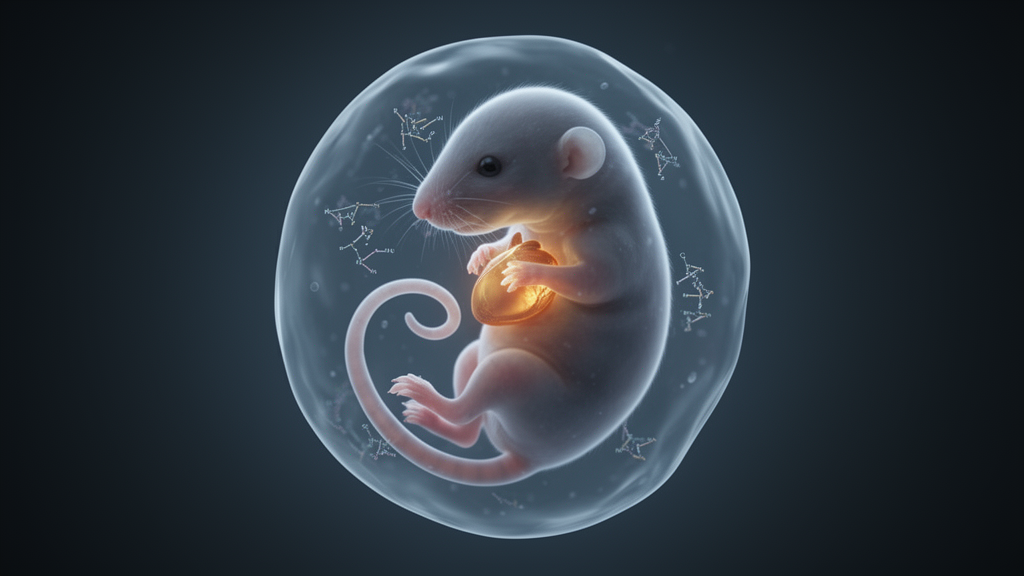
The researchers also tested CHDPIR in an experimental model. In foetal rats with nitrofen-induced CHD, knocking down CHDPIR attenuated disturbances in iron homeostasis and ferroptosis-associated protein changes and improved cardiac function. These in vivo findings, obtained in a chemically induced animal model, support the molecule’s potential as a target for intervention, though the authors frame the work as a basis for further investigation of CHDPIR-directed approaches rather than an established therapy.

Overall, the study supports CHDPIR as a potential maternal plasma EV biomarker for prenatal CHD assessment and offers insight into molecular alterations associated with the condition. As with any early-stage biomarker and mechanistic research, the findings come from cell culture, in vitro binding experiments and a rat model, and will require further validation before any clinical use in prenatal screening or treatment.

Subject of Research: A piRNA biomarker and its SFPQ–CSF2RB mechanism in congenital heart disease

Article Title: CHDPIR: a piRNA with biomarker and therapeutic potential in congenital heart disease

Article References: Sun, X., Wang, G., Gu, H., Zhang, N., Yang, W., Luo, W., Wang, Y., & Yuan, Z. (2026). CHDPIR: a piRNA with biomarker and therapeutic potential in congenital heart disease. Cell Biology and Toxicology. https://doi.org/10.1007/s10565-026-10293-x

Image Credits: AI Generated

DOI: 10.1007/s10565-026-10293-x

Keywords: piRNA, CHDPIR, congenital heart disease, extracellular vesicles, ferroptosis, SFPQ, CSF2RB, iron homeostasis, biomarker, cardiomyocytes, prenatal diagnosis, nitrofen-induced CHD

News Source: Frances Kline. (October 30, 2026). Newly identified piRNA linked to congenital heart disease in foetal rats. Scienmag.

Tags: biomarkercardiomyocytesCHDPIRcongenital heart diseaseCSF2RBextracellular vesiclesferroptosisiron homeostasisnitrofen-induced CHDpiRNAprenatal diagnosisSFPQ
Share12Tweet7Share2ShareShareShare1

Related Posts

Sugarcane Molasses Fuels PHB Production by Pseudomonas Strain

Sugarcane Molasses Fuels PHB Production by Pseudomonas Strain

November 8, 2026
ECM2 Adhesion Signaling Helps Glioblastoma Cells Adapt to Radiation Stress

ECM2 Adhesion Signaling Helps Glioblastoma Cells Adapt to Radiation Stress

November 8, 2026

AI model predicts individual survival in childhood brain tumors from routine methylation data

November 8, 2026

Ultrasonic Toothbrush Shows Limited Effect on Canine Dental Calculus in Pilot Study

November 8, 2026

POPULAR NEWS

  • Sugarcane Molasses Fuels PHB Production by Pseudomonas Strain

    Sugarcane Molasses Fuels PHB Production by Pseudomonas Strain

    29 shares
    Share 12 Tweet 7
  • Evaluation Reveals Barriers to Implementing Oral Health Care in Nursing Homes

    29 shares
    Share 12 Tweet 7
  • Kidney Disease Decision Toolkit Demonstrates Strong Patient and Clinician Acceptability

    29 shares
    Share 12 Tweet 7
  • Basket Trial Evaluates Oral Ponatinib for Solid Tumors With Genomic Alterations

    29 shares
    Share 12 Tweet 7

About

We bring you the latest biotechnology news from best research centers and universities around the world. Check our website.

Follow us

Recent News

Proteomic Shifts in Macaques Reveal Alzheimer’s Targets

Sugarcane Molasses Fuels PHB Production by Pseudomonas Strain

Evaluation Reveals Barriers to Implementing Oral Health Care in Nursing Homes

Subscribe to Blog via Email

Enter your email address to subscribe to this blog and receive notifications of new posts by email.

Join 86 other subscribers
  • Contact Us

Bioengineer.org © Copyright 2023 All Rights Reserved.

Welcome Back!

Login to your account below

Forgotten Password?

Retrieve your password

Please enter your username or email address to reset your password.

Log In
No Result
View All Result
  • Homepages
    • Home Page 1
    • Home Page 2
  • News
  • National
  • Business
  • Health
  • Lifestyle
  • Science

Bioengineer.org © Copyright 2023 All Rights Reserved.