• HOME
  • NEWS
  • EXPLORE
    • CAREER
      • Companies
      • Jobs
    • EVENTS
    • iGEM
      • News
      • Team
    • PHOTOS
    • VIDEO
    • WIKI
  • BLOG
  • COMMUNITY
    • FACEBOOK
    • INSTAGRAM
    • TWITTER
Wednesday, May 20, 2026
BIOENGINEER.ORG
No Result
View All Result
  • Login
  • HOME
  • NEWS
  • EXPLORE
    • CAREER
      • Companies
      • Jobs
        • Lecturer
        • PhD Studentship
        • Postdoc
        • Research Assistant
    • EVENTS
    • iGEM
      • News
      • Team
    • PHOTOS
    • VIDEO
    • WIKI
  • BLOG
  • COMMUNITY
    • FACEBOOK
    • INSTAGRAM
    • TWITTER
  • HOME
  • NEWS
  • EXPLORE
    • CAREER
      • Companies
      • Jobs
        • Lecturer
        • PhD Studentship
        • Postdoc
        • Research Assistant
    • EVENTS
    • iGEM
      • News
      • Team
    • PHOTOS
    • VIDEO
    • WIKI
  • BLOG
  • COMMUNITY
    • FACEBOOK
    • INSTAGRAM
    • TWITTER
No Result
View All Result
Bioengineer.org
No Result
View All Result
Home NEWS Science News Biology

Newly developed mathematical model could be used to predict cancer drug side effects

Bioengineer by Bioengineer
December 20, 2019
in Biology
Reading Time: 3 mins read
0
IMAGE
Share on FacebookShare on TwitterShare on LinkedinShare on RedditShare on Telegram

IMAGE

Credit: Kobe University


A research team at Kobe University Hospital have further illuminated the likelihood of cancer drug side effects that can occur due to genetic mutations in the drug-metabolizing enzyme. The team led by Dr. TAKAOKA Yutaka also developed a mathematical model by using the results of molecular simulation analyses to predict the possibility of side effects.

It is hoped that this research will pave the way for effective predictions of cancer drug side effects and treatment results.

These research findings were first published in the American Scientific Journal ‘PLOS ONE‘ on November 15 2019.

Research Background

Predictions regarding cancer treatment effectiveness and side effects can be made relating to 1. Drug metabolism and 2. Drug effectiveness on administration. However, how well drugs will be metabolized, their effectiveness and the likelihood of side-effects depends on individual differences. For example, before a patient with colon cancer is treated with the anti-cancer drug Irinotecan, a genetic analysis of their UGT1A1 must be performed. UGT1A1 is an enzyme found mainly in the liver which is responsible for processing many chemical substances, including Irinotecan. It is known that the patient with mutations in the UGT1A1 gene (in particular the mutations UGT1A1*6 and UGT1A1*28) have difficulty metabolizing this cancer drug, making severe side effects.

In recent years, genetic analysis technology has been advancing and new mutations in UGT1A1 are being discovered. To date, around 70 different mutations have been found. The ability of each of these newly discovered mutations to metabolize drugs is unknown, therefore it is difficult to accurately determine the likelihood of adverse reactions to anti-cancer agents.

Research Methodology

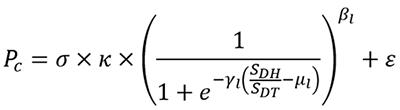
Professor Takaoka et al. used the results from molecular computer simulation analyses and wet laboratory experiments (using cells) to develop the following mathematical model for drug metabolism by the UGT1A1 (Figure 1).

They succeeded in using this mathematical model to predict the ability of UGT1A1 mutants to metabolize the anti-cancer agent with high accuracy- as shown in the bar graph (Figure 2). The predictions using the mathematical equation (gray bars) are very similar to the actual results (black bars).

Based on these results, this method was able to predict the drug metabolizing ability of UGT1A1 mutations. It is hoped that this methodology could be used to predict the possibility of cancer drug side-effects before they are prescribed- even for newly discovered mutations of UGT1A1.

Further Research

It is expected that further research using a similar methodology could be utilized to predict cancer drug effectiveness. Professor Takaoka et al. have already used RIKEN’s K-computer to perform a basic analysis and they are currently working towards being able to predict the effectiveness of drugs utilized in lung cancer treatment.

###

Media Contact
Verity Townsend
[email protected]
81-788-035-282

Original Source

https://www.kobe-u.ac.jp/research_at_kobe_en/NEWS/news/2019_12_20_01.html

Related Journal Article

http://dx.doi.org/10.1371/journal.pone.0225244

Tags: BiochemistryBioinformaticsBiologyBiomechanics/BiophysicsBiomedical/Environmental/Chemical EngineeringcancerMedicine/HealthTechnology/Engineering/Computer Science
Share12Tweet8Share2ShareShareShare2

Related Posts

Unraveling the Multifaceted Role of H2AK119 Mono-Ubiquitination in Biology and Disease — Biology

Unraveling the Multifaceted Role of H2AK119 Mono-Ubiquitination in Biology and Disease

May 20, 2026
Powerful Genetic Mutation Surpasses Female Protective Mechanisms in Autism — Biology

Powerful Genetic Mutation Surpasses Female Protective Mechanisms in Autism

May 20, 2026

Shandong University Researchers Innovate Multi-Scale Feature Fusion and Weighted Ensemble Learning for Precise Promoter Identification Across Cell Lines

May 20, 2026

Ancient Complex Life Thrived Along Oxygen-Rich Seafloors for Hundreds of Millions of Years

May 20, 2026
Please login to join discussion

POPULAR NEWS

  • blank

    New Study Reveals Plants Can Detect the Sound of Rain

    732 shares
    Share 292 Tweet 183
  • Research Indicates Potential Connection Between Prenatal Medication Exposure and Elevated Autism Risk

    846 shares
    Share 338 Tweet 212
  • ESMO 2025: mRNA COVID Vaccines Enhance Efficacy of Cancer Immunotherapy

    294 shares
    Share 118 Tweet 74
  • Breastmilk Balances E. coli and Beneficial Bacteria in Infant Gut Microbiomes

    58 shares
    Share 23 Tweet 15

About

We bring you the latest biotechnology news from best research centers and universities around the world. Check our website.

Follow us

Recent News

Revealing Hidden Objects Using Consumer LiDAR

AI System Revolutionizes Scientific Research by Automating Code Generation

Unraveling the Multifaceted Role of H2AK119 Mono-Ubiquitination in Biology and Disease

Subscribe to Blog via Email

Enter your email address to subscribe to this blog and receive notifications of new posts by email.

Join 82 other subscribers
  • Contact Us

Bioengineer.org © Copyright 2023 All Rights Reserved.

Welcome Back!

Login to your account below

Forgotten Password?

Retrieve your password

Please enter your username or email address to reset your password.

Log In
No Result
View All Result
  • Homepages
    • Home Page 1
    • Home Page 2
  • News
  • National
  • Business
  • Health
  • Lifestyle
  • Science

Bioengineer.org © Copyright 2023 All Rights Reserved.