• HOME
  • NEWS
  • EXPLORE
    • CAREER
      • Companies
      • Jobs
    • EVENTS
    • iGEM
      • News
      • Team
    • PHOTOS
    • VIDEO
    • WIKI
  • BLOG
  • COMMUNITY
    • FACEBOOK
    • INSTAGRAM
    • TWITTER
Tuesday, May 12, 2026
BIOENGINEER.ORG
No Result
View All Result
  • Login
  • HOME
  • NEWS
  • EXPLORE
    • CAREER
      • Companies
      • Jobs
        • Lecturer
        • PhD Studentship
        • Postdoc
        • Research Assistant
    • EVENTS
    • iGEM
      • News
      • Team
    • PHOTOS
    • VIDEO
    • WIKI
  • BLOG
  • COMMUNITY
    • FACEBOOK
    • INSTAGRAM
    • TWITTER
  • HOME
  • NEWS
  • EXPLORE
    • CAREER
      • Companies
      • Jobs
        • Lecturer
        • PhD Studentship
        • Postdoc
        • Research Assistant
    • EVENTS
    • iGEM
      • News
      • Team
    • PHOTOS
    • VIDEO
    • WIKI
  • BLOG
  • COMMUNITY
    • FACEBOOK
    • INSTAGRAM
    • TWITTER
No Result
View All Result
Bioengineer.org
No Result
View All Result
Home NEWS Science News

Newly created magnets are cheaper, more effective and ‘smarter’

Bioengineer by Bioengineer
October 28, 2019
in Science News
Reading Time: 2 mins read
0
IMAGE
Share on FacebookShare on TwitterShare on LinkedinShare on RedditShare on Telegram

Ferromagnets, or more precisely, magnets — are extremely demanded materials in modern electronics. The magnets present in almost every device — TVs, computers, fridges, cars, smartphones, etc.
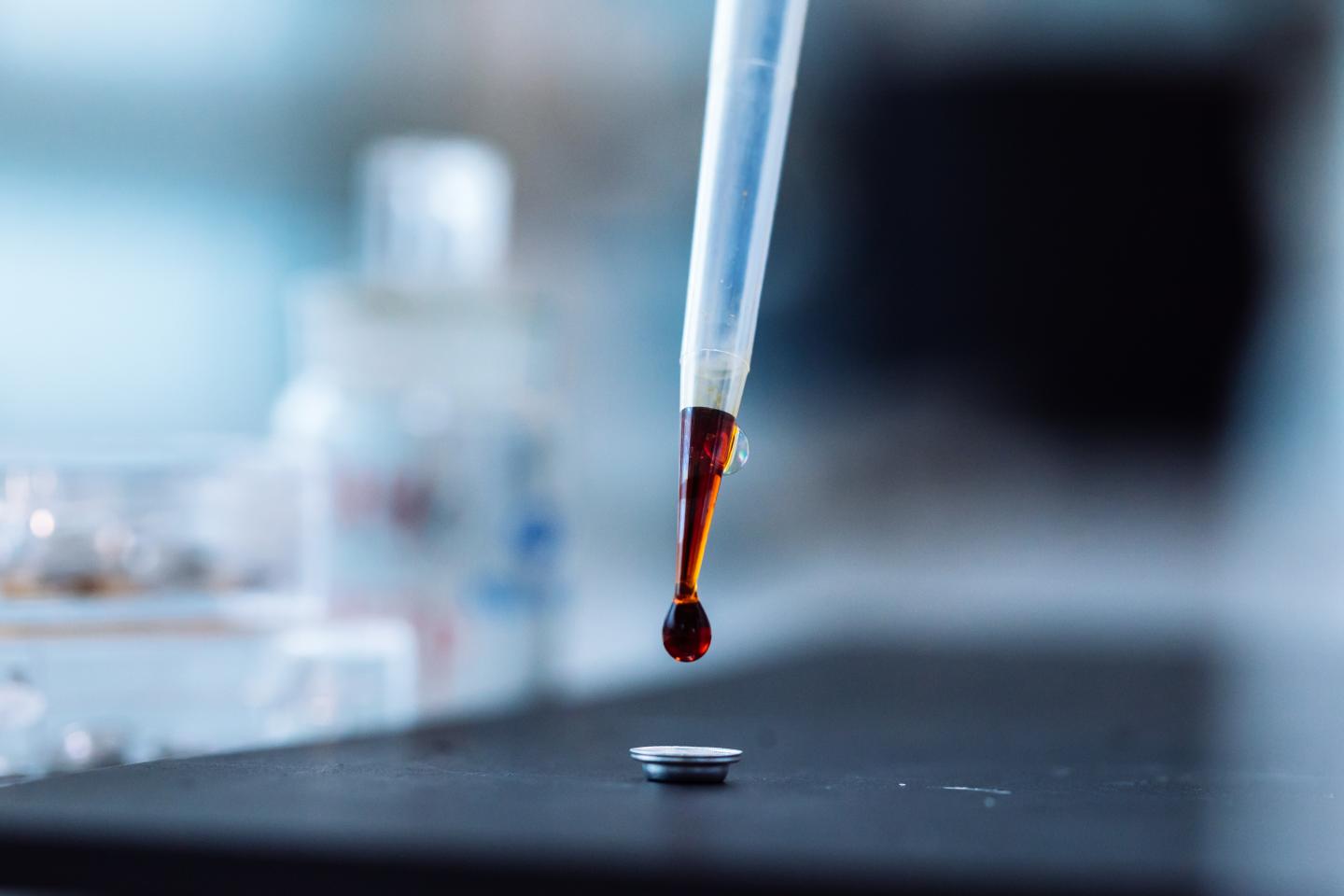
IMAGE

Credit: Immanuel Kant Baltic Federal University


Ferromagnets, or more precisely, magnets – are extremely demanded materials in modern electronics. The magnets present in almost every device – TVs, computers, fridges, cars, smartphones, etc.
But it is necessary to remember, that ferromagnetic alloys are made of rare-earth elements (REE) that is way an effective and high-powered magnet is an expensive thing. Today scientists are facing a challenge of making cheaper magnets without the REE or with the minimal amount of these elements.

It is also known that atoms of light elements like boron, nitrogen, and carbon are a part of the most high-powered magnets as well.

Intermetallics scientific journal has recently published a unique research of a group of scientists. Among the group was an IKBFU Institute of Physics, Mathematics and Information Technology scientist Mikhail Paukov.

The study is aimed at solving the goals of the Federal project “Development of advanced infrastructure for research and development in the Russian Federation” of the National project “Science”.

Mikhail Paukov said:

“My goal was to hydrogenate the ferromagnetic alloy consisting of three metals – neodymium, manganese, and germanium. To put it simply: I was to insert hydrogen atoms into the crystal structure (in-between its knots). Some compounds require only one hydrogen atom per unit; some require a few of them. But anyway hydrogenation may seriously alter the original substance’s properties”.

According to Mikhail, NdMnGe alloy may only be inserted with a single hydrogen atom per unit, but the compound resulted has gradually changed its characteristics and has shown anti-ferromagnetic properties. The compound stopped being a magnet.

The scientist said:

Now, at this point, we have no clear understanding of how to practically apply the data received. Maybe the materials will be possible to use as magnets for hydrogen-containing medium to control the amount of hydrogen in them. For now, our research is mostly “purely fundamental”.

But there can be no doubt that the data gathering on ferromagnetic alloys will lead to a breakthrough sooner or later. And will provide mankind with high-powered, “smart” and cheap magnets. And Mikhail Paukov and colleagues’ research brings this moment closer

###

Media Contact
Sergey Bulanov
[email protected]
7-921-268-5362

Original Source

http://eng.kantiana.ru/news/260785/

Related Journal Article

http://dx.doi.org/10.1016/j.intermet.2019.106619

Tags: ElectromagneticsHardwareTechnology/Engineering/Computer Science
Share12Tweet8Share2ShareShareShare2

Related Posts

Humans and Zebra Finches Share Similar Speech Learning Techniques #ASA190 — Chemistry

Humans and Zebra Finches Share Similar Speech Learning Techniques #ASA190

May 11, 2026
New Study Uncovers How Fungal Parasites Attack Strawberries and Raspberries — Agriculture

New Study Uncovers How Fungal Parasites Attack Strawberries and Raspberries

May 11, 2026

City of Hope Researchers to Present Groundbreaking Immunotherapy and Precision Medicine Advances Across Multiple Cancer Types at ASCO 2026

May 11, 2026

Medicaid Expansion Reduces Mortality in Young Adults with Kidney Failure

May 11, 2026
Please login to join discussion

POPULAR NEWS

  • Research Indicates Potential Connection Between Prenatal Medication Exposure and Elevated Autism Risk

    841 shares
    Share 336 Tweet 210
  • New Study Reveals Plants Can Detect the Sound of Rain

    728 shares
    Share 290 Tweet 182
  • Salmonella Haem Blocks Macrophages, Boosts Infection

    62 shares
    Share 25 Tweet 16
  • Breastmilk Balances E. coli and Beneficial Bacteria in Infant Gut Microbiomes

    57 shares
    Share 23 Tweet 14

About

We bring you the latest biotechnology news from best research centers and universities around the world. Check our website.

Follow us

Recent News

Humans and Zebra Finches Share Similar Speech Learning Techniques #ASA190

New Study Uncovers How Fungal Parasites Attack Strawberries and Raspberries

City of Hope Researchers to Present Groundbreaking Immunotherapy and Precision Medicine Advances Across Multiple Cancer Types at ASCO 2026

Subscribe to Blog via Email

Enter your email address to subscribe to this blog and receive notifications of new posts by email.

Join 82 other subscribers
  • Contact Us

Bioengineer.org © Copyright 2023 All Rights Reserved.

Welcome Back!

Login to your account below

Forgotten Password?

Retrieve your password

Please enter your username or email address to reset your password.

Log In
No Result
View All Result
  • Homepages
    • Home Page 1
    • Home Page 2
  • News
  • National
  • Business
  • Health
  • Lifestyle
  • Science

Bioengineer.org © Copyright 2023 All Rights Reserved.