• HOME
  • NEWS
  • EXPLORE
    • CAREER
      • Companies
      • Jobs
    • EVENTS
    • iGEM
      • News
      • Team
    • PHOTOS
    • VIDEO
    • WIKI
  • BLOG
  • COMMUNITY
    • FACEBOOK
    • INSTAGRAM
    • TWITTER
Sunday, May 10, 2026
BIOENGINEER.ORG
No Result
View All Result
  • Login
  • HOME
  • NEWS
  • EXPLORE
    • CAREER
      • Companies
      • Jobs
        • Lecturer
        • PhD Studentship
        • Postdoc
        • Research Assistant
    • EVENTS
    • iGEM
      • News
      • Team
    • PHOTOS
    • VIDEO
    • WIKI
  • BLOG
  • COMMUNITY
    • FACEBOOK
    • INSTAGRAM
    • TWITTER
  • HOME
  • NEWS
  • EXPLORE
    • CAREER
      • Companies
      • Jobs
        • Lecturer
        • PhD Studentship
        • Postdoc
        • Research Assistant
    • EVENTS
    • iGEM
      • News
      • Team
    • PHOTOS
    • VIDEO
    • WIKI
  • BLOG
  • COMMUNITY
    • FACEBOOK
    • INSTAGRAM
    • TWITTER
No Result
View All Result
Bioengineer.org
No Result
View All Result
Home NEWS Science News Chemistry

New way to date rocks

Bioengineer by Bioengineer
November 4, 2019
in Chemistry
Reading Time: 2 mins read
0
IMAGE
Share on FacebookShare on TwitterShare on LinkedinShare on RedditShare on Telegram

IMAGE

Credit: The University of Queensland

A new way to date a common mineral could help pinpoint ore deposits and improve mineral exploration globally, according to University of Queensland scientists.

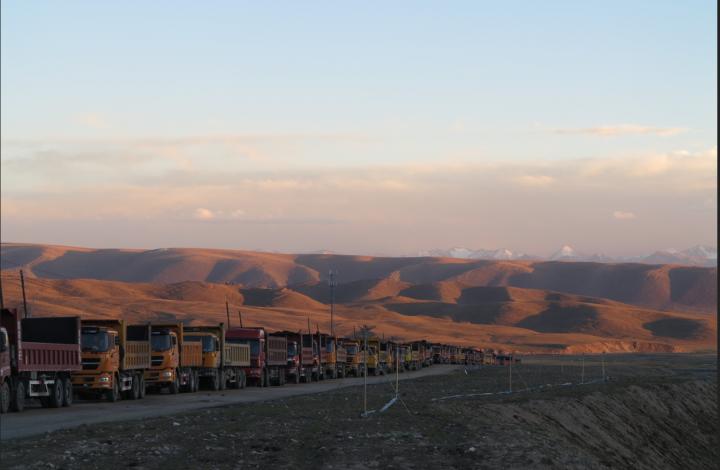
The researchers have identified a new reference material and used a state-of-the-art instrument to better date rock formations in central Asia.

UQ’s Professor Jian-xin Zhao said the team started by analysing a silicate mineral known as garnet, which then helped understand the accumulation of precious minerals such as gold, copper, lead zinc, silver and uranium.

“Garnet, which looks a little like the seeds of a pomegranate, is a challenging mineral to date but very common in volcanic mineral systems,” Professor Zhao said.

“It forms when hot magma enters the subsurface of the Earth’s crust and it gives us clues about other magmatic formations in the same area.

“Magmatic activity is a key Earth process and leads to mineralisation – many of the world’s major mineral districts including Australia’s Mt Isa and Olympic Dam were formed during a long history of magmatic activities.

“So by better understanding when, where and why this magma activity occurred, we’ll be able to find these mineral-rich hotspots.”

Key to the investigation was a laser system, which sampled tiny garnet grain particles that were only several hundred micrometres in length.

The laser-sampled material was then measured with a mass spectrometer – a tool that separates sample components by their mass and electrical charge – which helped calculate age.

UQ researcher Dr Renjie Zhou said the team hoped this new method would better establish the relationship between historical episodes of magma activity and mineral accumulation.

“The world’s many important mineral deposits are formed in geological settings like the Pacific Ocean’s Ring of Fire, where hot magma is constantly intruded into the crust,” Dr Zhou said.

“By understanding exactly when certain formations have occurred, it’s much easier to pin down mineral-rich deposits.”

The researchers believe this discovery comes at a critical time for the mining industry and for the planet.

“Developing and maintaining a sustainable world will rely on the discovery and the high-efficient recovery of mineral deposits,” Dr Zhou said.

“With the emerging of green energy, there’s an even greater need for the supply of minerals like copper, silver, nickel, and many more.”

###

The research has been published in GSA Bulletin (DOI: 10.1130/B35214.1).

The study is a result of a collaboration between UQ scientists and, Professor Hecai Niu and his former student Dr Yan Shuang from the Chinese Academy of Sciences.

Media Contact
Dr. Renjie Zhou
[email protected]
61-432-275-466

Original Source

https://www.uq.edu.au/news/article/2019/11/new-way-date-rocks

Related Journal Article

http://dx.doi.org/10.1130/B35214.1

Tags: Chemistry/Physics/Materials SciencesEarth ScienceEnergy SourcesGeographyGeology/SoilGeophysics
Share16Tweet10Share3ShareShareShare2

Related Posts

Miniature Sensor Uses Light to Detect Touch — Chemistry

Miniature Sensor Uses Light to Detect Touch

May 8, 2026
Iron Minerals Determine Whether Dissolved Organic Matter Fuels Microbes or Becomes Long-Term Carbon Storage — Chemistry

Iron Minerals Determine Whether Dissolved Organic Matter Fuels Microbes or Becomes Long-Term Carbon Storage

May 8, 2026

Kate Evans Appointed Associate Lab Director for Biological and Environmental Systems Science at ORNL

May 8, 2026

Advancing Multiscale Modeling and Overcoming Operational Challenges in Autothermal COâ‚‚-to-Methanol Reactors

May 8, 2026
Please login to join discussion

POPULAR NEWS

  • Research Indicates Potential Connection Between Prenatal Medication Exposure and Elevated Autism Risk

    840 shares
    Share 336 Tweet 210
  • New Study Reveals Plants Can Detect the Sound of Rain

    727 shares
    Share 290 Tweet 181
  • Scientists Investigate Possible Connection Between COVID-19 and Increased Lung Cancer Risk

    68 shares
    Share 27 Tweet 17
  • Salmonella Haem Blocks Macrophages, Boosts Infection

    61 shares
    Share 24 Tweet 15

About

We bring you the latest biotechnology news from best research centers and universities around the world. Check our website.

Follow us

Recent News

Evaluating Digoxin Use in Patients with Symptomatic Rheumatic Heart Disease

Evaluating the Effectiveness and Safety of Digitalis Glycosides in Treating Heart Failure

Urdu Fall Risk Questionnaire Adapted for Elderly

Subscribe to Blog via Email

Success! An email was just sent to confirm your subscription. Please find the email now and click 'Confirm' to start subscribing.

Join 82 other subscribers
  • Contact Us

Bioengineer.org © Copyright 2023 All Rights Reserved.

Welcome Back!

Login to your account below

Forgotten Password?

Retrieve your password

Please enter your username or email address to reset your password.

Log In
No Result
View All Result
  • Homepages
    • Home Page 1
    • Home Page 2
  • News
  • National
  • Business
  • Health
  • Lifestyle
  • Science

Bioengineer.org © Copyright 2023 All Rights Reserved.