• HOME
  • NEWS
  • EXPLORE
    • CAREER
      • Companies
      • Jobs
    • EVENTS
    • iGEM
      • News
      • Team
    • PHOTOS
    • VIDEO
    • WIKI
  • BLOG
  • COMMUNITY
    • FACEBOOK
    • INSTAGRAM
    • TWITTER
Tuesday, December 2, 2025
BIOENGINEER.ORG
No Result
View All Result
  • Login
  • HOME
  • NEWS
  • EXPLORE
    • CAREER
      • Companies
      • Jobs
        • Lecturer
        • PhD Studentship
        • Postdoc
        • Research Assistant
    • EVENTS
    • iGEM
      • News
      • Team
    • PHOTOS
    • VIDEO
    • WIKI
  • BLOG
  • COMMUNITY
    • FACEBOOK
    • INSTAGRAM
    • TWITTER
  • HOME
  • NEWS
  • EXPLORE
    • CAREER
      • Companies
      • Jobs
        • Lecturer
        • PhD Studentship
        • Postdoc
        • Research Assistant
    • EVENTS
    • iGEM
      • News
      • Team
    • PHOTOS
    • VIDEO
    • WIKI
  • BLOG
  • COMMUNITY
    • FACEBOOK
    • INSTAGRAM
    • TWITTER
No Result
View All Result
Bioengineer.org
No Result
View All Result
Home NEWS Science News Chemistry

New way to date rocks

Bioengineer by Bioengineer
November 4, 2019
in Chemistry
Reading Time: 2 mins read
0
IMAGE
Share on FacebookShare on TwitterShare on LinkedinShare on RedditShare on Telegram

IMAGE

Credit: The University of Queensland

A new way to date a common mineral could help pinpoint ore deposits and improve mineral exploration globally, according to University of Queensland scientists.

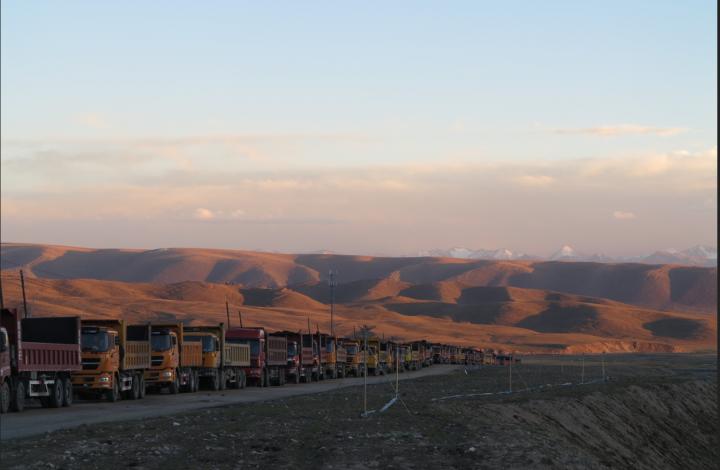
The researchers have identified a new reference material and used a state-of-the-art instrument to better date rock formations in central Asia.

UQ’s Professor Jian-xin Zhao said the team started by analysing a silicate mineral known as garnet, which then helped understand the accumulation of precious minerals such as gold, copper, lead zinc, silver and uranium.

“Garnet, which looks a little like the seeds of a pomegranate, is a challenging mineral to date but very common in volcanic mineral systems,” Professor Zhao said.

“It forms when hot magma enters the subsurface of the Earth’s crust and it gives us clues about other magmatic formations in the same area.

“Magmatic activity is a key Earth process and leads to mineralisation – many of the world’s major mineral districts including Australia’s Mt Isa and Olympic Dam were formed during a long history of magmatic activities.

“So by better understanding when, where and why this magma activity occurred, we’ll be able to find these mineral-rich hotspots.”

Key to the investigation was a laser system, which sampled tiny garnet grain particles that were only several hundred micrometres in length.

The laser-sampled material was then measured with a mass spectrometer – a tool that separates sample components by their mass and electrical charge – which helped calculate age.

UQ researcher Dr Renjie Zhou said the team hoped this new method would better establish the relationship between historical episodes of magma activity and mineral accumulation.

“The world’s many important mineral deposits are formed in geological settings like the Pacific Ocean’s Ring of Fire, where hot magma is constantly intruded into the crust,” Dr Zhou said.

“By understanding exactly when certain formations have occurred, it’s much easier to pin down mineral-rich deposits.”

The researchers believe this discovery comes at a critical time for the mining industry and for the planet.

“Developing and maintaining a sustainable world will rely on the discovery and the high-efficient recovery of mineral deposits,” Dr Zhou said.

“With the emerging of green energy, there’s an even greater need for the supply of minerals like copper, silver, nickel, and many more.”

###

The research has been published in GSA Bulletin (DOI: 10.1130/B35214.1).

The study is a result of a collaboration between UQ scientists and, Professor Hecai Niu and his former student Dr Yan Shuang from the Chinese Academy of Sciences.

Media Contact
Dr. Renjie Zhou
[email protected]
61-432-275-466

Original Source

https://www.uq.edu.au/news/article/2019/11/new-way-date-rocks

Related Journal Article

http://dx.doi.org/10.1130/B35214.1

Tags: Chemistry/Physics/Materials SciencesEarth ScienceEnergy SourcesGeographyGeology/SoilGeophysics
Share16Tweet10Share3ShareShareShare2

Related Posts

Neighboring Groups Speed Up Polymer Self-Deconstruction

Neighboring Groups Speed Up Polymer Self-Deconstruction

November 28, 2025
blank

Activating Alcohols as Sulfonium Salts for Photocatalysis

November 26, 2025

Carbonate Ions Drive Water Ordering in CO₂ Reduction

November 25, 2025

Isolable Germa-Isonitrile with N≡Ge Triple Bond

November 24, 2025
Please login to join discussion

POPULAR NEWS

  • New Research Unveils the Pathway for CEOs to Achieve Social Media Stardom

    New Research Unveils the Pathway for CEOs to Achieve Social Media Stardom

    203 shares
    Share 81 Tweet 51
  • Scientists Uncover Chameleon’s Telephone-Cord-Like Optic Nerves, A Feature Missed by Aristotle and Newton

    120 shares
    Share 48 Tweet 30
  • Neurological Impacts of COVID and MIS-C in Children

    106 shares
    Share 42 Tweet 27
  • MoCK2 Kinase Shapes Mitochondrial Dynamics in Rice Fungal Pathogen

    67 shares
    Share 27 Tweet 17

About

We bring you the latest biotechnology news from best research centers and universities around the world. Check our website.

Follow us

Recent News

Neonatal Gut Microbiota’s Role in Child Development

Antibody and T Cell Profiles in Chagas Disease

Substance P’s Role in Th17/Treg Imbalance and Ocular Damage

Subscribe to Blog via Email

Enter your email address to subscribe to this blog and receive notifications of new posts by email.

Join 69 other subscribers
  • Contact Us

Bioengineer.org © Copyright 2023 All Rights Reserved.

Welcome Back!

Login to your account below

Forgotten Password?

Retrieve your password

Please enter your username or email address to reset your password.

Log In
No Result
View All Result
  • Homepages
    • Home Page 1
    • Home Page 2
  • News
  • National
  • Business
  • Health
  • Lifestyle
  • Science

Bioengineer.org © Copyright 2023 All Rights Reserved.