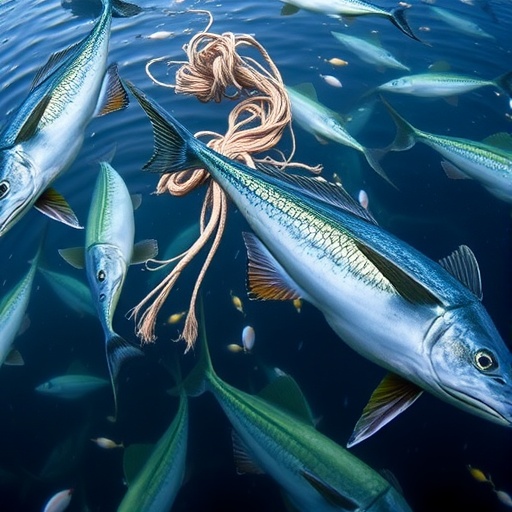
Aquaculture’s evolution over the past seven decades reveals a troubling shift: a move toward species with reduced sustainability potential that undermines critical global goals. A recent comprehensive study conducted by researchers at the University of British Columbia (UBC) exposes this changing landscape, emphasizing how the aquaculture industry’s rapid growth is paradoxically compromising its ability to support food security, climate mitigation, and biodiversity conservation. The research, published in the journal Fish and Fisheries, offers a nuanced, trait-based assessment of global aquaculture species, uncovering a trend that challenges the sector’s promise to drive sustainable development.
From 1950 through 2023, aquaculture has transformed dramatically—initially dominated by a wide array of species like seaweed and shellfish, which hold intrinsic ecological advantages, and gradually shifting toward fewer species characterized by intensive feed requirements and environmental trade-offs. The study reveals that since the 1980s, an overwhelming reliance on finfish such as salmon and shrimp, which are fed rather than filter feeders or autotrophs, has intensified. This trend has significant implications for three pivotal domains: nutritional output, ecosystem health, and contribution to climate goals.
The researchers adopted a methodical, traits-based approach, analyzing species’ characteristics related to their roles in food provision, carbon footprints, and biodiversity impacts. This multidimensional framework enabled the team to construct indices capable of quantifying aquaculture’s biological potential to address United Nations Sustainable Development Goals concerning nutrition, climate action, and life below water. The findings illustrate that the earlier aquaculture system, with its dominance of seaweed and bivalves, inherently delivered greater overall sustainability, owing to factors such as efficient nutrient cycling and habitat services.
China, the world’s largest aquaculture producer, exemplifies the challenges found broadly across regions. Accounting for 56 percent of global production in 2022, China’s aquaculture profile has dwindled in performance across the study’s food, climate, and biodiversity indices since the 1976–1980 baseline. This decline, measuring approximate reductions of 14.1 percent for food value, 21.6 percent for climate contribution, and 12.9 percent for biodiversity, reflects the intensification of species mix toward those less aligned with environmental and nutritional benefits. Similar patterns, albeit less pronounced, appear in the Americas.
Significantly, salmon farming, the world’s fastest-growing food production sector, poses a particular challenge. Though economically and culturally valuable, salmon aquaculture faces vulnerability to environmental stressors such as ocean warming and deoxygenation. Moreover, from a biological sustainability perspective, salmon’s feed requirements, growth dynamics, and ecosystem impacts position it lower on the biological potential scale. Aleah Wong, the study’s lead author and PhD candidate at the Institute for the Oceans and Fisheries, asserts that this disparity highlights how not all aquaculture species are equal—some carry substantial ecological and nutritional costs.
Beyond the biological traits, the study illuminates the intricate socio-economic fabric that influences how aquaculture impacts food security. Food security is not merely determined by production volume or nutrient density but involves complex interactions among producers, consumers, market forces, and regulatory frameworks. These factors influence food availability, access, trade dynamics, income distribution, and equity. Therefore, the production shift towards intensive finfish species can propagate inequities and reduce the sector’s capacity to fulfill human nutritional requirements sustainably.
The research advocates for a strategic pivot toward scaling up production of species with inherent environmental advantages, focusing notably on seaweed and bivalves. These organisms function as ecosystem engineers, with capacities to sequester carbon, filter nutrients, and foster marine biodiversity while providing nutritious food products. Their expansion could thus help realign aquaculture with pressing global sustainability imperatives. However, achieving this transition remains contingent on overcoming market, policy, and consumer preference barriers.
To catalyze change, the study authors emphasize the necessity for coordinated international policy interventions. Innovations in investment, a reevaluation of subsidy structures, improvements in regulatory oversight, and a shift in consumer diet preferences toward sustainable seafood are critical drivers. Without such systemic efforts, the current trajectory risks entrenching practices that exacerbate environmental degradation and nutritional inadequacies.
Furthermore, the research underscores that simply increasing the volume of aquaculture output is insufficient. Attention must focus on the composition of that output to ensure alignment with climate mitigation targets and biodiversity conservation commitments. This perspective signals a paradigm shift from quantity-driven aquaculture growth to quality- and sustainability-driven development.
Ultimately, the UBC study shines a spotlight on the pressing need to reconfigure global aquaculture production practices. By embracing a diversified species portfolio that privileges ecological benefits alongside nutritional provision, the industry can better fulfill its potential as a contributor to resilient and sustainable food systems. The findings call stakeholders—from policymakers to producers and consumers—to recognize and act on aquaculture’s complex biological and ecological realities.
This research marks a significant contribution to the field, encouraging an integrated approach that balances economic aspirations with ecological stewardship and human well-being. The evolving dynamics of aquaculture production illustrated here prompt urgent reflection and action to secure the sector’s role in a sustainable future, grounded in both science and policy innovation.
Subject of Research:
Animals
Article Title:
Shifting Trends in Aquaculture’s Biological Potential to Address Food, Climate and Biodiversity Challenges
News Publication Date:
25-Mar-2026
Web References:
https://onlinelibrary.wiley.com/doi/10.1111/faf.70081
References:
“Shifting Trends in Aquaculture’s Biological Potential to Address Food, Climate and Biodiversity Challenges,” Fish and Fisheries, 2026.
Image Credits:
William Cheung/Institute for the Oceans and Fisheries, UBC
Keywords:
Aquaculture, Sustainability, Food Security, Climate Mitigation, Biodiversity, Mariculture, Finfish, Seaweed, Bivalves, Salmon, Environmental Impact, Global Seafood Production
Tags: aquaculture and food securityaquaculture carbon footprint analysisaquaculture species sustainabilitybiodiversity conservation in aquacultureclimate mitigation in aquacultureecological implications of aquaculture expansionfinfish aquaculture environmental impactglobal aquaculture industry growthsalmon and shrimp farming sustainabilityshift from shellfish to finfish farmingsustainable aquaculture trendstraits-based aquaculture assessment