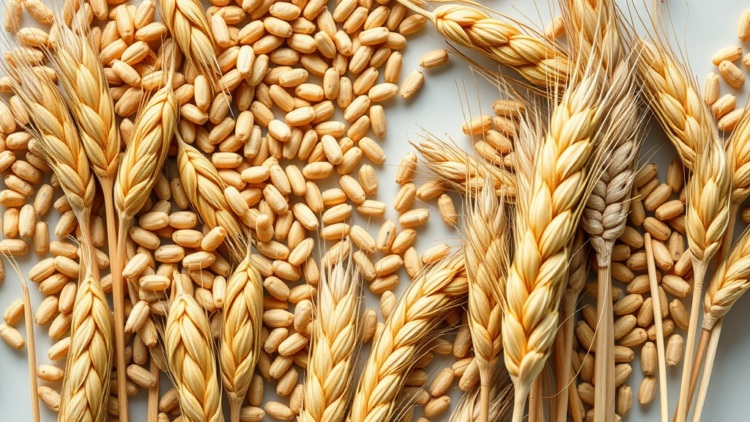
Beneath the surface of every wheat field, an invisible negotiation is underway between plant roots and the microbes that colonize them. A new study published in Plant and Soil has now mapped that negotiation in unprecedented chemical detail, revealing that modern bread wheat and ancient spelt respond to the same beneficial bacterial treatment in strikingly different ways. Rather than triggering a uniform boost, the endophytic biopreparation InnoEndop—a consortium of ten Bacillus strains carried on biochar—pushed the two crop types down divergent metabolic paths, one building layered physical and biochemical defenses, the other concentrating on a focused arsenal of phenolic compounds. The findings carry significant implications for sustainable agriculture, suggesting that microbial inoculants may need to be matched to specific cultivars rather than applied as one-size-fits-all solutions.
The research team, led by Marceli Pacan and Agnieszka Kuźniar of The John Paul II Catholic University of Lublin, set out to address a persistent puzzle in agricultural biotechnology: why microbial biostimulants often deliver inconsistent results in the field. Wheat is the world’s third most significant crop and accounts for roughly half of all cereal cultivation in the European Union, so even modest improvements in how beneficial microbes perform could have enormous consequences. The scientists compared two modern winter wheat cultivars, ‘Hondia’ and ‘Tytanika’, with ‘Rokosz’, an ancient spelt wheat valued for its higher protein and mineral content and its adaptation to low-input farming. Their central hypothesis was that the metabolic response to endophyte colonization would depend on the host genotype—a proposition the data dramatically confirmed.
The experimental design was meticulous. In laboratory tests, the researchers first optimized the bacterial cell density and temperature for inoculation, finding that 6.67 × 10⁴ cells per milliliter at 15 to 20 degrees Celsius produced the best seedling vigor. They also screened six biochar carriers made from pine or ash wood at different pyrolysis temperatures, ultimately selecting an ash-wood biochar designated J500, which supported normal seedling growth across all cultivars and proved compatible with commercial fungicide seed dressings. This compatibility matters because real-world farmers apply fungicides alongside seed treatments, and a biopreparation that fails under those conditions would be useless in practice.
The heart of the study was a 40-day greenhouse pot experiment in which inoculated and control seeds of all three cultivars were grown in non-sterilized soil, deliberately preserving the natural soil microbiota. Every five days, the researchers measured the activities of two key defense enzymes: peroxidase (POX), which drives cell wall cross-linking and reactive oxygen scavenging, and phenylalanine ammonia-lyase (PAL), the gateway enzyme of the phenylpropanoid pathway that produces phenolic acids, flavonoids, and lignin precursors. The patterns that emerged were anything but uniform. In ‘Hondia’, POX activity stayed suppressed for most of the experiment and then surged fifteen-fold within just five days at day 40, while PAL activity collapsed to an eleven-fold reduction below control levels. In ‘Rokosz’, the opposite occurred: PAL activity climbed to 11.81 IU per gram fresh weight at day 20—the highest value recorded across all treatments—and remained elevated through the end of the experiment, while POX stayed quietly low.
Untargeted metabolomics using liquid chromatography coupled to quadrupole time-of-flight mass spectrometry revealed the chemistry behind these enzymatic divergences. At day zero, just four days after inoculation, both cultivars shared a common set of exclusively induced metabolites pointing to rapid defense priming: oxidized glutathione, L-tryptophan, allantoin, the coumarin scopoletin, and 12-oxo-phytodienoic acid, a jasmonic acid precursor that functions as a stress-signaling molecule. This early signature demonstrates that the endophytes trigger metabolic activation almost immediately, before any visible growth differences appear. Yet even at this earliest stage, the genotypes differed in character. Spelt ‘Rokosz’ showed a balanced distribution of up- and down-regulated molecular features, whereas ‘Hondia’ displayed a pronounced wave of induction in its non-polar, lipid-rich fraction, with 980 differential features compared to 419 in ‘Rokosz’.
By day 40, the two crops had committed to fundamentally different strategies. Modern ‘Hondia’ accumulated wax esters at extraordinary levels—palmityl palmitate increased nearly forty-fold, and several other long-chain wax esters appeared exclusively in treated plants—suggesting reinforcement of the cuticle, the plant’s outer physical barrier. Alongside this, the cultivar showed extensive remodeling of membrane lipids, including galactolipids and sterol esters, broad accumulation of free amino acids such as tryptophan and N-γ-glutamyl-phenylalanine, and shifts in indole-related metabolism consistent with altered hormonal regulation. Meanwhile, several phenylpropanoid-derived flavonoids were strongly down-regulated, indicating that ‘Hondia’ had shifted away from chemical defense toward enzymatic oxidative management and structural reinforcement.
Ancient spelt ‘Rokosz’ told a different story. Treated plants showed significant enrichment of the phenylpropanoid pathway: p-coumaric acid rose 5.3-fold, trans-cinnamaldehyde 4.6-fold, and compounds such as chlorogenic acid, esculetin, and the flavonoid rutin appeared exclusively in biopreparation-treated samples. HPLC profiling confirmed that vanillic acid and total phenolic acid concentrations increased significantly in ‘Rokosz’ but not in ‘Hondia’. Remarkably, ‘Rokosz’ also accumulated ferulic acid in its leaves at levels comparable to its roots—an unusual pattern for cereals, where phenolics typically concentrate in roots and cell walls—potentially enhancing ultraviolet screening and photoprotection in photosynthetic tissue. The picture is of an ancient grain that channels the microbial partnership into building a dense chemical shield.
Perhaps the most striking statistical finding was convergence: biopreparation treatment reduced the metabolic differences between the two cultivars from 760 differential traits under control conditions to 423 after treatment, a 44.3 percent reduction. In other words, the same microbial inoculant pulled both genotypes toward a shared, microbially induced metabolic state, even as each retained its characteristic strategy. The researchers interpret this as evidence that subspecies-level genetic architecture determines whether endophyte colonization triggers metabolic enhancement, as in spelt, or metabolic moderation, as in modern bread wheat—a distinction consistent with prior work showing that endophytes from wild wheat ancestors can make drought-stressed plants metabolically resemble well-watered controls.
For agriculture, the implications are direct and potentially transformative. Microbial inoculants are increasingly promoted as environmentally friendly alternatives to synthetic fertilizers and pesticides, but their field performance is notoriously variable. This study suggests that much of that variability may stem from genotype-treatment interactions rather than product quality: the identical formulation can produce profoundly different metabolic outcomes depending on the crop’s genetic background. The authors argue for precision agrobiotechnology, in which microbial consortia are matched to individual cultivars and metabolic markers—phenylpropanoids, wax esters, and oxylipin signals such as 12-OPDA—are incorporated into breeding programs to select genotypes with enhanced microbial responsiveness. As climate pressures intensify and the need to reduce chemical inputs grows, understanding these hidden metabolic dialogues between crops and their endophytic partners may prove essential to feeding the world sustainably.
Subject of Research: Genotype-specific metabolic and enzymatic responses of wheat and spelt to an endophytic bacterial biopreparation
Article Title: Endophyte-induced metabolic divergence in wheat genotypes: implications for plant–soil interactions
Article References: Endophyte-induced metabolic divergence in wheat genotypes: implications for plant–soil interactions. (n.d.). https://doi.org/10.1007/s11104-026-09133-y
Image Credits: AI Generated
DOI: 10.1007/s11104-026-09133-y
Keywords: wheat, spelt, endophytes, metabolomics, plant–soil interactions, biostimulants, phenylpropanoid pathway, PAL, POX, biochar, Bacillus, sustainable agriculture
Cite Scienmag News
APA MLA Chicago
Alan Morgan. (September 26, 2026). Ancient and Modern Wheat Take Opposite Chemical Routes When Fed Beneficial Microbes. Scienmag. https://scienmag.com/ancient-and-modern-wheat-take-opposite-chemical-routes-when-fed-beneficial-microbes/
Alan Morgan. “Ancient and Modern Wheat Take Opposite Chemical Routes When Fed Beneficial Microbes.” Scienmag, 26 September 2026, https://scienmag.com/ancient-and-modern-wheat-take-opposite-chemical-routes-when-fed-beneficial-microbes/. Accessed 26 September 2026.
Alan Morgan. “Ancient and Modern Wheat Take Opposite Chemical Routes When Fed Beneficial Microbes.” Scienmag. September 26, 2026. https://scienmag.com/ancient-and-modern-wheat-take-opposite-chemical-routes-when-fed-beneficial-microbes/
Copy citation Download RIS
Tags: ancient vs modern wheat response to microbial inoculantsBacillusbeneficial microbes in wheat cultivationBiocharbiochar as microbial carrier in agriculturebiostimulantschemical signaling in plant root-microbe interactionsendophytesendophytic bacteria effects on crop defense mechanismsenhancing cereal cropimplications of microbial treatments for bread wheat and speltmetabolic pathway divergence in wheat speciesMetabolomicsmicrobial biostimulants and crop cultivar specificitymicrobial influence on wheat metabolic pathwaysPALphenolic compounds in wheat defensephenylpropanoid pathwayplant-microbe interactions in sustainable agricultureplant-soil interactionsPOXspeltsustainable agriculturewheat