• HOME
  • NEWS
  • EXPLORE
    • CAREER
      • Companies
      • Jobs
    • EVENTS
    • iGEM
      • News
      • Team
    • PHOTOS
    • VIDEO
    • WIKI
  • BLOG
  • COMMUNITY
    • FACEBOOK
    • INSTAGRAM
    • TWITTER
Wednesday, June 24, 2026
BIOENGINEER.ORG
No Result
View All Result
  • Login
  • HOME
  • NEWS
  • EXPLORE
    • CAREER
      • Companies
      • Jobs
        • Lecturer
        • PhD Studentship
        • Postdoc
        • Research Assistant
    • EVENTS
    • iGEM
      • News
      • Team
    • PHOTOS
    • VIDEO
    • WIKI
  • BLOG
  • COMMUNITY
    • FACEBOOK
    • INSTAGRAM
    • TWITTER
  • HOME
  • NEWS
  • EXPLORE
    • CAREER
      • Companies
      • Jobs
        • Lecturer
        • PhD Studentship
        • Postdoc
        • Research Assistant
    • EVENTS
    • iGEM
      • News
      • Team
    • PHOTOS
    • VIDEO
    • WIKI
  • BLOG
  • COMMUNITY
    • FACEBOOK
    • INSTAGRAM
    • TWITTER
No Result
View All Result
Bioengineer.org
No Result
View All Result
Home NEWS Science News Chemistry

New study presents tip-induced nano-engineering of strain, bandgap, and exciton funneling in 2D semiconductors

Bioengineer by Bioengineer
September 6, 2025
in Chemistry
Reading Time: 2 mins read
0
IMAGE
Share on FacebookShare on TwitterShare on LinkedinShare on RedditShare on Telegram

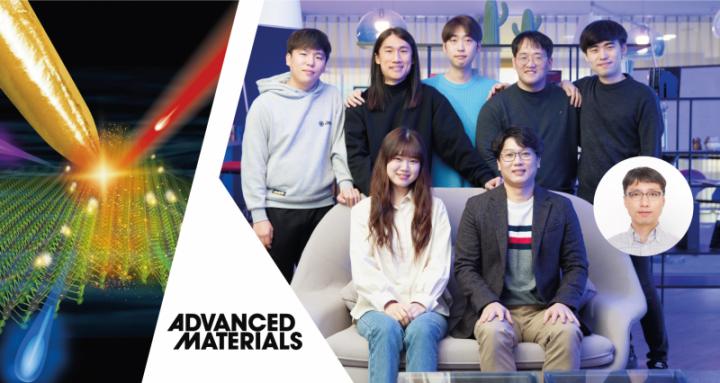
A research team, led by Professor Kyoung-Duck Park in the Department of Physics at UNIST has succeeded in investigating and controlling the physical properties of naturally-formed nanoscale wrinkles in two-dimensional (2D) semiconductors. This is thanks to their previously-developed hyperspectral adaptive tip-enhanced photoluminescence (a-TEPL) spectroscopy. This will be a major step forward in developing paper-thin, ultra-flexible displays.

Wrinkles are an inevitable structural deformation in 2D semiconductor materials, which gives rise to spatial heterogeneity in material properties, according to the research team. Such structural deformation has long been considered one of the top technical challenges in semiconductor manufacturing, as this would harm the uniformity in structural, electrical, and optical properties of semiconductors. Besides, because the size of these wrinkles is quite small, the accurate analysis of their structural, optical, and excitonic properties has been impossible with conventional spectroscopic tools. “Recent strain-engineering approaches have enabled to tune of some of these properties, yet there has been no attempt to control the induced strain of naturally-formed nanoscale wrinkles, while simultaneously investigating their modified nano-optical properties,” noted the research team.

In this study, the research team presented a hyperspectral TEPL nano-imaging approach, combined with nano-optomechanical strain control, to investigate and control the nano-optical and -excitonic properties of naturally-formed wrinkles in a WSe2 ML. This approach allowed them to reveal the modified electronic properties and exciton behaviors at the wrinkle, associated with the induced uniaxial tensile strain at the apex. Based on this, the research team was able to exploit the wrinkle structure as a nanoscale strain-engineering platform. The precise atomic force tip control also enabled them to engineer the excitonic properties of TMD MLs at the nano-local regions in a fully reversible fashion, noted the research team.

The research team further presented a more systematic platform for dynamic nano-emission control of the wrinkle by demonstrating programmably-operational switching and modulation modes in time and space. “We envision that our approach gives access to potential applications in quantum-nanophotonic devices, such as bright nano-optical sources for light-emitting diodes, nano-optical switch/multiplexer for optical integrated circuits, and exciton condensate devices,” said the research team.

Meanwhile, Professor Ki Kang Kim and Dr. Soo Ho Choi from Sungkyunkwan University, and Professor Hyun Seok Lee from Chungbuk National University participated in the production of 2D semiconductor materials used in the study. Professor Geunsik Lee and Dr. Yongchul Kim from the Department of Chemistry at UNIST also participated in the theoretical calculation of the findings.

The findings of this research have been published in the online version of Advanced Materials, ahead of print, on May 11, 2021. It has also been selected as the front cover of the April 2021 issue of the journal. Besides, the source technology of this nano-mechanical strain-engineering was granted an official patent.

###

Media Contact
JooHyeon Heo
[email protected]

Original Source

https://news.unist.ac.kr/new-study-presents-tip-induced-nano-engineering-of-strain-bandgap-and-exciton-funneling-in-2d-semiconductors/

Tags: Atomic/Molecular/Particle PhysicsChemistry/Physics/Materials SciencesMaterialsSuperconductors/Semiconductors
Share12Tweet8Share2ShareShareShare2

Related Posts

Plasma Technology Extends Catalyst Lifespan in Hydrogen Production

June 24, 2026

Electric Field and Oxygen Spillover Collaborate to Control Electrode Migration in SOECs

June 24, 2026

Innovative Speckle-Based Metrology System Advances Precision Measurement of Next-Generation X-Ray Mirrors

June 24, 2026

Water-Activated PVA Film Transforms from Bioplastic to High-Performance Wood Adhesive

June 24, 2026
Please login to join discussion

POPULAR NEWS

  • Saying Goodbye to PGY-6: Pediatric Fellowship Realities

    103 shares
    Share 41 Tweet 26
  • Multi-Hospital Study Reveals Long Covid Burden Is Twice as High as Current Estimates

    92 shares
    Share 36 Tweet 23
  • Detection of EDCs in Breast Milk and Infant Urine Up to Six Months Highlights Early Exposure Risks

    77 shares
    Share 31 Tweet 19
  • New Drug Candidate Developed at McMaster Shows Potential for Treating Brain Cancer

    58 shares
    Share 23 Tweet 15

About

We bring you the latest biotechnology news from best research centers and universities around the world. Check our website.

Follow us

Recent News

Late Neanderthal Genetic Diversity in Northwest Europe

Global Mining Threatens Forest Conservation Inside, Outside Protected Areas

Gene Variant rs11030119 Impacts BDNF Platelet Function

Subscribe to Blog via Email

Enter your email address to subscribe to this blog and receive notifications of new posts by email.

Join 82 other subscribers
  • Contact Us

Bioengineer.org © Copyright 2023 All Rights Reserved.

Welcome Back!

Login to your account below

Forgotten Password?

Retrieve your password

Please enter your username or email address to reset your password.

Log In
No Result
View All Result
  • Homepages
    • Home Page 1
    • Home Page 2
  • News
  • National
  • Business
  • Health
  • Lifestyle
  • Science

Bioengineer.org © Copyright 2023 All Rights Reserved.