


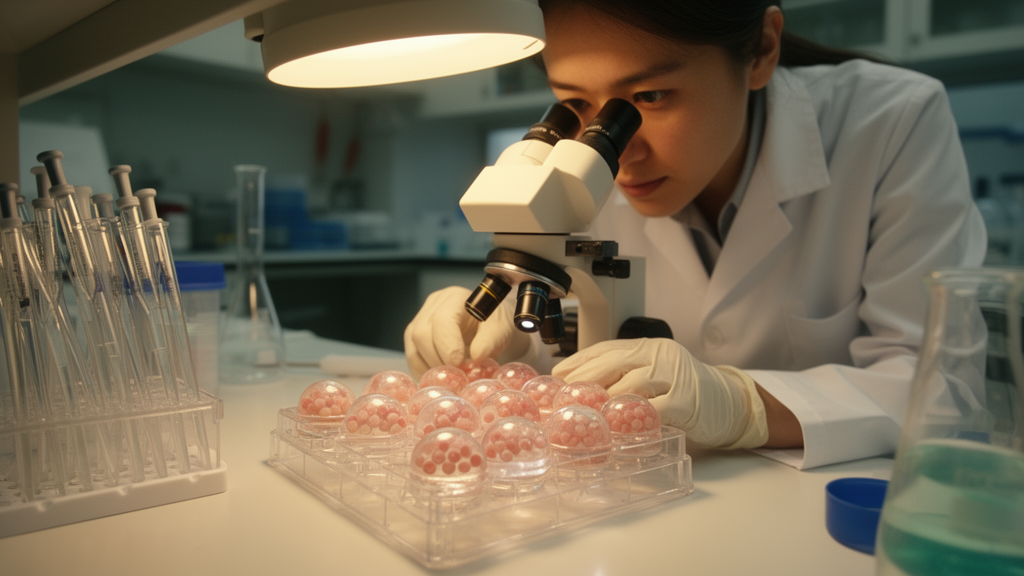
Breast cancer researchers have published a consensus-oriented standard describing, for the first time, unified procedures for establishing, validating and applying patient-derived breast cancer organoids grown from a wide range of clinical sample types. The document, released as an open access article in Cell Regeneration, addresses a gap that has long frustrated the field: laboratories around the world have been growing these miniature tumor models with protocols that differ so widely that results are difficult to reproduce or compare across studies.
Patient-derived organoids, or PDOs, are three-dimensional cellular structures grown in vitro from primary tumor tissue, stem cells or circulating tumor cells. Unlike conventional two-dimensional cell lines or patient-derived xenografts, organoids preserve the histopathological architecture, genetic alterations and molecular characteristics of the original tumors far more faithfully. According to the authors, increasing evidence suggests that organoid-based drug testing can recapitulate patient-specific treatment responses, which supports their potential role in translational research and personalized therapy. Yet despite this promise, the absence of standardized procedures across laboratories has limited reproducibility and clinical applicability.
The new standard covers organoids derived from surgical tissues, core needle biopsies, pleural effusion, ascites and circulating tumor cells, a breadth that matters clinically because patients with advanced disease often have no surgical specimen available. The authors note that organoids from different specimen types exhibit distinct biological and technical characteristics, owing to inherent differences in cellular composition, tumor cell abundance, sample processing and culture requirements. Protocols optimized for surgical tissue, they caution, are often not directly applicable to biopsy- or fluid-derived samples, which is precisely why the document tailors workflows to each source.
The operational recommendations are strikingly concrete. For surgical samples, the standard specifies that the primary tumor mass should be no less than 1.0 centimeter and metastatic masses no less than 0.5 centimeter; fresh tumor tissue roughly 2 to 3 millimeters thick is taken along the longest tumor diameter, avoiding necrotic tissue, then rinsed in pre-chilled buffer and stripped of fat, necrosis and blood vessels. Biopsy specimens are obtained with a 15G needle, with two samples required, each at least 1 by 10 by 10 cubic millimeters. For malignant body fluids, 100 to 500 milliliters of pleural or ascitic fluid retained within the past three hours is collected, filtered and centrifuged, with red blood cell lysis buffer applied when needed. Circulating tumor cell work begins with 10 to 20 milliliters of peripheral blood, and because CTCs are scarce, enrichment may involve immunoaffinity capture, microfluidic sorting or, optionally, in vivo expansion through xenograft models, an approach the authors flag as not yet universally standardized.
Culture conditions are similarly specified. Surgical tumor tissue is cut into 0.3 cubic millimeter blocks, digested with collagenase for 60 minutes and no more than 90, filtered, centrifuged and resuspended in matrix gel before plating into pre-warmed 24-well plates. Cultures run at 37 degrees Celsius with 5 percent carbon dioxide, with medium changes every three days and a growth cycle of roughly five to seven days per generation for surgical-tissue organoids. Biopsy-derived organoids need a shorter digestion of 15 to 30 minutes and grow over seven to fourteen days per generation, while body-fluid-derived organoids have medium changed every two to three days. The standard even anticipates a common pitfall: fibroblasts in pleural and peritoneal fluid samples can outgrow tumor cells, so timely passage is required if large numbers of fibroblasts adhere and proliferate.
Perhaps the most consequential contribution is a set of quantitative validation criteria defining when an organoid line counts as successfully established. Under the standard, breast cancer organoids must form stable three-dimensional structures within three to seven days of seeding, survive at least three serial passages, reach a tumor cell purity of at least 50 percent unless co-culture models are intended, show histological similarity to the parental tumor by hematoxylin and eosin staining, express concordantly at least one clinically relevant marker among ER, PR and HER2, and remain free of microbial contamination. Morphologically, most breast cancer organoids form three-dimensional spheres 100 to 150 micrometers in diameter, either solid or hollow, and after thawing, at least half the organoids present before cryopreservation should survive and remain capable of passage.
Beyond basic culture, the document extends into advanced co-culture systems designed to capture more of the tumor microenvironment. Immune-tumor organoid systems pair tumor organoids with T cells, NK cells, dendritic cells, macrophages or tumor-infiltrating lymphocytes to model immune recognition and evasion, with validation indicators including viable immune cells at no less than 30 percent of initial input after 72 hours, expression of activation markers such as CD69 and IFN-γ, and evidence of tumor cell killing defined as at least a 20 percent reduction in viability compared with controls. Neuro-tumor systems mix dissociated tumor organoids with mature neurons differentiated from human induced pluripotent stem cells, and validation requires axonal infiltration into the target region, synaptogenesis, neuronal markers such as βIII-tubulin and MAP2, and functional synchronized electrical activity. Microbiota-organoid systems co-culture identified intratumoral bacteria with organoids, requiring stable co-culture for at least 48 hours and evidence of functional interaction such as cytokine modulation or growth alteration.
The standard also codifies drug sensitivity testing in unusual detail, reflecting the technology’s central promise for precision oncology. Organoids at passages three to five are dissociated and seeded at a standardized density of 1,000 cells per well in 384-well plates, on a base layer of medium mixed 1:1 with basement membrane matrix. Before drugs are added, representative wells are checked microscopically to confirm that micro-organoids have formed and reached a target diameter of 50 to 150 micrometers. Each drug is tested across a seven-point concentration gradient prepared by threefold serial dilution, anchored to the previously reported clinical plasma concentration as the median value, with wells run in triplicate and solvent-only controls alongside blank wells for background subtraction. After a standardized 96-hour drug exposure, responses are read out in two ways: morphological assessment to confirm drug-induced structural disruption, and a quantitative ATP-based three-dimensional viability assay measured by luminescence. Dose-response curves are generated and half-maximal inhibitory concentration, or IC50, values are calculated by non-linear regression.
The document’s illustrative figures show what this looks like in practice, including dose-response curves for doxorubicin-resistant and doxorubicin-sensitive patient-derived organoid lines, with sensitive organoids showing a marked decrease in viability starting at sub-micromolar concentrations and resistant organoids maintaining viability at 2 micromolar drug. Representative images depict immune cell infiltration and tumor cell killing in co-cultures with CD8-positive T cells and CAR-NK cells, and bacterial invasion into organoids in the microbiota system, with inflammatory factors such as IFNα and IL-1β measured to characterize functional features of the co-culture.
Logistics receive their own chapters, underscoring how much of organoid quality depends on what happens before cells ever reach the incubator. Fresh tissue or biopsy specimens must travel in pre-cooled commercial tissue preservation solution for less than 24 hours, and fluid samples must be collected within three hours of retention; transport records must capture the mode of transport, temperatures during transport and on receipt, start and end times, and the names of transport and receiving personnel, in line with the Chinese national standard GB/T 37864—2019. Labels must list the organoid code, passage number, batch number, manufacturing organization and production date, while cryopreservation records must document the cryoprotectant composition, operator, storage conditions and duration. Ethical requirements are equally explicit: tissue and fluid collection requires prior ethics committee approval, written informed consent before collection, and donor privacy handling under GB/T 38736—2020, with sample-handling personnel required to hold professional training in biosafety and organoid technology.
The authors frame the effort as a step toward harmonizing methodologies, improving cross-study comparability and accelerating the clinical implementation of breast cancer organoid-based precision medicine. Breast cancer remains the most commonly diagnosed malignancy and a leading cause of cancer-related mortality among women worldwide, and therapeutic resistance, recurrence and metastasis persist despite advances in early detection and targeted therapies. Whether a consensus standard can translate laboratory enthusiasm into reproducible clinical tools will depend on adoption, but the document gives the field, for the first time, a shared yardstick for what a valid breast cancer organoid actually is.
Subject of Research: A consensus standard for establishing, validating and applying patient-derived breast cancer organoids from diverse clinical sample sources
Article Title: Standard: human breast cancer organoids derived from diverse clinical sample sources
Article References: Chen, Z., Xu, N., Chen, M., Hu, J., Yu, Z., Zhu, S., Zhang, Y., Zhang, R., Wang, K., Wang, S., Gao, D., Ma, F., Zhang, J., Wu, J., Xu, B., Song, E., & Huang, J. (2026). Standard: human breast cancer organoids derived from diverse clinical sample sources. Cell Regeneration, 15(1), Article 19. https://doi.org/10.1186/s13619-026-00291-z
Image Credits: AI Generated
DOI: 10.1186/s13619-026-00291-z
Keywords: breast cancer, patient-derived organoids, organoid standardization, precision oncology, drug sensitivity testing, circulating tumor cells, tumor microenvironment, immune co-culture, cryopreservation, quality control, 3D cell culture, Cell Regeneration
News Source: Nathaniel Bowman. (October 29, 2026). New Standard Sets Unified Rules for Growing Breast Cancer Organoids. Scienmag.



