• HOME
  • NEWS
  • EXPLORE
    • CAREER
      • Companies
      • Jobs
    • EVENTS
    • iGEM
      • News
      • Team
    • PHOTOS
    • VIDEO
    • WIKI
  • BLOG
  • COMMUNITY
    • FACEBOOK
    • INSTAGRAM
    • TWITTER
Monday, May 11, 2026
BIOENGINEER.ORG
No Result
View All Result
  • Login
  • HOME
  • NEWS
  • EXPLORE
    • CAREER
      • Companies
      • Jobs
        • Lecturer
        • PhD Studentship
        • Postdoc
        • Research Assistant
    • EVENTS
    • iGEM
      • News
      • Team
    • PHOTOS
    • VIDEO
    • WIKI
  • BLOG
  • COMMUNITY
    • FACEBOOK
    • INSTAGRAM
    • TWITTER
  • HOME
  • NEWS
  • EXPLORE
    • CAREER
      • Companies
      • Jobs
        • Lecturer
        • PhD Studentship
        • Postdoc
        • Research Assistant
    • EVENTS
    • iGEM
      • News
      • Team
    • PHOTOS
    • VIDEO
    • WIKI
  • BLOG
  • COMMUNITY
    • FACEBOOK
    • INSTAGRAM
    • TWITTER
No Result
View All Result
Bioengineer.org
No Result
View All Result
Home NEWS Science News Biology

New species of freshwater Crustacea found in the hottest place on earth

Bioengineer by Bioengineer
September 3, 2020
in Biology
Reading Time: 3 mins read
0
IMAGE
Share on FacebookShare on TwitterShare on LinkedinShare on RedditShare on Telegram

IMAGE

Credit: M. Pallmann
SMNS / Pallmann

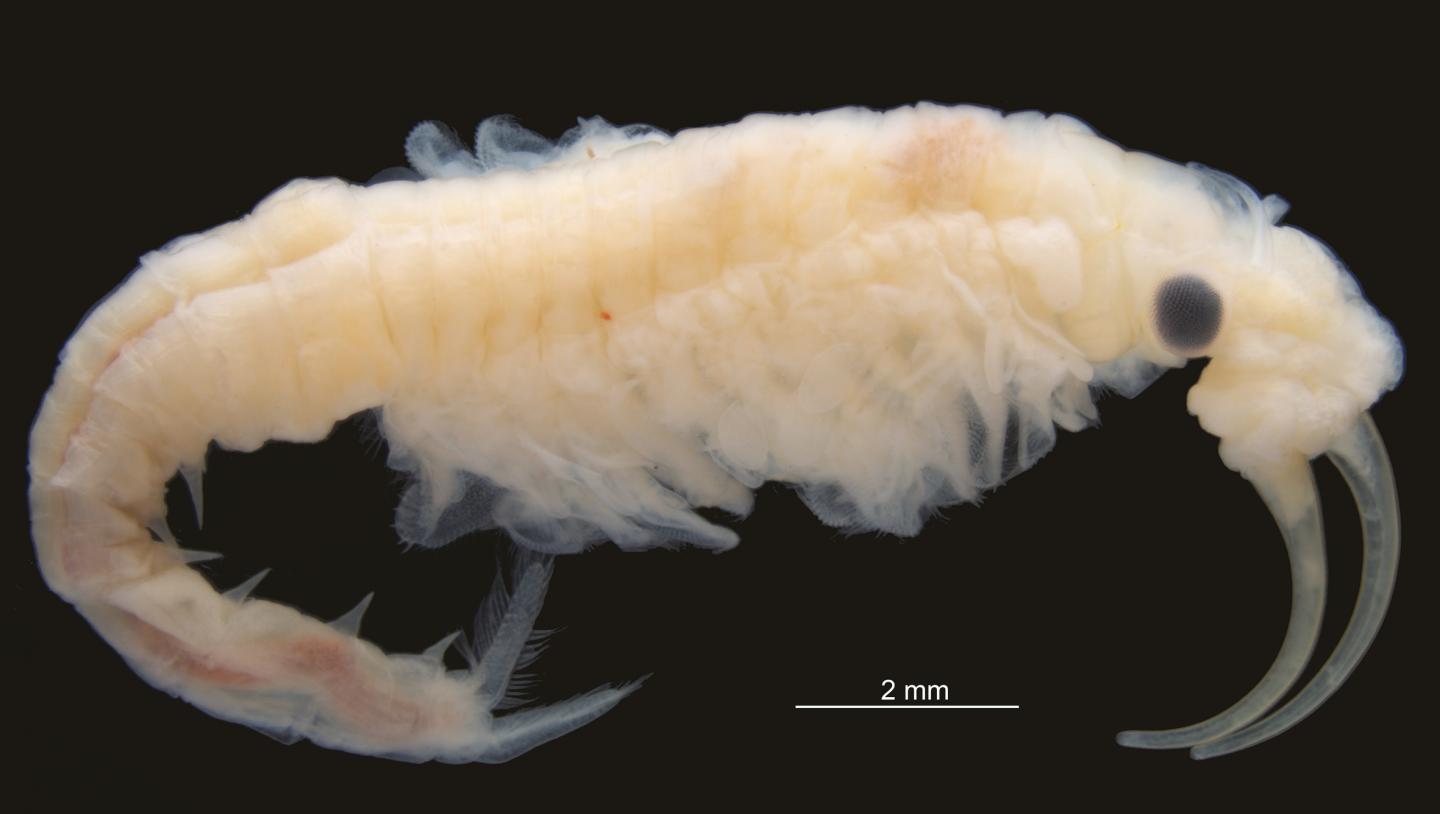
A new species of freshwater Crustacea has been discovered during an expedition of the desert Lut, known as the hottest place on Earth.

The newly identified species belongs to the genus Phallocryptus of which only four species were previously known from different arid and semiarid regions.

Dr Hossein Rajaei from the Stuttgart State Museum of Natural History and Dr Alexander V Rudov from Tehran University made the discovery during an expedition of Lut to better understand the desert’s ecology, biodiversity, geomorphology and paleontology.

Further scientific examinations of the specimens by co-author Dr Martin Schwentner, Crustacea specialist from the Natural History Museum of Vienna, stated that they belong to a new species of freshwater Crustacea.

Publishing their findings in Zoology in the Middle East, the biologists name the new species Phallocryptus fahimii, in honor of the Iranian conservation biologist, Hadi Fahimi, who took part in the 2017 expedition and sadly died in an airplane crash in 2018.

Dr Rajaei, an entomologist from State Museum of Natural History Stuttgart, who actually found the species in a small seasonal lake in southern part of the desert says the discovery is “sensational”.

“During an expedition to such an extreme place you are always on alert, in particular when finding water. Discovering crustaceans in this otherwise hot and dry environment was really sensational.”

The team’s study explains how Phallocryptus fahimii differs in its overall morphology and its genetics from all other known Phallocryptus species.

Dr Schwentner, who has worked with similar crustaceans from the Australian deserts in the past, adds: “These Crustaceans are able to survive for decades in the dried-out sediment and will hatch in an upcoming wet season, when the aquatic habitat refills. They are perfectly adapted to live in deserts environments. Their ability to survive even in the Lut desert highlights their resilience.”

The Lut desert – also known as Dasht-e Lut – is the second largest desert in Iran.

Located between 33° and 28° parallels and with its 51,800 km2 larger than Switzerland, this desert holds the current record for the highest ever-recorded surface temperature. Based on 2006 satellite measurements, the NASA reported a record surface temperature of 70.7°C, which more recently has been increased to even 80.3°C. Dark pebbles that heat up are one of the causes of these record temperatures. Mean daily temperatures range from -2.6°C in winter to 50.4°C in summer with annual precipitation not exceeding 30 mm per year.

Almost deprived of vegetation, the Lut desert harbors a diverse animal life, but no permanent aquatic biotops (such as ponds).

After rain falls, non-permanent astatic water bodies are filled including the Rud-e-Shur river from north-western Lut.

Here a diverse community of Archaea has been described but aquatic life in the Lut remains highly limited, which makes this find particularly rare.

###

Media Contact
Simon Wesson
[email protected]

Original Source

https://newsroom.taylorandfrancisgroup.com/new-species-of-freshwater-crustacea-found-in-the-hottest-place-on-earth/

Related Journal Article

http://dx.doi.org/10.1080/09397140.2020.1805139

Tags: BiodiversityBiologyEcology/EnvironmentFisheries/AquacultureGeographyHydrology/Water ResourcesMarine/Freshwater Biology
Share12Tweet8Share2ShareShareShare2

Related Posts

Ancient Plant Populations Reveal Fresh Insights into Climate Resilience — Biology

Ancient Plant Populations Reveal Fresh Insights into Climate Resilience

May 8, 2026
Rare Brain Disorders in Children Linked to Mutations in Lesser-Known Protein Complex — Biology

Rare Brain Disorders in Children Linked to Mutations in Lesser-Known Protein Complex

May 8, 2026

From Odd Insect to Underwater Predator: The Remarkable Evolution of a Bloodthirsty Fruit Fly

May 8, 2026

SNU Professor Sangwoo Seo’s Team Develops Next-Generation CRISPR Biocontainment Technology to Control Microbial Survival Without DNA Cleavage

May 8, 2026
Please login to join discussion

POPULAR NEWS

  • Research Indicates Potential Connection Between Prenatal Medication Exposure and Elevated Autism Risk

    840 shares
    Share 336 Tweet 210
  • New Study Reveals Plants Can Detect the Sound of Rain

    727 shares
    Share 290 Tweet 181
  • Salmonella Haem Blocks Macrophages, Boosts Infection

    61 shares
    Share 24 Tweet 15
  • Breastmilk Balances E. coli and Beneficial Bacteria in Infant Gut Microbiomes

    57 shares
    Share 23 Tweet 14

About

We bring you the latest biotechnology news from best research centers and universities around the world. Check our website.

Follow us

Recent News

New Post-Hoc Analysis Explores Daily Oral Orforglipron Use in Adults Over 65 with Obesity, Regardless of Diabetes Status

Evaluating Digoxin Use in Patients with Symptomatic Rheumatic Heart Disease

Evaluating the Effectiveness and Safety of Digitalis Glycosides in Treating Heart Failure

Subscribe to Blog via Email

Enter your email address to subscribe to this blog and receive notifications of new posts by email.

Join 82 other subscribers
  • Contact Us

Bioengineer.org © Copyright 2023 All Rights Reserved.

Welcome Back!

Login to your account below

Forgotten Password?

Retrieve your password

Please enter your username or email address to reset your password.

Log In
No Result
View All Result
  • Homepages
    • Home Page 1
    • Home Page 2
  • News
  • National
  • Business
  • Health
  • Lifestyle
  • Science

Bioengineer.org © Copyright 2023 All Rights Reserved.