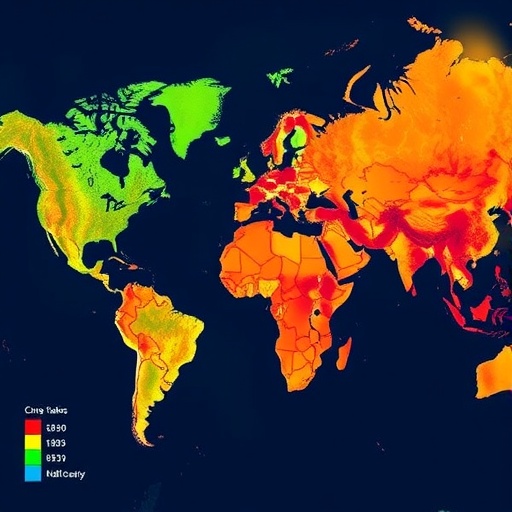
In a decisive step towards understanding the intricate interplay between climate dynamics and infectious diseases, two leading scientific organizations—the American Academy of Microbiology, a prestigious cadre within the American Society for Microbiology (ASM), and the American Geophysical Union (AGU)—have unveiled a comprehensive report that delves into how climate change is reshaping the landscape of infectious diseases globally. This report emerges as a critical resource in the ongoing quest to fortify global health systems against the mounting challenges posed by a warming planet.
The report meticulously examines how climatic variables—ranging from fluctuations in temperature and precipitation patterns to the inexorable rise of sea levels and the increasing frequency of extreme weather phenomena—profoundly influence the ecology and evolution of infectious disease agents. These climatic alterations modulate the distribution and prevalence of pathogens, their reservoirs, and vectors, culminating in the emergence of novel infectious threats and the re-emergence of diseases in regions historically unburdened by them. Such shifts underscore the complex biological responses to environmental stressors and signal an urgent need to recalibrate public health strategies.
Developed by a consortium of leading scientists, the report builds upon robust dialogues initiated at an October 2025 colloquium orchestrated by ASM and AGU, with critical support from the American Society of Tropical Medicine and Hygiene and the Burroughs Wellcome Fund. This scholarly collaboration highlights pivotal research domains aimed at enhancing infectious disease attribution science. At its core, the report advocates for the construction of agile, resilient public health frameworks that transcend disciplinary boundaries and national borders, emphasizing the importance of a holistic, globally coordinated response to the infectious diseases climate nexus.
A glaring consensus within the scientific community, as emphasized by the authors, is the imperative to transition beyond mere correlative studies linking climate variables with disease patterns. The report identifies an acute need for sophisticated detection methods and detailed attribution studies capable of parsing specific climate-driven factors that directly influence health outcomes. Such precision is paramount to translate epidemiological insights into actionable guidance, empowering health agencies to tailor interventions effectively and anticipate future disease trajectories with heightened accuracy.
Jay Lennon, Ph.D., Co-Chair of the Colloquium Steering Committee and Chair of the Academy Climate Change Task Force, elucidates the unprecedented velocity at which infectious disease risks are advancing into regions previously considered low-risk. “Climate change is moving infectious disease risks into new areas, often faster than health systems can respond,” Lennon articulates, underscoring the necessity of state-of-the-art detection and attribution science. This scientific groundwork promises to furnish predictive capabilities that are vital for public health preparedness, allowing system architects to strategically allocate resources and devise containment strategies preemptively.
Complementing this perspective, Madeleine Thomson, Ph.D., a pivotal member of the Colloquium Steering Committee and Head of Climate Impacts and Adaptation at the Wellcome Trust, emphasizes the indispensable role of interdisciplinary collaboration. She advocates for the convergence of microbiologists, climate scientists, epidemiologists, and data modelers, suggesting that such integrative efforts can revolutionize surveillance systems. By amalgamating diverse scientific insights and innovative analytical methodologies, these systems are envisioned to become more agile, predictive, and efficacious in safeguarding populations worldwide against the evolving microbial threats exacerbated by climate perturbations.
This seminal report marks the culmination of the Academy’s five-year Climate Change & Microbes Scientific Portfolio initiative, which ambitiously sought to propel microbial science at the vanguard of climate policy advancements and innovation in global markets. It succeeds the 2025 ASM–AGU collaboration report focused on mitigating waterborne infections amid climate-driven water system disruptions, signaling a sustained commitment to addressing multifaceted microbial challenges at the climate interface.
Going forward, ASM’s Applied and Environmental Microbiology (AEM) Scientific Unit pledges to build upon the insights unearthed through this portfolio, translating microbial research into pragmatic solutions that enhance climate resilience. This trajectory of research translation aligns with ASM’s mission to foster microbial science innovations that are both scientifically rigorous and socially impactful, laying the groundwork for robust, climate-adaptive health infrastructures. The Academy also intimates the forthcoming announcement of its next scientific portfolio, promising continued momentum in this strategic research arena.
Central to the report’s findings is the recognition that the dynamic relationships between climate change and infectious diseases demand a paradigm shift in public health surveillance and response. The report posits that current systems are often reactive and constrained by jurisdictional and disciplinary silos, which are inadequate to address the complex, globalized nature of emerging infectious threats. By advocating for integrated, transdisciplinary approaches facilitated by advancements in data analytics, remote sensing, and predictive modeling, the report envisions a transformative leap towards proactive and anticipatory public health paradigms.
Moreover, integrating climate impact assessments into infectious disease modeling holds significant promise. The report highlights that robust epidemiological models incorporating climate variables can elucidate mechanisms behind disease outbreaks, identify emerging hotspots, and forecast future trends under various climate scenarios. Such models serve as invaluable tools for policymakers, enabling informed decision-making that balances ecological, socio-economic, and health considerations within an uncertain and rapidly changing environment.
The report further underscores the disproportionate burden of climate-exacerbated infectious diseases on vulnerable populations, including low-income communities and regions with limited healthcare infrastructure. This inequity necessitates a global health equity framework that dovetails climate adaptation strategies with social determinants of health, ensuring that interventions not only anticipate epidemiological shifts but also address systemic vulnerabilities. The authors call for international cooperation to bolster capacities in resource-limited settings, fostering resilience that transcends borders and socio-economic strata.
Importantly, the report details emerging pathogens with pandemic potential that are influenced by climatic factors—ranging from vector-borne diseases such as dengue, Zika, and malaria to waterborne diseases exacerbated by flooding and water system disruptions. It advocates for enhanced genomic surveillance to track pathogen evolution in response to environmental pressures, which is critical for preempting outbreaks and guiding vaccine and therapeutic development.
In conclusion, this landmark report from the American Academy of Microbiology and the American Geophysical Union represents a clarion call to the global scientific community, public health practitioners, and policymakers. It elucidates that the confluence of climate change and infectious diseases constitutes a formidable challenge, demanding visionary leadership, interdisciplinary collaboration, and an unwavering commitment to science-driven action. Only through such concerted efforts can society hope to mitigate the escalating health risks posed by a transforming planet and safeguard future generations.
Subject of Research:
Role of Climate Change in Emerging and Reemerging Infectious Diseases
Article Title:
Climate Change Accelerates the Emergence and Reemergence of Infectious Diseases: Insights from a New Interdisciplinary Report
News Publication Date:
2026
Web References:
https://asm.org/reports/role-of-climate-change-on-emerging-and-reemerging
Keywords:
Climate Change, Infectious Diseases, Public Health, Microbial Ecology, Disease Surveillance, Climate Attribution, Epidemiology, Global Health Preparedness
Tags: climate change and infectious diseasesclimate resilience in health systemsclimate-driven disease emergenceextreme weather and disease outbreaksglobal health preparedness for climate threatsimpact of climate variability on pathogensinfectious disease ecology and climateinterdisciplinary climate-disease researchpublic health strategies for climate adaptationsea level rise and infectious disease risktemperature effects on disease transmissionvector-borne diseases and climate change