• HOME
  • NEWS
  • EXPLORE
    • CAREER
      • Companies
      • Jobs
    • EVENTS
    • iGEM
      • News
      • Team
    • PHOTOS
    • VIDEO
    • WIKI
  • BLOG
  • COMMUNITY
    • FACEBOOK
    • INSTAGRAM
    • TWITTER
Sunday, May 10, 2026
BIOENGINEER.ORG
No Result
View All Result
  • Login
  • HOME
  • NEWS
  • EXPLORE
    • CAREER
      • Companies
      • Jobs
        • Lecturer
        • PhD Studentship
        • Postdoc
        • Research Assistant
    • EVENTS
    • iGEM
      • News
      • Team
    • PHOTOS
    • VIDEO
    • WIKI
  • BLOG
  • COMMUNITY
    • FACEBOOK
    • INSTAGRAM
    • TWITTER
  • HOME
  • NEWS
  • EXPLORE
    • CAREER
      • Companies
      • Jobs
        • Lecturer
        • PhD Studentship
        • Postdoc
        • Research Assistant
    • EVENTS
    • iGEM
      • News
      • Team
    • PHOTOS
    • VIDEO
    • WIKI
  • BLOG
  • COMMUNITY
    • FACEBOOK
    • INSTAGRAM
    • TWITTER
No Result
View All Result
Bioengineer.org
No Result
View All Result
Home NEWS Science News Chemistry

New fault zone measurements could help us to understand subduction earthquake

Bioengineer by Bioengineer
October 30, 2020
in Chemistry
Reading Time: 2 mins read
0
IMAGE
Share on FacebookShare on TwitterShare on LinkedinShare on RedditShare on Telegram

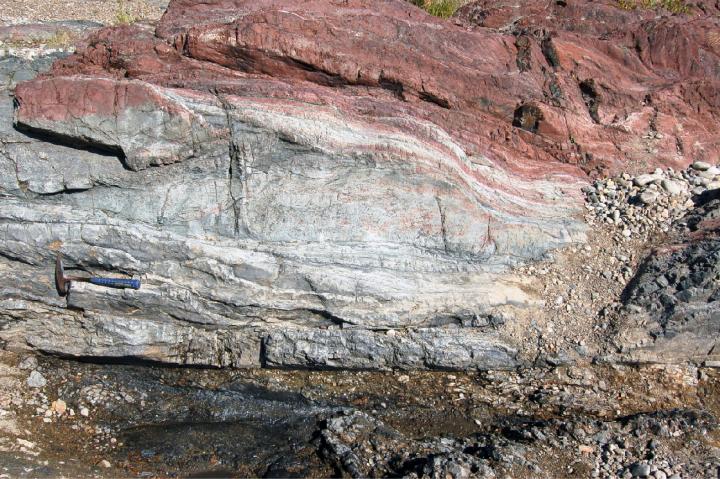
Researchers from the University of Tsukuba conducted detailed measurements of rocks formed by seismic slips in an exposed subduction zone in central Japan to help us understand subduction earthquake
IMAGE

Credit: University of Tsukuba

Tsukuba, Japan – A research team from the University of Tsukuba has conducted detailed structural analyses of a fault zone located in central Japan, with the aim to help identify the specific conditions that lead to earthquake faulting, a hazard that can cause enormous social damage. Subduction is a geological process that takes place in areas where two tectonic plates meet, such as the Japan Trench, in which one plate moves under another and is forced to sink. Regions in which this process occurs are known as subduction zones and the seismic activity that they produce causes devastating damage through ground shaking and tsunamis. However, understanding these seismic processes can be difficult because of the problems associated with taking measurements from their deepest sections, where much of the activity occurs. “To overcome this problem, we examined fault rocks exhumed from source depths of subduction earthquakes, which are now exposed at the land surface at the Jurassic accretionary complex in central Japan,” explains study lead author Professor Kohtaro Ujiie. “At this complex, we were able to examine pseudotachylyte, a solidified frictional melt produced during subduction earthquakes, to help us to infer what may occur in the subduction zones deep beneath the oceans.” The exposed fault zone was characterized through a range of measurements such as scanning electron microscope and Raman spectroscopy to provide a detailed picture of the pseudotachylytes and make some constraints about the heating conditions at the time of formation. “The pseudotachylyte at the site derived from the frictional melting of black carbonaceous mudstone together with chert, which accumulated under low-oxygen conditions,” says Ujiie. “Thermal fracturing tends to occur along slip zones flanked by rocks with high thermal diffusivities such as chert, and may happen during seismic slip within the Jurassic accretionary complex. This thermal fracturing could lead to a fluid pressure drop in the slip zone and reduction in stiffness of surrounding rocks, potentially contributing to the generation of frictional melt and acceleration of seismic slip.” The seismic slip processes recorded in the studied complex may be applicable to other fault zones with similar rock layers, such as the Japan Trench subduction zone. Therefore, the data gathered from this area could be useful in future attempts to describe or model the subduction earthquakes that lead to ground shaking and tsunami risk.

###

The article, “Frictional melting and thermal fracturing recorded in pelagic sedimentary rocks of the Jurassic accretionary complex, central Japan” was published in Earth and Planetary Science Letters at DOI: 10.1016/j.epsl.2020.116638

Media Contact
Naoko Yamashina
[email protected]

Related Journal Article

http://dx.doi.org/10.1016/j.epsl.2020.116638

Tags: Earth ScienceGeographyGeology/SoilGeophysics/GravityPlate Tectonics
Share12Tweet8Share2ShareShareShare2

Related Posts

Miniature Sensor Uses Light to Detect Touch — Chemistry

Miniature Sensor Uses Light to Detect Touch

May 8, 2026
Iron Minerals Determine Whether Dissolved Organic Matter Fuels Microbes or Becomes Long-Term Carbon Storage — Chemistry

Iron Minerals Determine Whether Dissolved Organic Matter Fuels Microbes or Becomes Long-Term Carbon Storage

May 8, 2026

Kate Evans Appointed Associate Lab Director for Biological and Environmental Systems Science at ORNL

May 8, 2026

Advancing Multiscale Modeling and Overcoming Operational Challenges in Autothermal COâ‚‚-to-Methanol Reactors

May 8, 2026
Please login to join discussion

POPULAR NEWS

  • Research Indicates Potential Connection Between Prenatal Medication Exposure and Elevated Autism Risk

    840 shares
    Share 336 Tweet 210
  • New Study Reveals Plants Can Detect the Sound of Rain

    727 shares
    Share 290 Tweet 181
  • Scientists Investigate Possible Connection Between COVID-19 and Increased Lung Cancer Risk

    68 shares
    Share 27 Tweet 17
  • Salmonella Haem Blocks Macrophages, Boosts Infection

    61 shares
    Share 24 Tweet 15

About

We bring you the latest biotechnology news from best research centers and universities around the world. Check our website.

Follow us

Recent News

Evaluating Digoxin Use in Patients with Symptomatic Rheumatic Heart Disease

Evaluating the Effectiveness and Safety of Digitalis Glycosides in Treating Heart Failure

Urdu Fall Risk Questionnaire Adapted for Elderly

Subscribe to Blog via Email

Enter your email address to subscribe to this blog and receive notifications of new posts by email.

Join 82 other subscribers
  • Contact Us

Bioengineer.org © Copyright 2023 All Rights Reserved.

Welcome Back!

Login to your account below

Forgotten Password?

Retrieve your password

Please enter your username or email address to reset your password.

Log In
No Result
View All Result
  • Homepages
    • Home Page 1
    • Home Page 2
  • News
  • National
  • Business
  • Health
  • Lifestyle
  • Science

Bioengineer.org © Copyright 2023 All Rights Reserved.