• HOME
  • NEWS
  • EXPLORE
    • CAREER
      • Companies
      • Jobs
    • EVENTS
    • iGEM
      • News
      • Team
    • PHOTOS
    • VIDEO
    • WIKI
  • BLOG
  • COMMUNITY
    • FACEBOOK
    • INSTAGRAM
    • TWITTER
Friday, May 15, 2026
BIOENGINEER.ORG
No Result
View All Result
  • Login
  • HOME
  • NEWS
  • EXPLORE
    • CAREER
      • Companies
      • Jobs
        • Lecturer
        • PhD Studentship
        • Postdoc
        • Research Assistant
    • EVENTS
    • iGEM
      • News
      • Team
    • PHOTOS
    • VIDEO
    • WIKI
  • BLOG
  • COMMUNITY
    • FACEBOOK
    • INSTAGRAM
    • TWITTER
  • HOME
  • NEWS
  • EXPLORE
    • CAREER
      • Companies
      • Jobs
        • Lecturer
        • PhD Studentship
        • Postdoc
        • Research Assistant
    • EVENTS
    • iGEM
      • News
      • Team
    • PHOTOS
    • VIDEO
    • WIKI
  • BLOG
  • COMMUNITY
    • FACEBOOK
    • INSTAGRAM
    • TWITTER
No Result
View All Result
Bioengineer.org
No Result
View All Result
Home NEWS Science News Chemistry

New electrodes could increase efficiency of electric vehicles and aircraft

Bioengineer by Bioengineer
November 22, 2019
in Chemistry
Reading Time: 3 mins read
0
IMAGE
Share on FacebookShare on TwitterShare on LinkedinShare on RedditShare on Telegram

IMAGE

Credit: Texas A&M Engineering

The rise in popularity of electric vehicles and aircraft presents the possibility of moving away from fossil fuels toward a more sustainable future. While significant technological advancements have dramatically increased the efficiency of these vehicles, there are still several issues standing in the way of widespread adoption.

One of the most significant of these challenges has to do with mass, as even the most current electric vehicle batteries and supercapacitors are incredibly heavy. A research team from the Texas A&M University College of Engineering is approaching the mass problem from a unique angle.

Most of the research aimed at lowering the mass of electric vehicles has focused on increasing the energy density, thus reducing the weight of the battery or supercapacitor itself. However, a team led by Dr. Jodie Lutkenhaus, professor in the Artie McFerrin Department of Chemical Engineering, believes that lighter electric vehicles and aircraft can be achieved by storing energy within the structural body panels. This approach presents its own set of technical challenges, as it requires the development of batteries and supercapacitors with the same sort of mechanical properties as the structural body panels. Specifically, batteries and supercapacitor electrodes are often formed with brittle materials and are not mechanically strong.

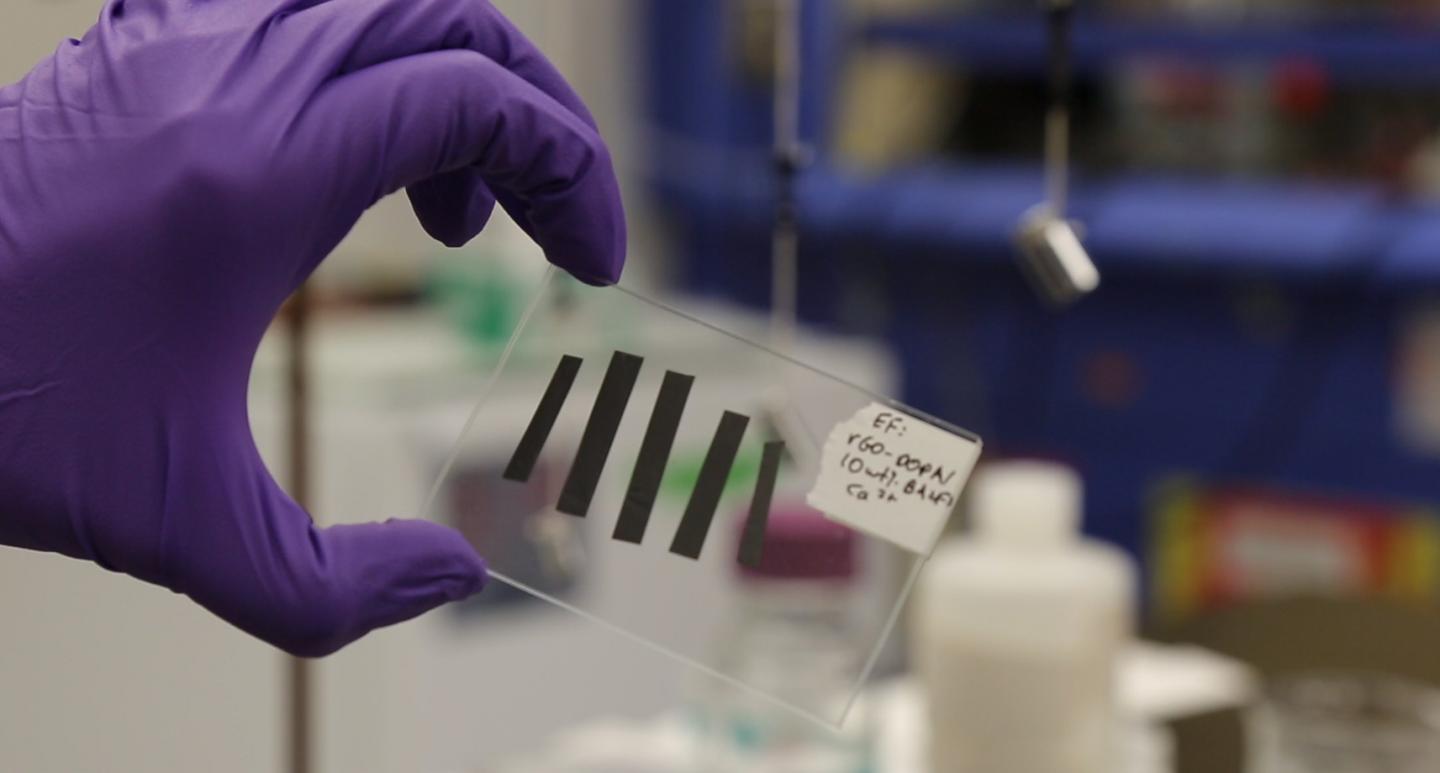
In an article published in Matter, the research team described the process of creating new supercapacitor electrodes that have drastically improved mechanical properties. In this work, the research team was able to create very strong and stiff electrodes based on dopamine functionalized graphene and Kevlar nanofibers. Dopamine, which is also a neurotransmitter, is a highly adhesive molecule that mimics the proteins that allow mussels to stick to virtually any surface. The use of dopamine and calcium ions leads to a significant improvement in mechanical performance.

In fact, in the article, researchers report supercapacitor electrodes with the highest, to date, multifunctional efficiency (a metric that evaluates a multifunctional material based on both mechanical and electrochemical performance) for graphene-based electrodes.

This research leads to an entirely new family of structural electrodes, which opens the door to the development of lighter electric vehicles and aircraft.

While this work mostly focused on supercapacitors, Lutkenhaus hopes to translate the research into creating sturdy, stiff batteries.

###

The research team includes Paraskevi Flouda, a doctoral student in the Department of Materials Science and Engineering and lead author of the article; Lutkenhaus, professor, Presidential Impact Fellow and holder of the William and Ruth Neely Faculty Fellowship in the Department of Chemical Engineering; Dr. Micah Green, associate professor, Nancy and Dan Zivney ’73 Faculty Fellow and director of the graduate program in the Department of Chemical Engineering; Dr. Dimitris Lagoudas, professor in the Department of Aerospace Engineering, University Distinguished Professor, John and Bea Slattery Chair Professor and senior associate dean for research; and Smit A. Shah, a doctoral student in the Department of Chemical Engineering.

Media Contact
Amy Halbert
[email protected]
979-458-4243

Original Source

https://engineering.tamu.edu/news/2019/11/new-electrodes-could-increase-efficiency-of-electric-vehicles-and-aircraft.html

Related Journal Article

http://dx.doi.org/10.1016/j.matt.2019.09.017

Tags: Chemistry/Physics/Materials SciencesEnergy SourcesEnergy/Fuel (non-petroleum)Industrial Engineering/ChemistryMaterials
Share12Tweet8Share2ShareShareShare2

Related Posts

Personalized beverages offer vital nutrients for space missions, new study reveals — Chemistry

Personalized beverages offer vital nutrients for space missions, new study reveals

May 15, 2026
Synthetic Cell Microreactor with Dual Dynamic DNA Pores — Chemistry

Synthetic Cell Microreactor with Dual Dynamic DNA Pores

May 15, 2026

Hanyang University Researchers Pinpoint 2.5 Nanometers as Minimum Coating Thickness for Durable Solid-State EV Batteries

May 15, 2026

Smart Hydrogels Revolutionize Information Security with Photo-Patterning and Multi-Stimuli Responsive Structural Colors

May 15, 2026
Please login to join discussion

POPULAR NEWS

  • Research Indicates Potential Connection Between Prenatal Medication Exposure and Elevated Autism Risk

    843 shares
    Share 337 Tweet 211
  • New Study Reveals Plants Can Detect the Sound of Rain

    729 shares
    Share 291 Tweet 182
  • Salmonella Haem Blocks Macrophages, Boosts Infection

    62 shares
    Share 25 Tweet 16
  • Breastmilk Balances E. coli and Beneficial Bacteria in Infant Gut Microbiomes

    58 shares
    Share 23 Tweet 15

About

We bring you the latest biotechnology news from best research centers and universities around the world. Check our website.

Follow us

Recent News

Personalized beverages offer vital nutrients for space missions, new study reveals

Innovative Ultrasonic Framework Enhances Real-Time Measurement of Oil Film Thickness in Rolling Bearings

HESpotEx: Deep Learning Predicts Gene Expression from Histology

Subscribe to Blog via Email

Enter your email address to subscribe to this blog and receive notifications of new posts by email.

Join 82 other subscribers
  • Contact Us

Bioengineer.org © Copyright 2023 All Rights Reserved.

Welcome Back!

Login to your account below

Forgotten Password?

Retrieve your password

Please enter your username or email address to reset your password.

Log In
No Result
View All Result
  • Homepages
    • Home Page 1
    • Home Page 2
  • News
  • National
  • Business
  • Health
  • Lifestyle
  • Science

Bioengineer.org © Copyright 2023 All Rights Reserved.