Research introduces new DNA methylation-based method for accurately assessing cell composition in the human pancreas, addressing a critical gap in diabetes research. By overcoming limitations of traditional protein marker-based approaches, the study provides a more precise means to identify specific cell types. The findings offer insights into beta-cell dysfunction across diabetes types and have direct clinical implications, enhancing our understanding of diabetes development and potentially guiding more tailored treatment strategies. This innovative molecular alternative to immunodetection methods holds promise for broader applications in molecular biology and diagnostics.
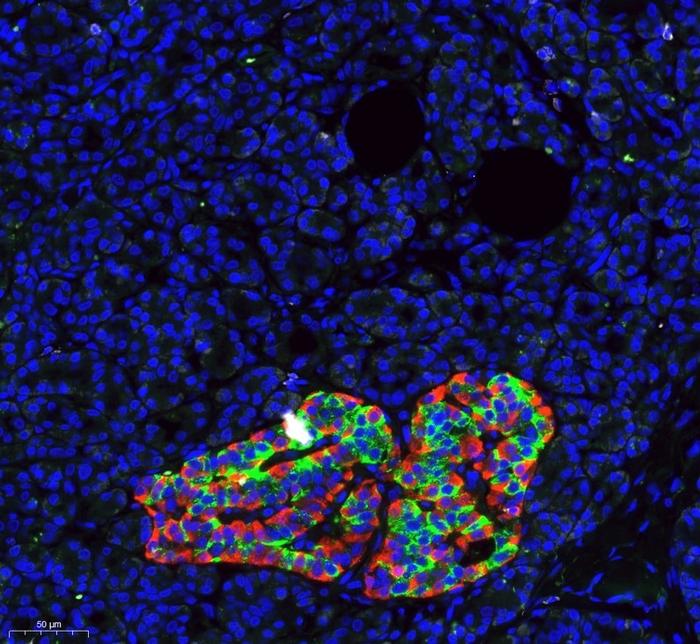
Credit: Zeina Drawshy, Dor Lab
Research introduces new DNA methylation-based method for accurately assessing cell composition in the human pancreas, addressing a critical gap in diabetes research. By overcoming limitations of traditional protein marker-based approaches, the study provides a more precise means to identify specific cell types. The findings offer insights into beta-cell dysfunction across diabetes types and have direct clinical implications, enhancing our understanding of diabetes development and potentially guiding more tailored treatment strategies. This innovative molecular alternative to immunodetection methods holds promise for broader applications in molecular biology and diagnostics.
[Hebrew University, Jerusalem, Israel] In a study published in Diabetes, Prof. Yuval Dor and his research team from Hebrew University have introduced a new approach for accurately assessing cell composition in the human pancreas and islets. The research addresses a critical need in understanding the genesis of diabetes and offers an alternative to traditional protein marker-based methods.
Current methodologies rely on the detection of protein markers, such as insulin, to identify specific cell types in the pancreas. However, the variability in protein content under different physiological and pathological conditions poses a significant limitation, complicating the accurate determination of cell numbers.
The study demonstrates the innovative use of cell type-specific DNA methylation markers to overcome these limitations. By identifying genomic loci uniquely demethylated in specific pancreatic cell types, the research team applied targeted PCR to assess the methylation status of these loci in human islet and pancreas specimens. This enabled a precise inference of cell type composition, offering a molecular alternative to traditional immunodetection methods.
The researchers looked at groups of cells in the pancreas called islets. They found that in people with different types of diabetes (pre-T1D, T1D, and T2D), the function of a specific type of cell called beta-cells was similar, but it was lower compared to people without diabetes. When they looked at pancreas tissues from people with recent-onset T1D, they found that the beta-cell function was within the normal range, suggesting a problem with these cells. In people with T2D, there were more of another type of cell called alpha-cells, but the beta-cell function was normal. This helps us understand how these cells work in diabetes.
Prof. Yuval Dor, the lead researcher, remarked, “The use of DNA methylation-based analysis not only provides a more accurate assessment of cell types in the human pancreas but also proves invaluable in interpreting insulin secretion assays. This method opens new avenues for understanding pancreas cell composition in both health and disease.”
The study was led by graduate student Zeina Drawshy, Dr Agnes Klochendler and Prof. Yuval Dor from the Hebrew University, in collaboration with scientsts from Hadassah Medical Center, the University of Florida, the University of Pennsylvania and Li Ka Shing Centre for Research in Edmonton.
Journal
Diabetes
DOI
10.2337/db23-0704
Method of Research
Experimental study
Subject of Research
Human tissue samples
Article Title
DNA methylation-based assessment of cell composition in human pancreas and islets
Article Publication Date
24-Jan-2024