• HOME
  • NEWS
  • EXPLORE
    • CAREER
      • Companies
      • Jobs
    • EVENTS
    • iGEM
      • News
      • Team
    • PHOTOS
    • VIDEO
    • WIKI
  • BLOG
  • COMMUNITY
    • FACEBOOK
    • INSTAGRAM
    • TWITTER
Tuesday, May 12, 2026
BIOENGINEER.ORG
No Result
View All Result
  • Login
  • HOME
  • NEWS
  • EXPLORE
    • CAREER
      • Companies
      • Jobs
        • Lecturer
        • PhD Studentship
        • Postdoc
        • Research Assistant
    • EVENTS
    • iGEM
      • News
      • Team
    • PHOTOS
    • VIDEO
    • WIKI
  • BLOG
  • COMMUNITY
    • FACEBOOK
    • INSTAGRAM
    • TWITTER
  • HOME
  • NEWS
  • EXPLORE
    • CAREER
      • Companies
      • Jobs
        • Lecturer
        • PhD Studentship
        • Postdoc
        • Research Assistant
    • EVENTS
    • iGEM
      • News
      • Team
    • PHOTOS
    • VIDEO
    • WIKI
  • BLOG
  • COMMUNITY
    • FACEBOOK
    • INSTAGRAM
    • TWITTER
No Result
View All Result
Bioengineer.org
No Result
View All Result
Home NEWS Science News Health

New diagnostic criteria shine light on early dementia mimics

Bioengineer by Bioengineer
August 17, 2020
in Health
Reading Time: 2 mins read
0
IMAGE
Share on FacebookShare on TwitterShare on LinkedinShare on RedditShare on Telegram

IMAGE

Credit: University of Bristol

Experts estimate up to one third of people attending specialist memory clinics could have a condition that is commonly mistaken for early dementia.

In a paper published in the journal, Brain, UK academics and clinicians have collaborated to develop a diagnostic definition of the widely recognised but poorly understood condition, Functional Cognitive Disorder (FCD).

Dr Harriet Ball from the University of Bristol, first author of the paper, said providing diagnostic criteria was an incredibly important step toward improving diagnosis, management and research into FCD and other cognitive disorders.

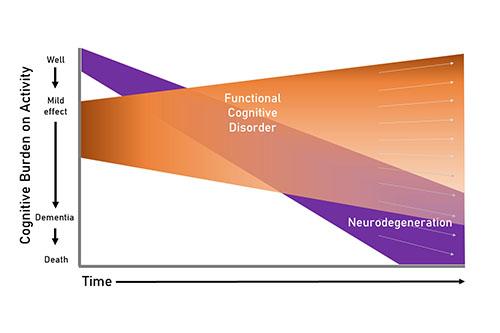
“Dysfunction of day-to-day thinking processes is a feature of FCD but it is often misdiagnosed as early dementia. We estimate up to a third of people attending specialist memory clinics have FCD. While FCD involves impairment of thinking processes, unlike dementia, it is not expected to progress. From a patient’s point of view, that is a very different prognosis and one that requires different management.

“As clinicians, our aim is to unravel the causes of early memory symptoms, and importantly, identify those that can improve over time rather than deteriorate towards dementia. Having clear diagnostic criteria for FCD will enable us to better characterise the condition and better explain it – and its prognosis – to patients and their families,” said Dr Ball.

The position paper: Functional cognitive disorder: dementia’s blind spot is the collaborative effort of 25 of the UK’s leading experts on the topic and represents the first agreed clinical definition of FCD.

This definition will allow a new phase of research into FCD as researchers can now consistently identify patients for studies. The next stage for this work, which has already begun, involves assessing clinical markers and understanding the epidemiology, all of which will help to build treatment studies.

“While some people do spontaneously recover, this is often related to how long it has gone on for and how entrenched it has become. Treatment up to now has focused on management of aspects that we know can help in general, for example cutting down medications that might be making things worse, working on better sleep patterns; but in future we’d like to test specific cognitive therapies which could prove much more successful,” said Dr Ball.

Dr Ball said the definition also had important benefits in terms of strengthening research into dementia.

“With a clear operational definition, we’ll be better at picking the right people for trials against, for example, Alzheimer’s proteins – because if lots of people with FCD are in those trials, it is much harder to show any treatment effect against Alzheimer’s.”

###

Paper:

‘Functional cognitive disorder: dementia’s blind spot’ by Harriet A Ball et al., published in BRAIN.

Media Contact
Victoria Tagg
[email protected]

Related Journal Article

http://dx.doi.org/10.1093/brain/awaa224

Tags: AgingAlzheimerGerontologyMedicine/Healthneurobiology
Share12Tweet8Share2ShareShareShare2

Related Posts

Medicaid Expansion Reduces Mortality in Young Adults with Kidney Failure

May 11, 2026

CRISPR Technology Shows Promise in Inhibiting Hepatitis E Virus

May 11, 2026

Mapping Ocular Bioenergetics: Insights into TCA Cycle Intermediates and Gender Differences in Eye Tissues

May 11, 2026

Telemedicine Does Not Drive Higher Medical Utilization or Health Care Costs, Study Finds

May 11, 2026
Please login to join discussion

POPULAR NEWS

  • Research Indicates Potential Connection Between Prenatal Medication Exposure and Elevated Autism Risk

    841 shares
    Share 336 Tweet 210
  • New Study Reveals Plants Can Detect the Sound of Rain

    728 shares
    Share 290 Tweet 182
  • Salmonella Haem Blocks Macrophages, Boosts Infection

    62 shares
    Share 25 Tweet 16
  • Breastmilk Balances E. coli and Beneficial Bacteria in Infant Gut Microbiomes

    57 shares
    Share 23 Tweet 14

About

We bring you the latest biotechnology news from best research centers and universities around the world. Check our website.

Follow us

Recent News

Humans and Zebra Finches Share Similar Speech Learning Techniques #ASA190

New Study Uncovers How Fungal Parasites Attack Strawberries and Raspberries

City of Hope Researchers to Present Groundbreaking Immunotherapy and Precision Medicine Advances Across Multiple Cancer Types at ASCO 2026

Subscribe to Blog via Email

Enter your email address to subscribe to this blog and receive notifications of new posts by email.

Join 82 other subscribers
  • Contact Us

Bioengineer.org © Copyright 2023 All Rights Reserved.

Welcome Back!

Login to your account below

Forgotten Password?

Retrieve your password

Please enter your username or email address to reset your password.

Log In
No Result
View All Result
  • Homepages
    • Home Page 1
    • Home Page 2
  • News
  • National
  • Business
  • Health
  • Lifestyle
  • Science

Bioengineer.org © Copyright 2023 All Rights Reserved.