The German Research Foundation (DFG) has approved the establishment and funding of the Collaborative Research Center/Transregio (CRC/TRR) 355 “Heterogeneity and functional specialization of regulatory T cells in distinct microenvironments”. Under the leadership of the Mainz University Medical Center, the CRC investigates how so-called regulatory T (Treg) cells influence immunological and tissue-specific diseases. Based on these findings, tailored immunotherapies could be developed in the future with the help of Treg cells. Ludwig-Maximilians-Universität München and the Technical University of Munich are involved in the CRC as cooperation partners. For the four years of the first funding period, the CRC/TRR 355 will receive approximately EUR 13 million.
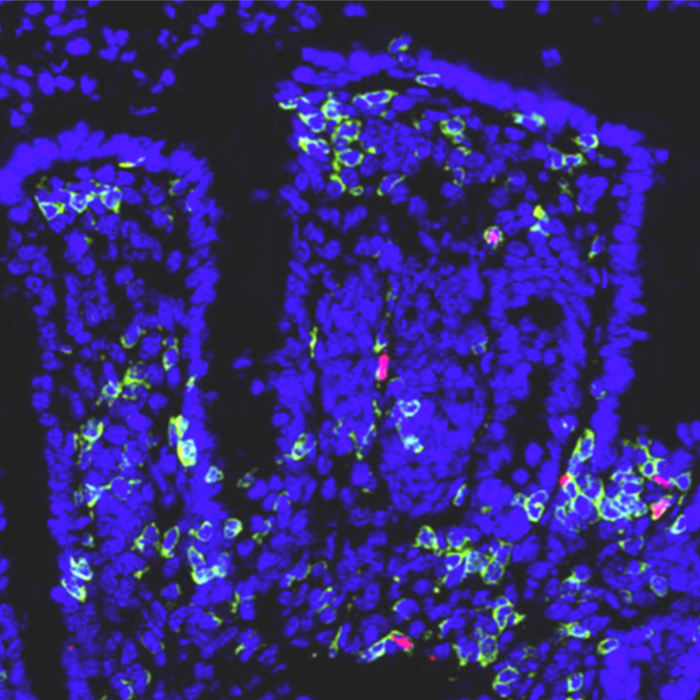
Credit: © Mainz University Medical Center / AG Waisman
The German Research Foundation (DFG) has approved the establishment and funding of the Collaborative Research Center/Transregio (CRC/TRR) 355 “Heterogeneity and functional specialization of regulatory T cells in distinct microenvironments”. Under the leadership of the Mainz University Medical Center, the CRC investigates how so-called regulatory T (Treg) cells influence immunological and tissue-specific diseases. Based on these findings, tailored immunotherapies could be developed in the future with the help of Treg cells. Ludwig-Maximilians-Universität München and the Technical University of Munich are involved in the CRC as cooperation partners. For the four years of the first funding period, the CRC/TRR 355 will receive approximately EUR 13 million.
The Chief Executive Officer and Medical Director of the Mainz University Medical Center, Professor Norbert Pfeiffer, is pleased with the DFG’s decision: “The University Medicine Mainz is now involved in a total of eleven Collaborative Research Centers. We are the spokesperson for three of those CRCs. This makes us a university medical center with a particularly high number of participations in CRCs. This is an outstanding success and showcases our excellent research, which we also translate directly into patient care.”
The newly approved CRC/TRR 355 investigates the role of so-called regulatory T cells in immune-related and tissue-specific diseases. Regulatory T (Treg) cells play a major role in controlling the immune response. Absent or defective Treg cells can lead to autoimmunity. Excessive Treg cell activity, on the other hand, can impair important immune responses, such as those against pathogens. Treg cells are also integrated into the functional architecture of various tissues. Despite some similarities, Treg cells also exhibit significant differences depending on their function. The new CRC explores this heterogeneity of Treg cells. The goal: using Treg cells for the development of tailored immunotherapies as well as for tissue regeneration.
The spokesperson of the CRC/TRR 355 and head of the Institute of Molecular Medicine at the Mainz University Medical Center, Professor Ari Waisman, explains: “We are investigating the prerequisites and consequences of the heterogeneity and functional specialization of Treg cells in a variety of tissue- and disease-specific questions. In addition to the function of Treg cells in immune or autoimmune responses, we are also taking a close look at the central nervous system as well as various tissues and organs, such as the muscles, lungs, and intestines. The goal is to identify the relevant molecules and mechanisms for which a Treg cell-directed therapeutic approach might be appropriate. With these findings, we could exploit the full potential of Treg cells – not only for tailored immunotherapy, but also targeted for tissue-specific processes such as organ regeneration.”
The Mainz University Medical Center is cooperating in the CRC/TRR 355 with Ludwig-Maximilians-Universität München and the Technical University of Munich. Of the 22 projects, 13 are located at the Mainz University Medical Center. In addition to the Institute of Molecular Medicine, the Institute of Immunology, the Department of Medical Microbiology and Hygiene, the Department of Neurology, the Department of Dermatology, the Center for Thrombosis and Hemostasis (CTH), and the Institute for Translational Immunology at the Mainz University Medical Center are also involved in this interdisciplinary research project.
That it is a very good day for biomedical research at the Mainz University Medical Center and at Johannes Gutenberg University Mainz emphasizes Professor Ulrich Förstermann, Scientific Director and Dean of the Mainz University Medical Center: “The CRC/TRR 355 strengthens once again the research focus on immunology at the Mainz University Medical Center. It is the third immunological CRC at the Mainz University Medical Center and covers another important aspect that can be of great significance for modern immunotherapy. I am convinced that our scientists will gain pioneering insights into the use of regulatory T cells in immunotherapy. At the same time, two other biomedical CRCs were approved or reapproved by the DFG, in each of which the Mainz University Medical Center is involved with several projects. The CRC 1551 ‘Polymer Concepts in Cellular Function’ was newly established by the DFG under the auspices of Johannes Gutenberg University Mainz. The CRC 1361 ‘Regulation of DNA Repair and Genome Stability’ enters the second funding period under the leadership of the Mainz-based Institute of Molecular Biology (IMB).”
Collaborative Research Centers enable the processing of innovative, challenging and long-term research projects in a network. They are thus intended to serve the formation of focal points and structures at the applicant universities. In the case of transregional Collaborative Research Centers, several universities are involved in the application process. The close cooperation between these universities is intended to create a complementary and synergistic research network. Collaborative Research Centers are funded by the DFG for a maximum of three funding periods of four years each.