• HOME
  • NEWS
  • EXPLORE
    • CAREER
      • Companies
      • Jobs
    • EVENTS
    • iGEM
      • News
      • Team
    • PHOTOS
    • VIDEO
    • WIKI
  • BLOG
  • COMMUNITY
    • FACEBOOK
    • INSTAGRAM
    • TWITTER
Sunday, October 4, 2026
BIOENGINEER.ORG
No Result
View All Result
  • Login
  • HOME
  • NEWS
  • EXPLORE
    • CAREER
      • Companies
      • Jobs
        • Lecturer
        • PhD Studentship
        • Postdoc
        • Research Assistant
    • EVENTS
    • iGEM
      • News
      • Team
    • PHOTOS
    • VIDEO
    • WIKI
  • BLOG
  • COMMUNITY
    • FACEBOOK
    • INSTAGRAM
    • TWITTER
  • HOME
  • NEWS
  • EXPLORE
    • CAREER
      • Companies
      • Jobs
        • Lecturer
        • PhD Studentship
        • Postdoc
        • Research Assistant
    • EVENTS
    • iGEM
      • News
      • Team
    • PHOTOS
    • VIDEO
    • WIKI
  • BLOG
  • COMMUNITY
    • FACEBOOK
    • INSTAGRAM
    • TWITTER
No Result
View All Result
Bioengineer.org
No Result
View All Result
Home NEWS Science News Biology

New cellular player involved in obesity discover

Bioengineer by Bioengineer
January 10, 2020
in Biology
Reading Time: 2 mins read
0
IMAGE
Share on FacebookShare on TwitterShare on LinkedinShare on RedditShare on Telegram

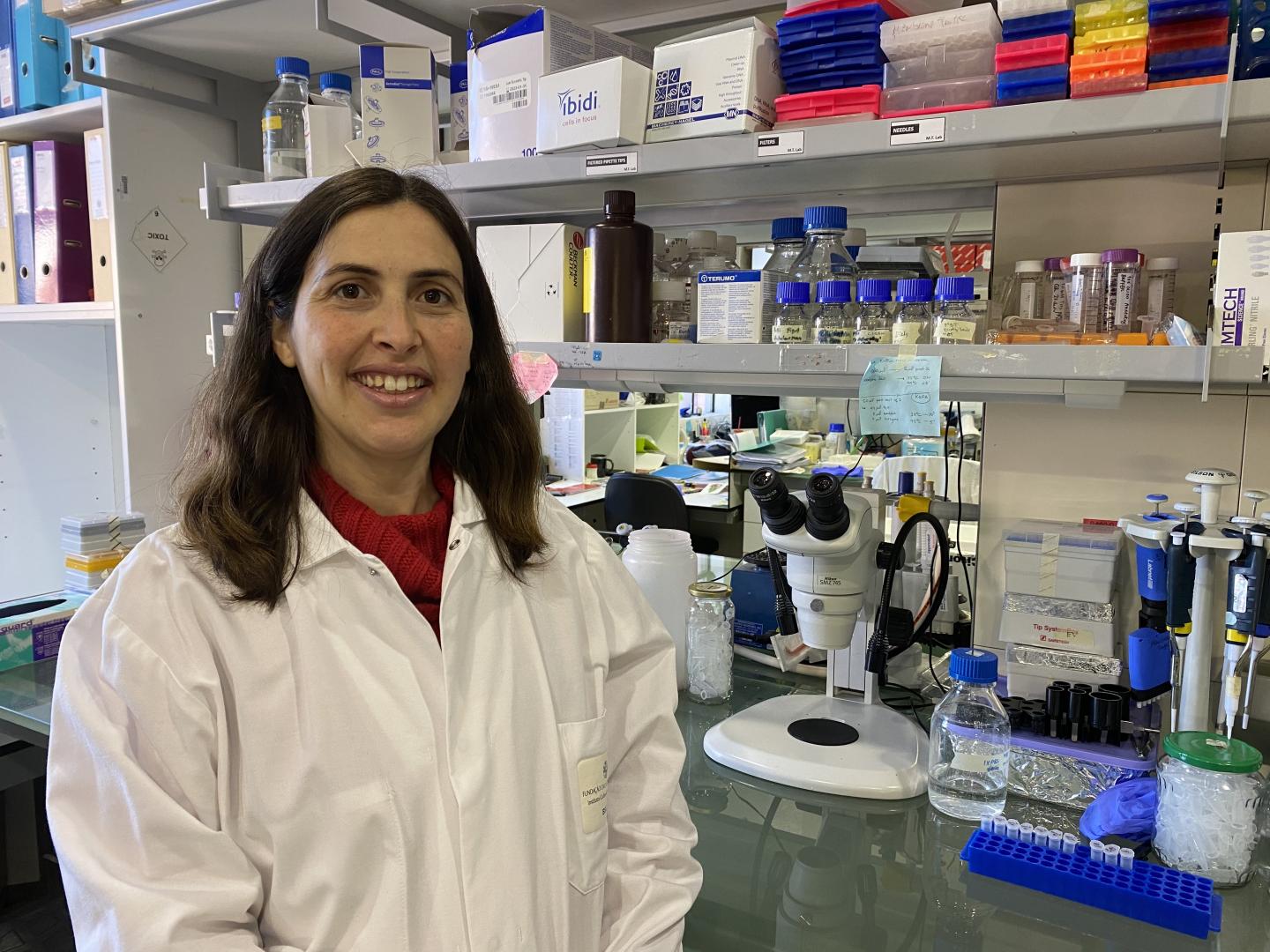
Researchers have discovered that blocking a protein called ‘iRhom2’ in mice increases energy consumption in fat depots called adipose tissue
IMAGE

Credit: Ana Morais


The prevalence of obesity, a disease considered a serious public health problem, is increasing globally. In Portugal, almost half of the population is overweight and close to one million adults suffer from obesity. Known as a risk factor for the development of cardiovascular disease and diabetes, obesity is associated with chronic inflammation in fat tissues. New strategies to fight this disease are needed. Therefore, a deeper understanding of the mechanisms involved in metabolic deregulation are critical to approach the obesity problem.

To Colin Adrain, principal investigator of the research group, “it is important to understand the fundamental mechanisms underlying how metabolic dysregulation occurs.” Adrain added that during the research they found that “iRhom2 protein is strongly present in metabolic tissues and organs, which made us decide to study the role of iRhom2 in obesity in more detail.”

The paper, now published in the Molecular Metabolism journal, demonstrates how the researchers reached these results: they used an animal model, comparing groups with iRhom2 deletion to controls, and feeding them with normal diet versus a high fat diet.

Surprisingly, they found that during obesity, iRhom2 protein levels increase specifically in brown adipose tissue in obese animals compared to controls. Following up on this, they found that, on a high fat diet, the animals lacking iRhom2 protein were metabolically more healthy than their wild type counterparts.

Marina Badenes, a researcher and the main author of the paper, explains that “the deletion of iRhom2 led to enhanced energy consumption in adipose tissue, which protected animals from fat accumulation and inflammation, fatty liver and insulin resistance when the animals were placed on a diet that predisposed them to obesity”. Furthermore, the researchers found that “at the cellular level deletion of iRhom2 leads to an increase in thermogenesis (heat production) in brown adipose tissue. Thermogenesis in brown adipose tissue is an important physiological mechanism to consume excess body energy”.

Interestingly no deleterious side effects were found in the animals with iRhom2 deletion, indicating that blocking iRhom2 may potentially be beneficial in the treatment of obesity and associated complications. Researchers intend to continue the project to further understand the mechanisms and cell types involved in the iRhom2 control of obesity. They also want to find out the specific targets involved in the protection against obesity associated with loss of iRhom2.

###

This research project involved several Labs of the IGC (Membrane Traffic, Obesity, and Innate Immunity and Inflammation) and International Institutes: NeurObesity Group from the Center for Research in Molecular Medicine and Chronic Diseases (CiMUS) and CIBER (Spain), the Girona Biomedical Research Institute (Spain) and the Institute of Metabolic Science (UK).

Media Contact
Ana Morais
[email protected]
351-965-249-488

Related Journal Article

http://dx.doi.org/10.1016/j.molmet.2019.10.006

Tags: Cell BiologyMedicine/HealthMicrobiologyMolecular Biology
Share12Tweet8Share2ShareShareShare2

Related Posts

Decade of Data: How Explainable AI Is Cracking Open the Black Box of Crash Severity Prediction

Decade of Data: How Explainable AI Is Cracking Open the Black Box of Crash Severity Prediction

October 4, 2026
Past Chytrid Infection Leaves Harlequin Toads More Vulnerable, Not Resistant, to Re-infection

Past Chytrid Infection Leaves Harlequin Toads More Vulnerable, Not Resistant, to Re-infection

October 4, 2026

Turning Seaweed Gel Waste Into Resources: Electrodialysis and Enzymes Offer a Greener Path

October 4, 2026

Computational Framework Ranks Safer RNA-LNP Formulations Before the Lab

October 4, 2026
Please login to join discussion

POPULAR NEWS

  • Alloys That Shrink Their Own Grains: New PIX Mechanism Refines Metals With Heat Alone

    Alloys That Shrink Their Own Grains: New PIX Mechanism Refines Metals With Heat Alone

    29 shares
    Share 12 Tweet 7
  • Endurance Exercise Reshapes the Liver in Males and Females Through Distinct Molecular Routes

    29 shares
    Share 12 Tweet 7
  • Single Transcription Factor PU.1 Rapidly Converts Fibroblasts into Macrophage-Lineage Cells

    29 shares
    Share 12 Tweet 7
  • New Scale Measures How Ready Nurse Educators Really Are for the AI Era

    29 shares
    Share 12 Tweet 7

About

We bring you the latest biotechnology news from best research centers and universities around the world. Check our website.

Follow us

Recent News

Alloys That Shrink Their Own Grains: New PIX Mechanism Refines Metals With Heat Alone

Endurance Exercise Reshapes the Liver in Males and Females Through Distinct Molecular Routes

Single Transcription Factor PU.1 Rapidly Converts Fibroblasts into Macrophage-Lineage Cells

Subscribe to Blog via Email

Success! An email was just sent to confirm your subscription. Please find the email now and click 'Confirm' to start subscribing.

Join 85 other subscribers
  • Contact Us

Bioengineer.org © Copyright 2023 All Rights Reserved.

Welcome Back!

Login to your account below

Forgotten Password?

Retrieve your password

Please enter your username or email address to reset your password.

Log In
No Result
View All Result
  • Homepages
    • Home Page 1
    • Home Page 2
  • News
  • National
  • Business
  • Health
  • Lifestyle
  • Science

Bioengineer.org © Copyright 2023 All Rights Reserved.