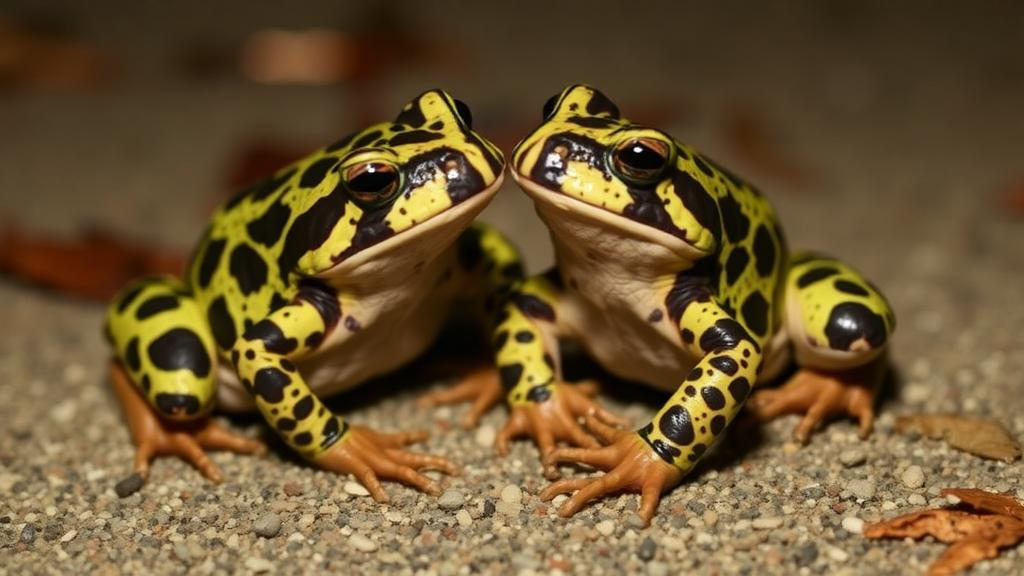
A devastating fungal pathogen has driven hundreds of amphibian species toward extinction over the past few decades, and conservationists have long hoped that surviving an infection might confer some measure of protection against future encounters. A new study of the critically endangered Pirre harlequin toad, Atelopus glyphus, delivers a sobering counterexample. Researchers found that toads previously infected with the chytrid fungus Batrachochytrium dendrobatidis, commonly known as Bd, and then cleared of the infection with antifungal treatment fared significantly worse when re-exposed to the pathogen than animals facing it for the first time. The work, published in BMC Genomics, combined infection experiments, immune gene expression profiling, and skin microbiome sequencing to reveal why prior infection failed to protect this highly susceptible species.
The experimental design was unusually thorough for a wildlife disease study. The team, led by Brian Gratwicke of the Smithsonian’s National Zoo and Conservation Biology Institute and Owen Osborne of Bangor University, divided toads into five treatment groups. One group of twenty animals was infected with Bd, then cleared using itraconazole, a standard antifungal used in amphibian rescue programs, and then infected again. A second group of twenty received a mock infection, underwent the same itraconazole treatment, and was then exposed to Bd for the first time. Two smaller groups of ten animals each served as controls that experienced infection or mock infection without re-exposure, and a final group of ten remained untreated throughout. This structure allowed the researchers to disentangle the effects of prior infection, antifungal treatment, and re-infection on survival, pathogen load, immune gene expression, and the communities of bacteria and fungi living on the skin.
The survival results were unambiguous and troubling. Toads that had been previously infected and cleared developed detectable Bd infections faster and died sooner after re-infection than naïve animals that had never encountered the fungus. In other words, the infection-clearance-infection protocol, which mirrors the approach used in some captive breeding and reintroduction programs, did not improve survival. It actively worsened outcomes. This finding stands in sharp contrast to earlier studies in other amphibian species, in which surviving a Bd infection and being cleared of it sometimes produced acquired resistance or reduced susceptibility upon re-exposure. For Atelopus glyphus, one of the most Bd-susceptible species known, no such protective effect emerged.
To understand the mechanism behind this heightened vulnerability, the researchers turned to transcriptomics, sequencing RNA from the toads’ skin to measure the activity of immune-related genes. Their analysis revealed that even after Bd had been cleared from previously infected animals, the fungus left a lasting imprint on the immune system. Animals in the Bd-mock group, which had been infected and cleared but never re-exposed, showed downregulation of immune genes that normally respond to Bd compared with animals that were re-infected. This sustained immunosuppression, the authors suggest, likely reduced the effectiveness of the immune response when the pathogen returned, explaining the accelerated infection dynamics and earlier mortality in the previously infected group.
When the researchers examined what happened upon re-infection in more detail, they found that as fungal loads climbed, Bd itself became the dominant force shaping both immune gene expression and bacterial community composition, regardless of whether an animal had prior infection history. Previously infected animals did not mount any novel immune response upon re-exposure. Instead, their gene expression patterns resembled those of naïve infected animals, only more pronounced. This suggests that the initial infection produced no long-lasting immunological memory that could be mobilized against the pathogen a second time, and that the immune system was simply responding more intensely to a heavier fungal burden.
The skin microbiome added another layer to the story. Prior infection and itraconazole treatment shifted the toads’ bacterial and fungal skin communities into a new state, one enriched in bacteria that are putatively capable of inhibiting Bd. On its face, this might seem like a beneficial change, a kind of microbial vaccination induced by the pathogen itself. Yet the enriched anti-Bd bacteria clearly did not translate into protection, since previously infected animals died faster. The researchers noted that observed differences in bacterial communities were closely tied to host immune gene expression, indicating that the skin microbiome and the immune system are tightly coupled, and that microbial shifts alone cannot compensate for a compromised immune response.
Intriguingly, the fungal component of the skin microbiome told a different story. While the initial infection and treatment period reshaped fungal communities, those communities did not shift again in response to re-infection. The authors concluded that the fungal community changes were most likely a side effect of itraconazole treatment rather than a host- or pathogen-driven response, a reminder that antifungal therapy itself can perturb the delicate microbial ecosystems on amphibian skin. This has practical implications for rescue programs that routinely use itraconazole to clear infections before releasing animals back into the wild.
The broader significance of the study lies in its demonstration that disease outcomes following pathogen clearance are species-specific and cannot be generalized across amphibian diversity. Bd has caused the steepest disease-driven biodiversity loss ever recorded, and harlequin toads of the genus Atelopus have been among its most catastrophic victims, with many Central and South American species vanishing or collapsing to remnant populations. Captive assurance colonies, such as those maintained by the Panama Amphibian Rescue and Conservation Project, a collaboration involving the Smithsonian Tropical Research Institute, Zoo New England, the Cheyenne Mountain Zoo and other partners, represent a lifeline for these species. The new results suggest that simply clearing Bd from captive animals before release may not only fail to protect them but could actively sensitize them to the pathogen awaiting them in their native streams.
For conservation practitioners, the message is that reintroduction strategies must account for the immunological legacy of prior infection. The integrative approach used here, pairing survival data with gene expression and microbiome sequencing, offers a template for evaluating whether any intervention intended to reduce susceptibility actually works before animals are committed to the wild. The researchers emphasize that strategies to improve survival of wildlife impacted by emerging infectious disease remain urgently needed for species of conservation concern, but that such strategies must be tested rigorously in the species they are meant to help. In the case of Atelopus glyphus, the hope that infection history could serve as a shield has been replaced by a more nuanced and challenging reality: for some of the world’s most endangered amphibians, the scars left by chytrid fungus run deeper than the infection itself.
Subject of Research: Effects of prior Batrachochytrium dendrobatidis infection on immunity, skin microbiome and re-infection mortality in harlequin toads
Article Title: Prior infection of harlequin toads by Batrachochytrium dendrobatidis alters their immune-microbial state and increases mortality upon re-infection
Article References: Gratwicke, B., Osborne, O. G., Hartmann, A., Ávila, N., Baitchman, E., Togna, G. D., Figueroa, Y., Guerrel, J., Illueca, E., Linhoff, L., Madison, J. D., Ellison, A., Grayfer, L., Ibáñez, R., & Muletz-Wolz, C. R. (2026). Prior infection of harlequin toads by Batrachochytrium dendrobatidis alters their immune-microbial state and increases mortality upon re-infection. BMC Genomics. https://doi.org/10.1186/s12864-026-13310-9
Image Credits: AI Generated
DOI: 10.1186/s12864-026-13310-9
Keywords: Batrachochytrium dendrobatidis, harlequin toads, Atelopus glyphus, chytridiomycosis, amphibian conservation, immune gene expression, skin microbiome, itraconazole, re-infection, immunosuppression, wildlife disease, BMC Genomics
News Source: Kristina Jarvis. (October 4, 2026). Past Chytrid Infection Leaves Harlequin Toads More Vulnerable, Not Resistant, to Re-infection. Scienmag.