• HOME
  • NEWS
  • EXPLORE
    • CAREER
      • Companies
      • Jobs
    • EVENTS
    • iGEM
      • News
      • Team
    • PHOTOS
    • VIDEO
    • WIKI
  • BLOG
  • COMMUNITY
    • FACEBOOK
    • INSTAGRAM
    • TWITTER
Wednesday, October 28, 2026
BIOENGINEER.ORG
No Result
View All Result
  • Login
  • HOME
  • NEWS
  • EXPLORE
    • CAREER
      • Companies
      • Jobs
        • Lecturer
        • PhD Studentship
        • Postdoc
        • Research Assistant
    • EVENTS
    • iGEM
      • News
      • Team
    • PHOTOS
    • VIDEO
    • WIKI
  • BLOG
  • COMMUNITY
    • FACEBOOK
    • INSTAGRAM
    • TWITTER
No Result
View All Result
Bioengineer.org
No Result
View All Result
Home NEWS Science News Chemistry

New Bis-Coumarinyl Compounds Show Strong Tyrosinase Inhibition

by
October 28, 2026
in Chemistry
Reading Time: 2 mins read
0
New Bis-Coumarinyl Compounds Show Strong Tyrosinase Inhibition

New Bis-Coumarinyl Compounds Show Strong Tyrosinase Inhibition

Share on FacebookShare on TwitterShare on LinkedinShare on RedditShare on Telegram

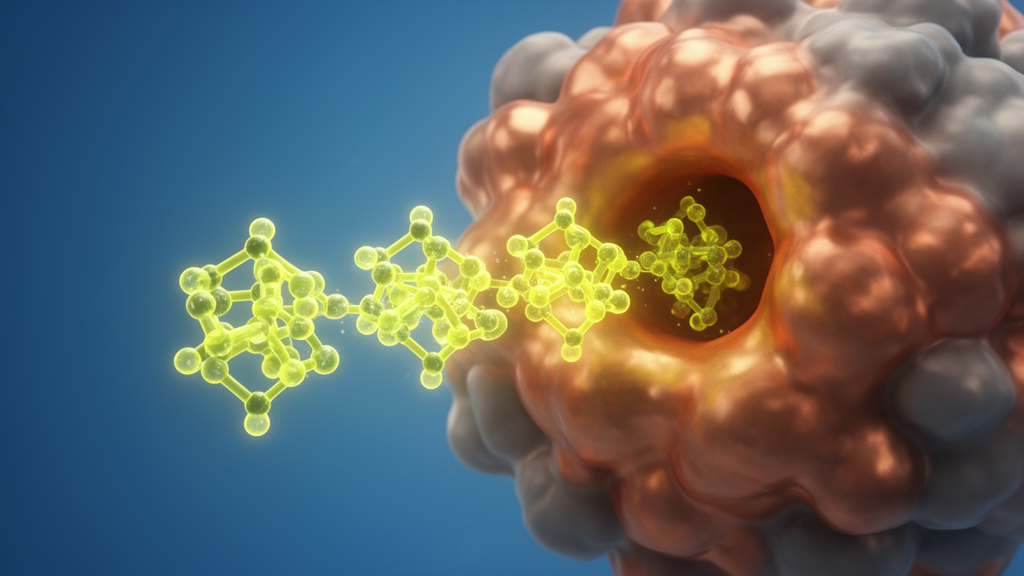
Chemists have synthesized a series of bis-coumarinyl methane derivatives and identified one member of the series as a notably potent inhibitor of tyrosinase, the enzyme whose overactivity drives hyperpigmentation problems in dermatology and in the food industry. The work, published as an open access research article in BMC Chemistry on 28 October 2026, combines synthesis, enzyme assays, kinetic analysis and computational modeling to map how structural changes across the series affect inhibitory power.

The research team, comprising Zahra Najafi, Mohammad Amin Jafari-Nasab, Asrin Bahmani, Gholamabbas Chehardoli and Aida Iraji, prepared sixteen compounds designated 14a through 14p and evaluated each against tyrosinase. Among the tested compounds, the derivative labeled 14e emerged as the most potent, with an IC50 value of 10.29 ± 1.80 µM. That measurement was significantly lower than the value obtained for kojic acid, the reference inhibitor used for comparison, which showed an IC50 of 27.56 ± 1.27 µM under the same assay conditions.

To understand how 14e slows the enzyme, the researchers performed enzyme kinetic analysis. The results indicated that 14e acts as a competitive inhibitor, meaning it competes with the natural substrate for binding at the enzyme’s active site. The inhibition constant derived from the kinetic study was 5.99 µM, a figure consistent with the compound’s strong performance in the potency screen.

Computational work provided a structural picture of the interaction.

The stability of that modeled complex was then tested over time.

Structure-activity relationship studies across the sixteen-compound series revealed a clear chemical pattern: para-halogen substitution on the terminal phenyl ring was essential for enhancing potency. This finding gives synthetic chemists a concrete handle for designing next-generation analogues, since it identifies the specific substitution pattern on the outer aromatic ring that correlates with stronger enzyme inhibition.

The authors present these results as evidence of 14e’s potential as a lead candidate for anti-hyperpigmentation therapy.

As with any early-stage study, the findings rest on in vitro enzyme assays and computational models rather than clinical testing. Nevertheless, the combination of a measured IC50 well below that of kojic acid, a defined competitive mechanism, and a structurally grounded explanation for potency makes 14e a concrete starting point for further development of coumarin-based tyrosinase inhibitors aimed at controlling excess pigmentation.

Subject of Research: Synthesis of bis-coumarinyl methane derivatives as tyrosinase inhibitors

Article Title: New bis-coumarinyl methane derivatives as efficient inhibitors of tyrosinase: synthesis and structure-activity relationships

Article References: Najafi, Z., Jafari-Nasab, M. A., Bahmani, A., Chehardoli, G., & Iraji, A. (2026). New bis-coumarinyl methane derivatives as efficient inhibitors of tyrosinase: synthesis and structure-activity relationships. BMC Chemistry. https://doi.org/10.1186/s13065-026-01949-0

Image Credits: AI Generated

DOI: 10.1186/s13065-026-01949-0

Keywords: tyrosinase, bis-coumarinyl methane, enzyme inhibition, hyperpigmentation, kojic acid, molecular docking, molecular dynamics, structure-activity relationship, ADMET, BMC Chemistry, competitive inhibitor, coumarin derivatives

News Source: Bethany Barker. (October 28, 2026). New Bis-Coumarinyl Compounds Show Strong Tyrosinase Inhibition. Scienmag.


Tags: ADMETbis-coumarinyl methaneBMC Chemistrycompetitive inhibitorcoumarin derivativesenzyme inhibitionhyperpigmentationkojic acidmolecular dockingmolecular dynamicsstructure-activity relationshiptyrosinase
Share12Tweet7Share2ShareShareShare1

Related Posts

Ozone Pollution Is Fading Ancient Safflower Yellow in Grotto Temple Murals

Ozone Pollution Is Fading Ancient Safflower Yellow in Grotto Temple Murals

October 28, 2026
Gallium-68 PET tracking reveals where nanoerythrosomes travel in rats

Gallium-68 PET tracking reveals where nanoerythrosomes travel in rats

October 28, 2026

Fluorescence derivatization enables sensitive delafloxacin measurement in drugs and plasma

October 28, 2026

New Piperidine Acetamide Compounds Show Early Anti-Alzheimer’s Potential

October 28, 2026

POPULAR NEWS

  • Physicists control the magnetic nucleus of a single atom with radio waves

    Physicists control the magnetic nucleus of a single atom with radio waves

    29 shares
    Share 12 Tweet 7
  • Long Noncoding RNA SNHG4 Emerges as a Player Across Multiple Human Cancers

    29 shares
    Share 12 Tweet 7
  • Bladder Artery Embolization Before Tumor Resection Cuts Bleeding and Surgery Time

    29 shares
    Share 12 Tweet 7
  • Vial surface treatment and early creeping predict fogging in freeze-dried drugs

    29 shares
    Share 12 Tweet 7

About

We bring you the latest biotechnology news from best research centers and universities around the world. Check our website.

Follow us

Recent News

Emergency Aortic Dissection Surgery in Severe Hemophilia B Managed with Extended Half-Life Factor IX

Blood CXCL1 tracks Salmonella colonization in tumors, study finds

Obesity stigma among nutrition students linked to body dissatisfaction, study finds

Subscribe to Blog via Email

Enter your email address to subscribe to this blog and receive notifications of new posts by email.

Join 85 other subscribers
  • Contact Us

Bioengineer.org © Copyright 2023 All Rights Reserved.

Welcome Back!

Login to your account below

Forgotten Password?

Retrieve your password

Please enter your username or email address to reset your password.

Log In
No Result
View All Result
  • Homepages
    • Home Page 1
    • Home Page 2
  • News
  • National
  • Business
  • Health
  • Lifestyle
  • Science

Bioengineer.org © Copyright 2023 All Rights Reserved.