• HOME
  • NEWS
  • EXPLORE
    • CAREER
      • Companies
      • Jobs
    • EVENTS
    • iGEM
      • News
      • Team
    • PHOTOS
    • VIDEO
    • WIKI
  • BLOG
  • COMMUNITY
    • FACEBOOK
    • INSTAGRAM
    • TWITTER
Monday, May 11, 2026
BIOENGINEER.ORG
No Result
View All Result
  • Login
  • HOME
  • NEWS
  • EXPLORE
    • CAREER
      • Companies
      • Jobs
        • Lecturer
        • PhD Studentship
        • Postdoc
        • Research Assistant
    • EVENTS
    • iGEM
      • News
      • Team
    • PHOTOS
    • VIDEO
    • WIKI
  • BLOG
  • COMMUNITY
    • FACEBOOK
    • INSTAGRAM
    • TWITTER
  • HOME
  • NEWS
  • EXPLORE
    • CAREER
      • Companies
      • Jobs
        • Lecturer
        • PhD Studentship
        • Postdoc
        • Research Assistant
    • EVENTS
    • iGEM
      • News
      • Team
    • PHOTOS
    • VIDEO
    • WIKI
  • BLOG
  • COMMUNITY
    • FACEBOOK
    • INSTAGRAM
    • TWITTER
No Result
View All Result
Bioengineer.org
No Result
View All Result
Home NEWS Science News Health

New approach for potential treatment of liver cancer patients with Hep B virus infection

Bioengineer by Bioengineer
March 28, 2019
in Health
Reading Time: 3 mins read
0
IMAGE
Share on FacebookShare on TwitterShare on LinkedinShare on RedditShare on Telegram

New therapeutic approach points to potential treatment of liver cancer patients with Hepatitis B virus infection
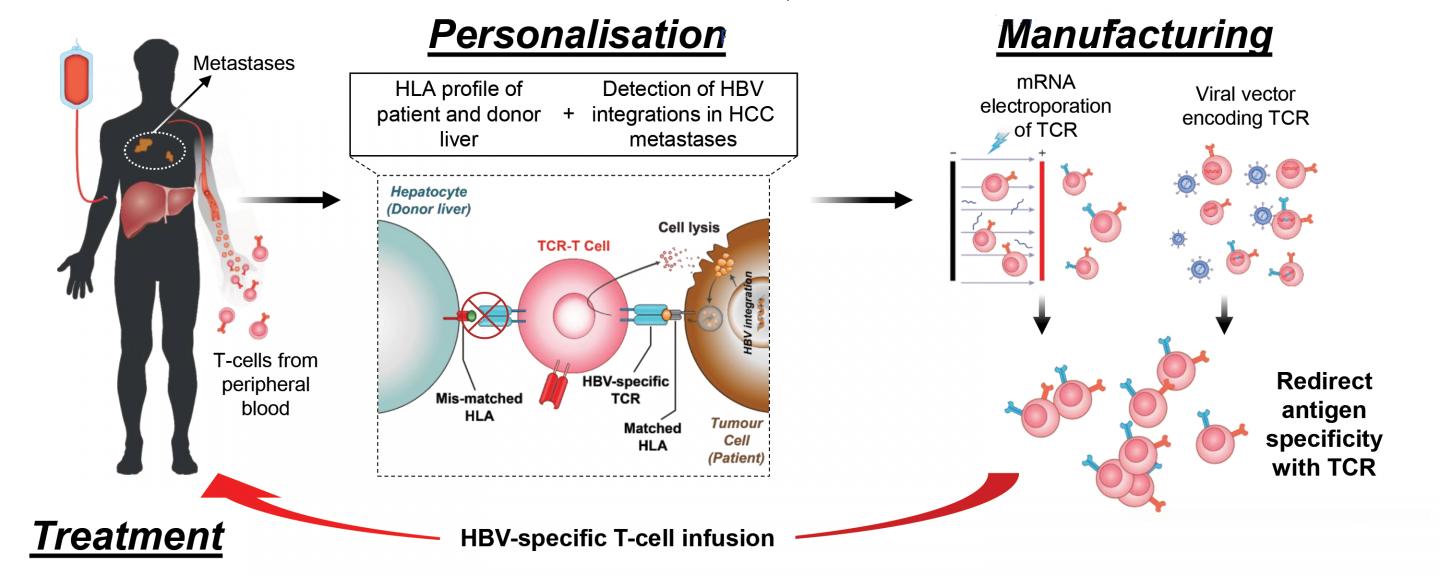
IMAGE

Credit: Gastroenterology

SINGAPORE, 27 March 2019 – Researchers from Duke-NUS Medical School, Singapore General Hospital (SGH) and Lion TCR have demonstrated that they were able to engineer HBV-specific T cells, a type of immune cells found in the body, to treat Hepatocellular carcinoma (HCC), a commonly occurring liver cancer. The treatment was also individualised, as T cells that were engineered were specific to the patients. The approach was successfully performed on two liver transplanted patients who had HBV associated liver cancer recurrence with one patient seeing a reduction in size of the tumour lesions.

Chronic hepatitis B virus (HBV) infection is predominant in Asia and is highly associated with the development of Hepatocellular carcinoma (HCC), the commonly occurring liver cancer. The currently effective treatments for small to moderate size HCC are restricted to surgery, liver transplantation and loco-regional treatment that kill cancer cells by interventional radiologic means, while treatment with drugs helps only in a modest increase in the overall survival in more extensive disease. In patients who have HCC recurrence after liver transplantation, the treatment options are even more limited.

“In this study we showed that the integrated HBV-DNA gene components in the HCC cells were able to activate functional HBV-specific T cells. Hence, by analyzing the specific HBV- DNA integration patterns in these HCC cells, we were able to select, design and engineer the individualised T cells for therapy. Our studies showed that these engineered T cells were able to destroy the tumor,” said Dr Antonio Bertoletti, Professor of the Emerging Infectious Diseases (EID) Programme at Duke-NUS, Founder of the Singapore biotech company Lion TCR and co- author of the study.

“There were over 20 T cell infusions that were successfully performed on the two liver- transplanted patients. None of the patients experienced adverse reactions related to the treatment and one of them had a reduction in the tumour size of distant metastases of the liver cancer. Given that 80 per cent of the HCC cases in Asia are currently HBV-related, this approach could lead to a major breakthrough in improving the survival and quality of life of patients suffering from this disease,” said Dr Thinesh Lee Krishnamoorthy, Consultant, Department of Gastroenterology and Hepatology, SGH, and co-author of this study.

The authors plan to further refine the technique and treatment strategy with further research study and trials to improve the efficacy of the therapy.

###

This translational research project won the SingHealth Duke-NUS Research Team Award last year and is the result of a collaboration between researchers and clinicians at Duke- NUS’ Emerging Infectious Diseases Programme, and SGH’s Department of Gastroenterology and Hepatology, Department of Vascular and Interventional Radiology, and Department of Haematology, as well as Singapore biotechnology company, Lion TCR.

Media Contact
Lekshmy Sreekumar
[email protected]

Original Source

https://www.duke-nus.edu.sg/about/media/media-releases/detail/index/new-therapy-approach-points-to-potential-treatment-of-liver-cancer-patients-with-hepatitis-b-virus-infection

Related Journal Article

http://dx.doi.org/10.1053/j.gastro.2019.01.251

Tags: cancerImmunology/Allergies/AsthmaMedicine/HealthTransplantation
Share12Tweet8Share2ShareShareShare2

Related Posts

NELA, P-POSSUM, Muscle Index Predict Elderly Surgery Risk

May 11, 2026

Pramipexole Bioequivalence Tested in Fasting vs. Fed Volunteers

May 11, 2026

New JACIE IEC Certification Pathway Expands Opportunities for Centers Beyond Transplant

May 11, 2026

Mapping Skin Lesions in Lupus Types Explored

May 11, 2026
Please login to join discussion

POPULAR NEWS

  • Research Indicates Potential Connection Between Prenatal Medication Exposure and Elevated Autism Risk

    840 shares
    Share 336 Tweet 210
  • New Study Reveals Plants Can Detect the Sound of Rain

    728 shares
    Share 290 Tweet 182
  • Salmonella Haem Blocks Macrophages, Boosts Infection

    62 shares
    Share 25 Tweet 16
  • Breastmilk Balances E. coli and Beneficial Bacteria in Infant Gut Microbiomes

    57 shares
    Share 23 Tweet 14

About

We bring you the latest biotechnology news from best research centers and universities around the world. Check our website.

Follow us

Recent News

Charting a Path to Safer and More Transparent AI in Protein Design

Breast Cancer Cells That Slowly Tick Could Unlock Secrets to Late Relapse

NELA, P-POSSUM, Muscle Index Predict Elderly Surgery Risk

Subscribe to Blog via Email

Enter your email address to subscribe to this blog and receive notifications of new posts by email.

Join 82 other subscribers
  • Contact Us

Bioengineer.org © Copyright 2023 All Rights Reserved.

Welcome Back!

Login to your account below

Forgotten Password?

Retrieve your password

Please enter your username or email address to reset your password.

Log In
No Result
View All Result
  • Homepages
    • Home Page 1
    • Home Page 2
  • News
  • National
  • Business
  • Health
  • Lifestyle
  • Science

Bioengineer.org © Copyright 2023 All Rights Reserved.