A neuro-fuzzy model predicts the Young’s modulus of rock materials with significantly higher accuracy than multivariate regression analysis. Published in the journal AI in Civil Engineering, the study by Hasan Karakul addresses a persistent challenge in rock engineering: the difficulty and high cost of experimentally determining the stiffness of rock specimens. By compiling a comprehensive database of 138 samples across major rock classes, including sedimentary, igneous, and metamorphic types, the study provides a robust framework for estimating this critical geomechanical property without relying on expensive laboratory equipment.
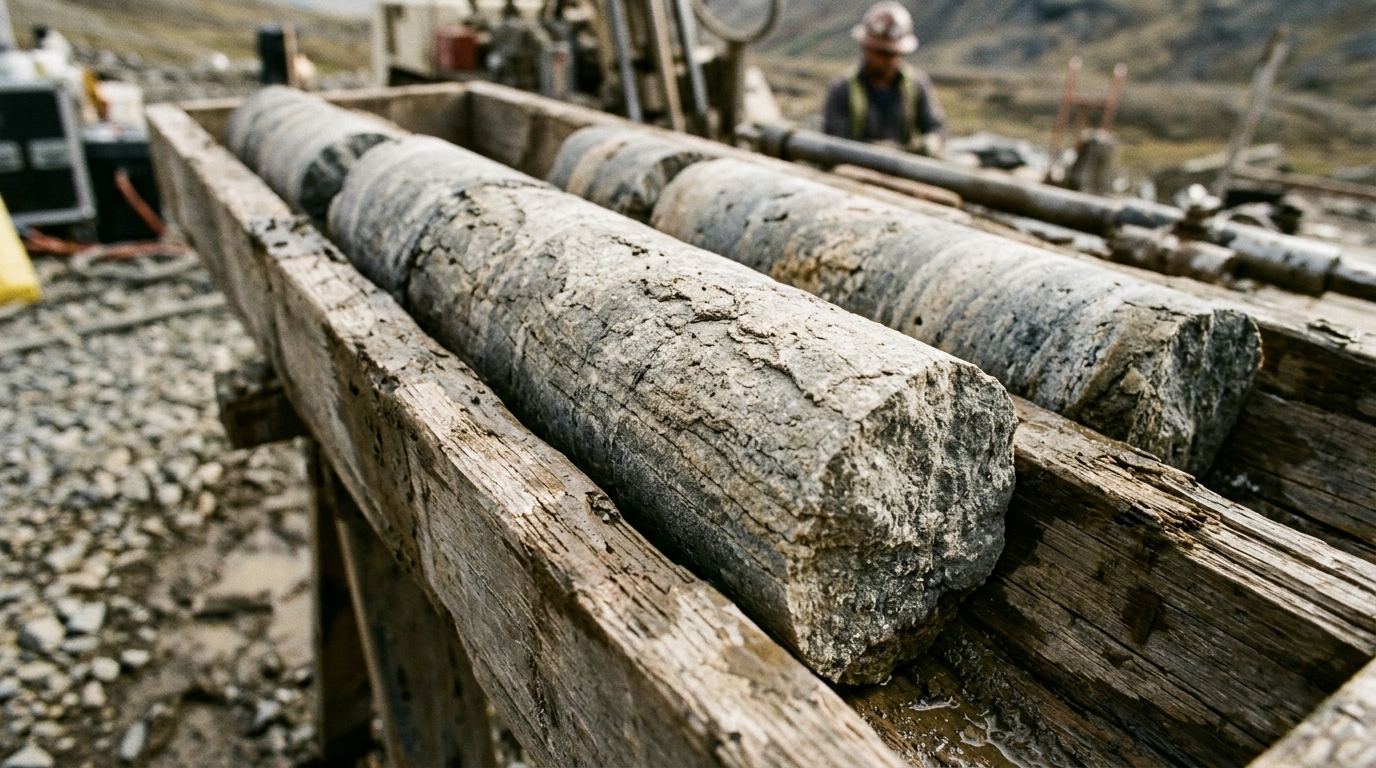
Young’s modulus is a fundamental parameter used in the design phase of various rock engineering applications, describing the stiffness of rock materials. Traditionally, this property is measured on rock core specimens in the laboratory following standards suggested by the International Society for Rock Mechanics. However, the preparation of these test samples is often difficult, and the required testing equipment is costly. These practical limitations have led researchers to seek alternative methods for predicting Young’s modulus using more accessible physical and geomechanical parameters.
The novelty of this study lies in its use of a large, diverse database that overcomes the limitations of previous research, which was often restricted to specific rock types or small datasets. The compiled data includes Schmidt rebound values, uniaxial compressive strength, and porosity. By incorporating a wide variety of rock types, the study aims to develop equations and models with broader applicability and generalizability, addressing the need for reliable estimation methods that are not confined to narrow geological contexts.
To predict Young’s modulus, the study employed two primary methods: multivariate regression analysis and an adaptive neuro-fuzzy inference system, or ANFIS. The ANFIS model is a hybrid soft computing method. In this research, the ANFIS model was configured to use uniaxial compressive strength, Schmidt rebound value, and porosity as input parameters. The use of porosity as an input is particularly significant, as theoretical and experimental studies have established a relationship between the porosity of porous materials and their overall stiffness.
The Schmidt rebound value, obtained from the Schmidt hammer test, is a practical and non-destructive measure of rock hardness. Because the strain induced by the impact of the hammer generally remains within the elastic deformation limits, the rebound value is often associated with Young’s modulus. However, the Schmidt test has limitations, as it only affects a limited volume of the rock specimen. For weak or soft rocks, plastic deformation may occur, reducing the rebound value. Therefore, the study combined the Schmidt rebound value with other parameters that represent the entire specimen, such as uniaxial compressive strength and porosity, to improve prediction accuracy.
The multivariate regression analysis produced two distinct prediction equations. The first equation used uniaxial compressive strength and Schmidt rebound value as independent variables, yielding a high correlation coefficient of 0.95. The second equation incorporated porosity in addition to the previous variables. Statistical reliability tests, including F-tests and t-tests, confirmed that both equations were reliable at the 95% significance level. However, the absolute prediction errors for these regression models were 6.3 and 4.75, respectively, indicating that while the models were statistically sound, they still exhibited significant deviations from experimental values, particularly at lower stiffness values.
In contrast, the neuro-fuzzy models yielded considerably lower absolute prediction errors. The ANFIS model using two input parameters had an absolute prediction error of 3.84, while the model using three parameters, including porosity, achieved an error of only 3.00. These results demonstrate that the neuro-fuzzy method provides significantly higher prediction accuracy than the multivariate regression approach. The lower error values are attributed to the ability of the ANFIS model to capture the nonlinear relationships between the input parameters and Young’s modulus, which linear regression models cannot fully account for.
To interpret the contributions of the input parameters to the model’s output, the study utilized SHapley Additive exPlanations, or SHAP, analysis. This technique allows for the quantification of feature importance in soft computing models. The SHAP analysis revealed that uniaxial compressive strength and Schmidt rebound value have a strong positive influence on the predicted Young’s modulus. Conversely, porosity has a negative average SHAP value, indicating that it contributes to a decrease in the predicted stiffness. This finding aligns with theoretical expectations that higher porosity generally reduces the effective modulus of rock materials.
The study also compared the performance of the newly developed models with equations proposed in previous studies. When the data from this comprehensive database was applied to earlier models, the absolute prediction errors ranged from 7.54 to 12.72. These larger errors are primarily due to the fact that previous equations were derived using limited datasets comprising only a few specific rock types. The results indicate that the models proposed in this study, utilizing compressive strength, Schmidt rebound, and porosity, yield the best estimations of Young’s modulus when compared to those from previous literature.
Despite the high accuracy of the neuro-fuzzy models, the study notes certain limitations. The models are applicable only within the data ranges considered in the research and are not recommended for rocks with high porosity exceeding 23 percent. Additionally, the database did not include fine-grained sedimentary rocks such as shale and siltstone. The authors recommend that future studies incorporate microstructural features, such as microcrack density, into predictive models to further enhance prediction accuracy. Extending similar research to these underrepresented rock types would help broaden the scope and applicability of the models.
By providing a reliable method for estimating Young’s modulus without the need for costly and time-consuming laboratory tests, the neuro-fuzzy model can streamline the design process for various rock engineering applications.
Subject of Research: Prediction of Young’s modulus of rock materials by multivariate regression analysis and neuro-fuzzy model
Article Title: Prediction of Young’s modulus of rock materials by multivariate regression analysis and neuro-fuzzy model
Article References: Karakul, H. (2026). Prediction of Young’s modulus of rock materials by multivariate regression analysis and neuro-fuzzy model. AI in Civil Engineering, 5(1), Article 3. https://doi.org/10.1007/s43503-025-00085-3
Image Credits: AI Generated
DOI: 10.1007/s43503-025-00085-3
Keywords: Prediction, Young, modulus, rock, materials, multivariate, regression, analysis, neuro-fuzzy, model, scientific research
News Source: Denise Maddox. (November 8, 2026). Neuro-Fuzzy Models Predict Rock Stiffness More Accurately. Scienmag.