


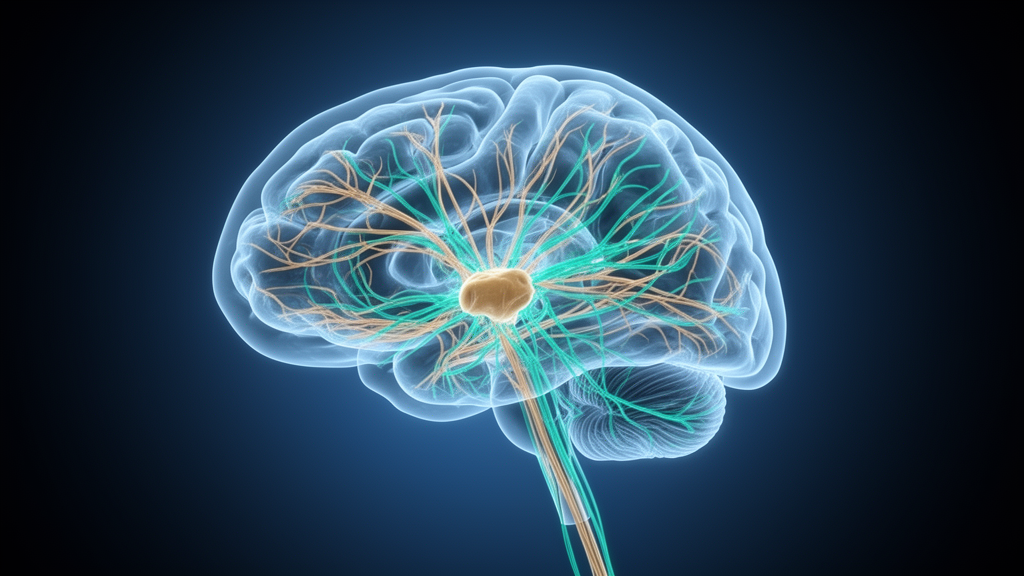
Researchers have fitted biophysically informed corticothalamic neural field models to high-density EEG recordings in order to probe thalamocortical function in disorders of consciousness, according to a multicentre study published in PLOS Computational Biology. The work, led by Lín Cóngyǔ and colleagues, analysed two large independent datasets comprising 203 patients with unresponsive wakefulness syndrome, also known as vegetative state, 270 patients in a minimally conscious state, and 74 healthy controls.
For each participant, the team fitted the model to empirical EEG data and then used the resulting parameters to simulate EEG time series on a per-subject basis. By comparing complexity metrics computed from the real and simulated recordings, the model reliably captured the spectral features of the brain activity across different states of consciousness.
The fitted parameters revealed reduced corticothalamic integrity in patients with disorders of consciousness, and this reduction was more pronounced in the unresponsive wakefulness group than in the minimally conscious group.
Importantly, the simulated EEG reproduced the complexity patterns seen in the empirical recordings.
Because the study was conducted in patient cohorts rather than as a clinical trial, the findings describe associations between model parameters and diagnostic categories rather than the efficacy of any treatment. The authors present the approach as a research tool for understanding neural mechanisms underlying disorders of consciousness, particularly in distinguishing limited awareness in the minimally conscious state from complete unawareness in unresponsive wakefulness syndrome.
Subject of Research: Computational modelling of thalamocortical function in disorders of consciousness using EEG
Article Title: Individualised electrophysiological neural field models for the assessment of thalamocortical function in disorders of consciousness: A multicentre study
Article References: Cóngyǔ, L., Tewarie, P., Alnagger, N. L. N., Mindlin, I., Van der Lande, G. J. M., Belloli, L., Laureys, S., Naccache, L., Rohaut, B., Thibaut, A., Annen, J., Gosseries, O., Núñez, P., & Sitt, J. D. (2026). Individualised electrophysiological neural field models for the assessment of thalamocortical function in disorders of consciousness: A multicentre study. PLOS Computational Biology, 22(10), e1014905. https://doi.org/10.1371/journal.pcbi.1014905
Image Credits: AI Generated
DOI: 10.1371/journal.pcbi.1014905
Keywords: disorders of consciousness, EEG, neural field model, thalamocortical, minimally conscious state, unresponsive wakefulness syndrome, permutation entropy, mesocircuit hypothesis, computational neuroscience, multicentre study, Individualised, electrophysiological
News Source: Cassandra Pierce. (October 28, 2026). Neural Field Model Fitting Suggests Reduced Corticothalamic Integrity in Disorders of Consciousness. Scienmag.



