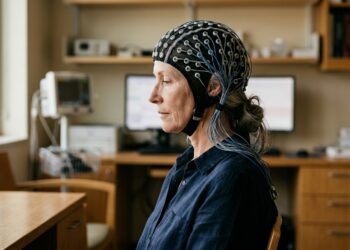
Computational Model Explains Brain Wave Coupling in Parkinson’s Disease
A computational model of the subthalamic nucleus reveals that synchronized bursting among excitatory neurons drives pathological phase-amplitude coupling in Parkinson's ...
A computational model of the subthalamic nucleus reveals that synchronized bursting among excitatory neurons drives pathological phase-amplitude coupling in Parkinson's ...

Researchers show that interpretable speech features largely account for how well audio foundation models predict brain responses, while also revealing ...

An editorial in Frontiers in Computational Neuroscience gathers eight studies arguing that neural systems operate near a critical state between ...

A computational study shows that distinct ion-channel configurations producing the same neuronal activity regimes differ sharply in how much ionic ...

A backpropagation-free Deep Memory mechanism preserves representations in dissipative AI architectures by recording centroids, seeding replaced units and stabilizing through ...
A multi-receptor whole-brain model traces atomoxetine's stabilizing effect on brain dynamics to receptor binding affinities expressed along a frontal chemoarchitectural ...

Simulations show that short, distance-dependent excitatory connections amplify shared inputs, drive burst propagation, and generate modular functional organization without built-in ...
A simulation-based study presents a nonlinear state-space model linking stress, negative cognitive bias and multivariate EEG and ERP signals, reporting ...
A multicentre study fitted individualised corticothalamic neural field models to EEG from 547 participants, showing reduced corticothalamic integrity in unresponsive ...
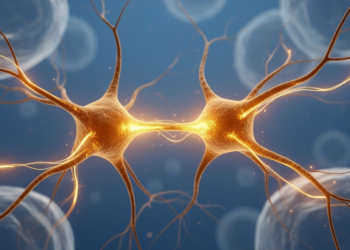
A computational model of Alzheimer's disease shows that adjusting short-term synaptic facilitation time constants can restore memory engram selectivity and ...
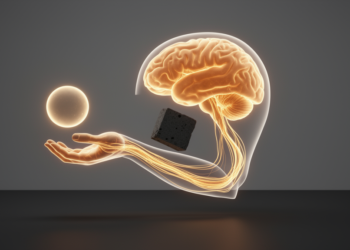
Researchers have built a computational model based on stochastic optimal control that reproduces how human movements bend around obstacles while ...
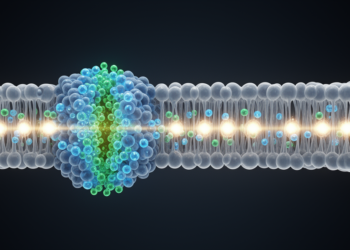
Evolutionary and computational models suggest that higher BK potassium-channel conductance may ease calcium-dependent activation limits and improve the precision of ...
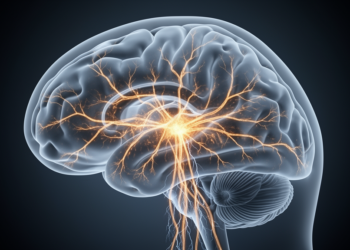
Adding biologically grounded inhibitory connections to a spiking neural network model of decision making improved its ability to predict human ...
A new collection of five computational neuroscience studies argues that cognition emerges from processes spanning single neurons to whole brain ...

A new computational neuroscience study shows that biologically constrained Hebbian learning can build useful visual representations without exact weight sharing, ...
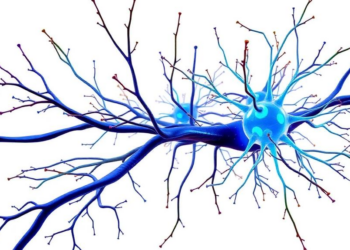
Researchers have built and validated a new general-purpose biophysical model of hippocampal CA1 pyramidal neurons that captures a wide range ...
A conductance-based computer model of the Parkinsonian brain circuit shows that deep brain stimulation and rhythmic visual input reshape network ...
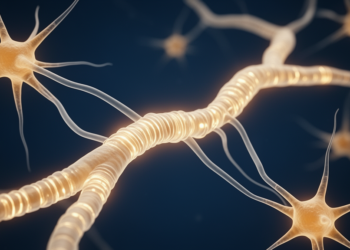
A new perspective in Frontiers in Computational Neuroscience maps the emerging computational models of activity-dependent myelination, showing how oligodendrocytes tune ...
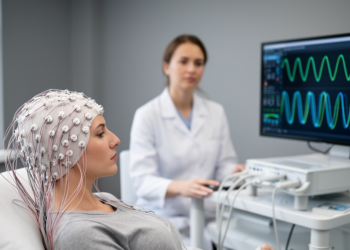
A hybrid CNN-BiLSTM model with multi-head self-attention classifies five EEG brain states, including seizures, with 98.83 percent accuracy on a ...
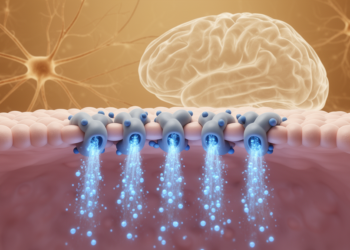
A new approximate matrix exponential method simulates Markov kinetic models of ion channels an order of magnitude faster and more ...