• HOME
  • NEWS
  • EXPLORE
    • CAREER
      • Companies
      • Jobs
    • EVENTS
    • iGEM
      • News
      • Team
    • PHOTOS
    • VIDEO
    • WIKI
  • BLOG
  • COMMUNITY
    • FACEBOOK
    • INSTAGRAM
    • TWITTER
Saturday, September 12, 2026
BIOENGINEER.ORG
No Result
View All Result
  • Login
  • HOME
  • NEWS
  • EXPLORE
    • CAREER
      • Companies
      • Jobs
        • Lecturer
        • PhD Studentship
        • Postdoc
        • Research Assistant
    • EVENTS
    • iGEM
      • News
      • Team
    • PHOTOS
    • VIDEO
    • WIKI
  • BLOG
  • COMMUNITY
    • FACEBOOK
    • INSTAGRAM
    • TWITTER
  • HOME
  • NEWS
  • EXPLORE
    • CAREER
      • Companies
      • Jobs
        • Lecturer
        • PhD Studentship
        • Postdoc
        • Research Assistant
    • EVENTS
    • iGEM
      • News
      • Team
    • PHOTOS
    • VIDEO
    • WIKI
  • BLOG
  • COMMUNITY
    • FACEBOOK
    • INSTAGRAM
    • TWITTER
No Result
View All Result
Bioengineer.org
No Result
View All Result
Home NEWS Science News Science

NASA’s Aqua Satellite catches Tropical Cyclone Lorna organizing

Bioengineer by Bioengineer
April 24, 2019
in Science
Reading Time: 2 mins read
0
IMAGE
Share on FacebookShare on TwitterShare on LinkedinShare on RedditShare on Telegram

IMAGE

Credit: NASA/NRL

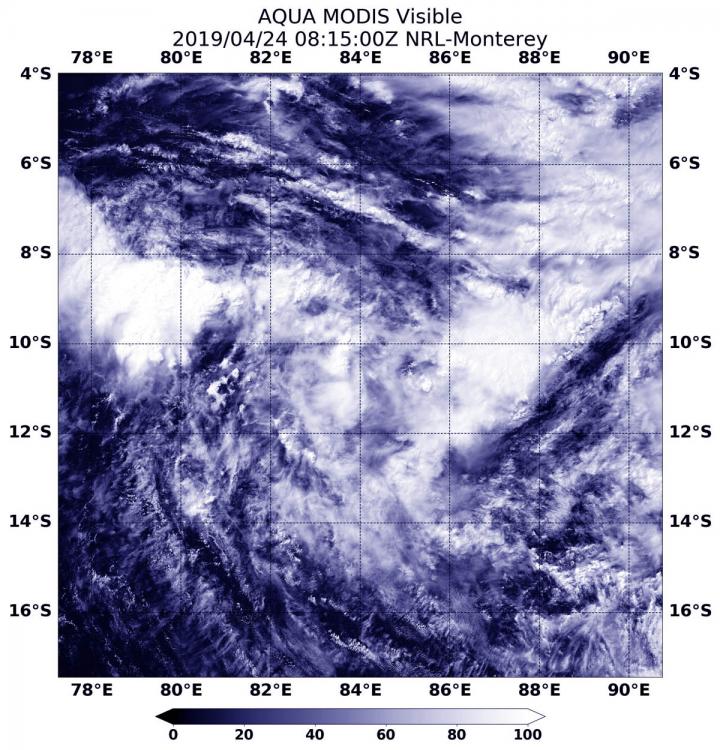
Visible satellite imagery from NASA’s Aqua satellite revealed the recently formed Tropical Storm Lorna was getting organized in the Southeastern Indian Ocean.

Lorna developed into a tropical storm on April 23 at 11 a.m. EDT (1500 UTC) and was named Tropical Cyclone 25S. On April 24, it received the name Lorna. At 4:15 a.m. EDT (0815 UTC) on April 24, the Moderate Resolution Imaging Spectroradiometer or MODIS instrument aboard Aqua captured a visible image of Lorna. The Joint Typhoon Warning Center or JTWC forecasters noted “persistent deep convection to the west of, and obscuring, the low level circulation center.”

By 11 a.m. EDT (1500 UTC) on April 24, Tropical Storm Lorna had maximum sustained winds near 40 knots (46 mph/74 kph). Lorna was centered near 10.9 degrees south latitude and 84.6 degrees east longitude, approximately 743 nautical miles southeast of Diego Garcia. Lorna has tracked to the east-southeast.

The tropical low pressure area designated System 92S is located east of Tropical Cyclone Lorna. The JTWC forecaster expect 92S to interact Lorna may merge with it.

Lorna is forecast to strengthen to hurricane-strengthen and move in a southerly direction. Lorna is not expected to affect any land areas.

###

By Rob Gutro

NASA’s Goddard Space Flight Center

Media Contact
Rob Gutro
[email protected]

Original Source

https://blogs.nasa.gov/hurricanes/2019/04/24/lorna-southeastern-indian-ocean/

Tags: Atmospheric ChemistryAtmospheric ScienceClimate ChangeClimate ScienceEarth ScienceMeteorologyTechnology/Engineering/Computer ScienceTemperature-Dependent PhenomenaWeather/Storms
Share12Tweet8Share2ShareShareShare2

Related Posts

Five or more hours of smartphone usage per day may increase obesity

July 25, 2019
IMAGE

NASA’s terra satellite finds tropical storm 07W’s strength on the side

July 25, 2019

NASA finds one burst of energy in weakening Depression Dalila

July 25, 2019

Researcher’s innovative flood mapping helps water and emergency management officials

July 25, 2019
Please login to join discussion

POPULAR NEWS

  • Charge-Switching Lipids Make Lipid Nanoparticles Safer for Gene Delivery

    29 shares
    Share 12 Tweet 7
  • Machine Learning Cracks the Code of Nitinol Wear, a Metal That Remembers Its Shape

    29 shares
    Share 12 Tweet 7
  • Ensemble of Five Neural Networks Creates Richer Deep Dream Art

    29 shares
    Share 12 Tweet 7
  • Motor Neuron Disease Deaths Rise in the US, but Age-Adjusted Rates Hold Steady

    29 shares
    Share 12 Tweet 7

About

We bring you the latest biotechnology news from best research centers and universities around the world. Check our website.

Follow us

Recent News

Charge-Switching Lipids Make Lipid Nanoparticles Safer for Gene Delivery

Machine Learning Cracks the Code of Nitinol Wear, a Metal That Remembers Its Shape

Ensemble of Five Neural Networks Creates Richer Deep Dream Art

Subscribe to Blog via Email

Enter your email address to subscribe to this blog and receive notifications of new posts by email.

Join 85 other subscribers
  • Contact Us

Bioengineer.org © Copyright 2023 All Rights Reserved.

Welcome Back!

Login to your account below

Forgotten Password?

Retrieve your password

Please enter your username or email address to reset your password.

Log In
No Result
View All Result
  • Homepages
    • Home Page 1
    • Home Page 2
  • News
  • National
  • Business
  • Health
  • Lifestyle
  • Science

Bioengineer.org © Copyright 2023 All Rights Reserved.