• HOME
  • NEWS
  • EXPLORE
    • CAREER
      • Companies
      • Jobs
    • EVENTS
    • iGEM
      • News
      • Team
    • PHOTOS
    • VIDEO
    • WIKI
  • BLOG
  • COMMUNITY
    • FACEBOOK
    • INSTAGRAM
    • TWITTER
Tuesday, August 18, 2026
BIOENGINEER.ORG
No Result
View All Result
  • Login
  • HOME
  • NEWS
  • EXPLORE
    • CAREER
      • Companies
      • Jobs
        • Lecturer
        • PhD Studentship
        • Postdoc
        • Research Assistant
    • EVENTS
    • iGEM
      • News
      • Team
    • PHOTOS
    • VIDEO
    • WIKI
  • BLOG
  • COMMUNITY
    • FACEBOOK
    • INSTAGRAM
    • TWITTER
  • HOME
  • NEWS
  • EXPLORE
    • CAREER
      • Companies
      • Jobs
        • Lecturer
        • PhD Studentship
        • Postdoc
        • Research Assistant
    • EVENTS
    • iGEM
      • News
      • Team
    • PHOTOS
    • VIDEO
    • WIKI
  • BLOG
  • COMMUNITY
    • FACEBOOK
    • INSTAGRAM
    • TWITTER
No Result
View All Result
Bioengineer.org
No Result
View All Result
Home NEWS Science News

NASA observes tropical storm Fung-Wong organize

Bioengineer by Bioengineer
November 20, 2019
in Science News
Reading Time: 2 mins read
0
IMAGE
Share on FacebookShare on TwitterShare on LinkedinShare on RedditShare on Telegram

IMAGE

Credit: Credit: NASA Worldview


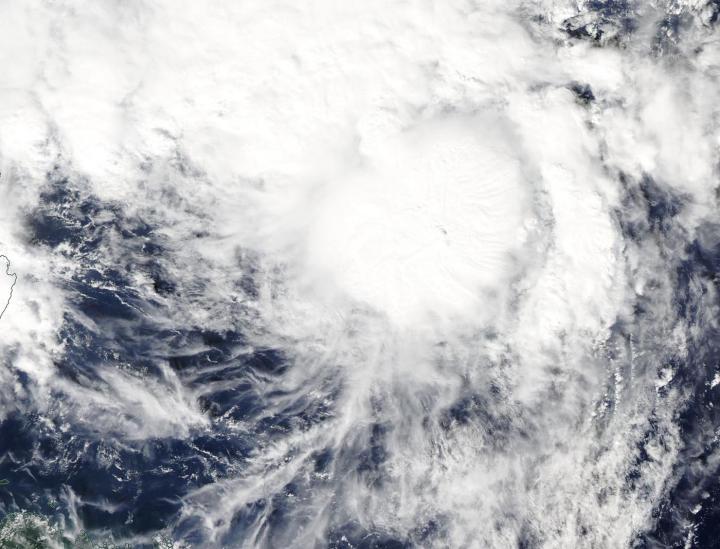
As Tropical Depression 28W continued organizing and developing into Tropical Storm Fung-Wong in the Philippine Sea, NASA’s Aqua satellite provided data on the storm to forecasters. In the Philippines, Fung-Wong is known as Sarah.

On Nov. 20, the Moderate Resolution Imaging Spectroradiometer or MODIS instrument that flies aboard NASA’s Aqua satellite provided a visible image on Fung-Wong. The image indicated that the circulation center was more well-defined. A band of thunderstorms was also seen on the eastern side of the storm.

The shape of the storm is a clue to forecasters that a storm is either strengthening or weakening. If a storm takes on a more rounded shape it is getting more organized and strengthening. Conversely, if it becomes less rounded or elongated, it is a sign the storm is weakening. Fung-Wong has appeared to become more symmetrical in the MODIS imagery, indicating it is getting better organized.

In addition, the Joint Typhoon Warning Center noted that animated enhanced infrared satellite imagery suggests the low-level circulation center is obscured under central dense overcast. The deep convection (bands of thunderstorms) appears to have begun wrapping completely around the low-level center of circulation.

At 10 a.m. EST (1500 UTC) on Nov. 20, the center of Tropical Storm Fung-Wong was located near latitude 19.5 degrees north and longitude 126.4 degrees east. That puts the center about 432 nautical miles southeast of Taipei, Taiwan. Maximum sustained winds were near 45 knots (52 mph/83 kph). Fung-Wong is moving to the north-northwest.

The Joint Typhoon Warning Center or JTWC noted that Fung-Wong would move northwest toward Taiwan. The system is forecast to strengthen to 55 knots (63 mph/102 kph) within 24 hours before weakening rapidly on approach to Taiwan.

The Central Weather Bureau of Taiwan is keeping track of the storm and will provide watches and warnings.

Typhoons and hurricanes are the most powerful weather event on Earth. NASA’s expertise in space and scientific exploration contributes to essential services provided to the American people by other federal agencies, such as hurricane weather forecasting.

###

For Taiwan Central Weather Bureau updates, visit https://www.cwb.gov.tw/V7e/prevent/typhoon/ty.htm

By Rob Gutro

NASA’s Goddard Space Flight Center

Media Contact
Rob Gutro
[email protected]

Original Source

https://blogs.nasa.gov/hurricanes/2019/11/20/fung-wong-northwestern-pacific-ocean/

Tags: Atmospheric ChemistryAtmospheric ScienceClimate ChangeClimate ScienceEarth ScienceMeteorologyTechnology/Engineering/Computer ScienceTemperature-Dependent PhenomenaWeather/Storms
Share12Tweet8Share2ShareShareShare2

Related Posts

UL Research Institutes names Chao-Yang Wang electrochemical safety institute executive director

UL Research Institutes names Chao-Yang Wang electrochemical safety institute executive director

August 18, 2026

Alliance reports first randomized trial results for radiopharmaceutical treatment in kidney cancer

August 18, 2026

Real-world study confirms TB preventive treatment works for people with HIV

August 18, 2026

3D-Printed Cellulose Hydrogel Keeps Wearable Sensors Flexible Below Freezing

August 18, 2026
Please login to join discussion

POPULAR NEWS

  • UL Research Institutes names Chao-Yang Wang electrochemical safety institute executive director

    29 shares
    Share 12 Tweet 7
  • Alliance reports first randomized trial results for radiopharmaceutical treatment in kidney cancer

    29 shares
    Share 12 Tweet 7
  • Real-world study confirms TB preventive treatment works for people with HIV

    29 shares
    Share 12 Tweet 7
  • 3D-Printed Cellulose Hydrogel Keeps Wearable Sensors Flexible Below Freezing

    29 shares
    Share 12 Tweet 7

About

We bring you the latest biotechnology news from best research centers and universities around the world. Check our website.

Follow us

Recent News

UL Research Institutes names Chao-Yang Wang electrochemical safety institute executive director

Alliance reports first randomized trial results for radiopharmaceutical treatment in kidney cancer

Real-world study confirms TB preventive treatment works for people with HIV

Subscribe to Blog via Email

Enter your email address to subscribe to this blog and receive notifications of new posts by email.

Join 85 other subscribers
  • Contact Us

Bioengineer.org © Copyright 2023 All Rights Reserved.

Welcome Back!

Login to your account below

Forgotten Password?

Retrieve your password

Please enter your username or email address to reset your password.

Log In
No Result
View All Result
  • Homepages
    • Home Page 1
    • Home Page 2
  • News
  • National
  • Business
  • Health
  • Lifestyle
  • Science

Bioengineer.org © Copyright 2023 All Rights Reserved.