• HOME
  • NEWS
  • EXPLORE
    • CAREER
      • Companies
      • Jobs
    • EVENTS
    • iGEM
      • News
      • Team
    • PHOTOS
    • VIDEO
    • WIKI
  • BLOG
  • COMMUNITY
    • FACEBOOK
    • INSTAGRAM
    • TWITTER
Tuesday, August 18, 2026
BIOENGINEER.ORG
No Result
View All Result
  • Login
  • HOME
  • NEWS
  • EXPLORE
    • CAREER
      • Companies
      • Jobs
        • Lecturer
        • PhD Studentship
        • Postdoc
        • Research Assistant
    • EVENTS
    • iGEM
      • News
      • Team
    • PHOTOS
    • VIDEO
    • WIKI
  • BLOG
  • COMMUNITY
    • FACEBOOK
    • INSTAGRAM
    • TWITTER
  • HOME
  • NEWS
  • EXPLORE
    • CAREER
      • Companies
      • Jobs
        • Lecturer
        • PhD Studentship
        • Postdoc
        • Research Assistant
    • EVENTS
    • iGEM
      • News
      • Team
    • PHOTOS
    • VIDEO
    • WIKI
  • BLOG
  • COMMUNITY
    • FACEBOOK
    • INSTAGRAM
    • TWITTER
No Result
View All Result
Bioengineer.org
No Result
View All Result
Home NEWS Science News

NASA-NOAA satellite sees Tropical Depression 19W organizing

Bioengineer by Bioengineer
September 27, 2019
in Science News
Reading Time: 2 mins read
0
IMAGE
Share on FacebookShare on TwitterShare on LinkedinShare on RedditShare on Telegram

IMAGE

Credit: NASA/NOAA/NRL

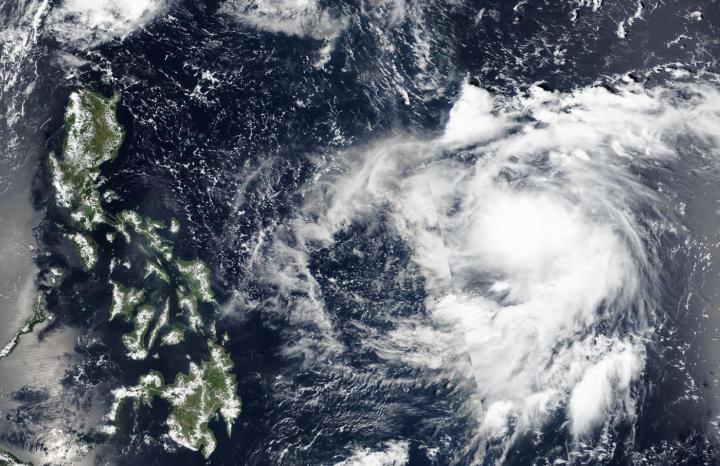
NASA-NOAA’s Suomi NPP satellite passed over the Northwestern Pacific Ocean and provided forecasters at the Joint Typhoon Warning Center with a view of Tropical Depression 19W’s structure that helped confirm it is now a depression.

On Sept. 27, 2019, the Visible Infrared Imaging Radiometer Suite (VIIRS) instrument aboard Suomi NPP provided a visible image of newly developed Tropical Depression 19W. The VIIRS image showed the storm had already developed some strong thunderstorms around its center with a band of strong storms feeding into the center from the southeast. The VIIRS imagery helped confirm that the storm is now a depression and appears to be strengthening toward tropical storm status.

On Sept. 27 at 5 a.m. EDT (0900 UTC), Tropical Depression 19W had maximum sustained winds near 25 knots (29 mph)/46 kph). 19W was centered near 14.4 degrees north latitude and 136.2 degrees east longitude. That puts the center approximately 908 nautical miles southeast of Kadena Air Base, Okinawa Island, Japan. The storm was moving to the west.

Forecasters at the Joint Typhoon Warning Center expect 19W will move west-northwest and strengthen, then turn north and move east of Taiwan.

###

Hurricanes are the most powerful weather event on Earth. NASA’s expertise in space and scientific exploration contributes to essential services provided to the American people by other federal agencies, such as hurricane weather forecasting.

For updated forecasts. Visit: http://www.nhc.noaa.gov

By Rob Gutro 

NASA’s Goddard Space Flight Center

Media Contact
Rob Gutro
[email protected]

Original Source

https://blogs.nasa.gov/hurricanes/2019/09/27/19w-northwestern-pacific-ocean/

Tags: Atmospheric ChemistryAtmospheric ScienceClimate ChangeClimate ScienceEarth ScienceMeteorologyTechnology/Engineering/Computer ScienceTemperature-Dependent PhenomenaWeather/Storms
Share14Tweet9Share2ShareShareShare2

Related Posts

Freeze-Drying Method Reveals Bacterial Ultrastructure in Scanning Electron Microscopy

Freeze-Drying Method Reveals Bacterial Ultrastructure in Scanning Electron Microscopy

August 18, 2026
Scientists map plant-fungus symbiosis at single-cell resolution

Scientists map plant-fungus symbiosis at single-cell resolution

August 18, 2026

Machine Learning Predicts Microslit Panel Surface Impedance in Grazing Flow

August 18, 2026

UC San Diego Wins $12.3 Million Grant to Study HIV-Methamphetamine Connection

August 18, 2026
Please login to join discussion

POPULAR NEWS

  • Freeze-Drying Method Reveals Bacterial Ultrastructure in Scanning Electron Microscopy

    29 shares
    Share 12 Tweet 7
  • Scientists map plant-fungus symbiosis at single-cell resolution

    29 shares
    Share 12 Tweet 7
  • Machine Learning Predicts Microslit Panel Surface Impedance in Grazing Flow

    29 shares
    Share 12 Tweet 7
  • UC San Diego Wins $12.3 Million Grant to Study HIV-Methamphetamine Connection

    29 shares
    Share 12 Tweet 7

About

We bring you the latest biotechnology news from best research centers and universities around the world. Check our website.

Follow us

Recent News

Freeze-Drying Method Reveals Bacterial Ultrastructure in Scanning Electron Microscopy

Scientists map plant-fungus symbiosis at single-cell resolution

Machine Learning Predicts Microslit Panel Surface Impedance in Grazing Flow

Subscribe to Blog via Email

Enter your email address to subscribe to this blog and receive notifications of new posts by email.

Join 85 other subscribers
  • Contact Us

Bioengineer.org © Copyright 2023 All Rights Reserved.

Welcome Back!

Login to your account below

Forgotten Password?

Retrieve your password

Please enter your username or email address to reset your password.

Log In
No Result
View All Result
  • Homepages
    • Home Page 1
    • Home Page 2
  • News
  • National
  • Business
  • Health
  • Lifestyle
  • Science

Bioengineer.org © Copyright 2023 All Rights Reserved.