• HOME
  • NEWS
  • EXPLORE
    • CAREER
      • Companies
      • Jobs
    • EVENTS
    • iGEM
      • News
      • Team
    • PHOTOS
    • VIDEO
    • WIKI
  • BLOG
  • COMMUNITY
    • FACEBOOK
    • INSTAGRAM
    • TWITTER
Monday, October 5, 2026
BIOENGINEER.ORG
No Result
View All Result
  • Login
  • HOME
  • NEWS
  • EXPLORE
    • CAREER
      • Companies
      • Jobs
        • Lecturer
        • PhD Studentship
        • Postdoc
        • Research Assistant
    • EVENTS
    • iGEM
      • News
      • Team
    • PHOTOS
    • VIDEO
    • WIKI
  • BLOG
  • COMMUNITY
    • FACEBOOK
    • INSTAGRAM
    • TWITTER
No Result
View All Result
Bioengineer.org
No Result
View All Result
Home NEWS Science News

NASA follows Tropical Storm Nuri’s path

Bioengineer by Bioengineer
June 15, 2020
in Science News
Reading Time: 2 mins read
0
IMAGE
Share on FacebookShare on TwitterShare on LinkedinShare on RedditShare on Telegram

IMAGE

Credit: Credit: NASA Worldview

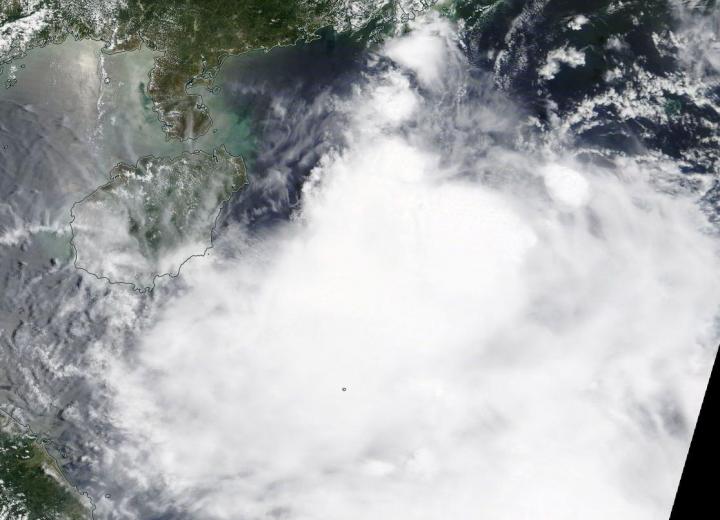
An animation of four days of imagery from NASA’s Terra satellite showed the progression and landfall of Tropical Storm Nuri.

At NASA’s Goddard Space Flight Center in Greenbelt, Md. an animation of Nuri from June 11 to 15 was created using NASA Terra satellite images. It showed Nuri’s path through the South China Sea, its landfall and dissipation over southern China. The Moderate Imaging Spectroradiometer or MODIS instrument that flies aboard NASA’s Terra satellite captured the visible images.

NASA’s Terra satellite provided a visible image to forecasters of Tropical Storm Nuri as it approached the southeastern coast of China during the day on Saturday, June 13. At that time, Strong wind signal #3 was in force for Hong Kong. At 5 a.m. EDT (0900 UTC), Tropical storm Nuri was located near latitude 18.7 north and longitude 115.2 east, 166 miles south-southeast of Hong Kong. Nuri was moving to the west-northwest and had maximum sustained winds of 35 knots (40 mph/65 kph). Nuri was moving northwest and did not strengthen further before making landfall.

On June 13 at 11 p.m. EDT (June 14 at 0300 UTC), the Joint Typhoon Warning Center issued their final warning on Nuri. Nuri had made landfall in China’s Guangdong Province and was located near latitude 21.8 degrees north and longitude 112.0 degrees east, about 126 nautical miles west-southwest of Hong Kong. Nuri had weakened to a depression and had maximum sustained winds near 25 knots (29 mph/46 kph). It was moving to the northwest and dissipating.

NASA’s Terra satellite is one in a fleet of NASA satellites that provide data for hurricane research.

Tropical cyclones/hurricanes are the most powerful weather events on Earth. NASA’s expertise in space and scientific exploration contributes to essential services provided to the American people by other federal agencies, such as hurricane weather forecasting.

For updated forecasts, visit: http://www.nhc.noaa.gov

###

Media Contact
Rob Gutro
[email protected]

Original Source

https://blogs.nasa.gov/hurricanes/2020/06/15/nuri-south-china-sea-2/

Tags: Atmospheric ChemistryAtmospheric ScienceClimate ChangeClimate ScienceEarth ScienceMeteorologyTechnology/Engineering/Computer ScienceTemperature-Dependent PhenomenaWeather/Storms
Share12Tweet8Share2ShareShareShare2

Related Posts

When AI Hears Africa: The Hidden Bias in Generative Music Systems

When AI Hears Africa: The Hidden Bias in Generative Music Systems

October 5, 2026
Hybrid Compression Scheme Shrinks Images While Keeping Quality Intact

Hybrid Compression Scheme Shrinks Images While Keeping Quality Intact

October 5, 2026

Ribosomes Are Not All Alike: Review Maps the Rise of Specialized Protein Factories

October 5, 2026

Monotonic neural networks reveal building water pipes are drastically oversized

October 5, 2026
Please login to join discussion

POPULAR NEWS

  • Alloys That Shrink Their Own Grains: New PIX Mechanism Refines Metals With Heat Alone

    Alloys That Shrink Their Own Grains: New PIX Mechanism Refines Metals With Heat Alone

    29 shares
    Share 12 Tweet 7
  • Endurance Exercise Reshapes the Liver in Males and Females Through Distinct Molecular Routes

    29 shares
    Share 12 Tweet 7
  • Single Transcription Factor PU.1 Rapidly Converts Fibroblasts into Macrophage-Lineage Cells

    29 shares
    Share 12 Tweet 7
  • New Scale Measures How Ready Nurse Educators Really Are for the AI Era

    29 shares
    Share 12 Tweet 7

About

We bring you the latest biotechnology news from best research centers and universities around the world. Check our website.

Follow us

Recent News

Alloys That Shrink Their Own Grains: New PIX Mechanism Refines Metals With Heat Alone

Endurance Exercise Reshapes the Liver in Males and Females Through Distinct Molecular Routes

Single Transcription Factor PU.1 Rapidly Converts Fibroblasts into Macrophage-Lineage Cells

Subscribe to Blog via Email

Success! An email was just sent to confirm your subscription. Please find the email now and click 'Confirm' to start subscribing.

Join 85 other subscribers
  • Contact Us

Bioengineer.org © Copyright 2023 All Rights Reserved.

Welcome Back!

Login to your account below

Forgotten Password?

Retrieve your password

Please enter your username or email address to reset your password.

Log In
No Result
View All Result
  • Homepages
    • Home Page 1
    • Home Page 2
  • News
  • National
  • Business
  • Health
  • Lifestyle
  • Science

Bioengineer.org © Copyright 2023 All Rights Reserved.