• HOME
  • NEWS
  • EXPLORE
    • CAREER
      • Companies
      • Jobs
    • EVENTS
    • iGEM
      • News
      • Team
    • PHOTOS
    • VIDEO
    • WIKI
  • BLOG
  • COMMUNITY
    • FACEBOOK
    • INSTAGRAM
    • TWITTER
Wednesday, July 1, 2026
BIOENGINEER.ORG
No Result
View All Result
  • Login
  • HOME
  • NEWS
  • EXPLORE
    • CAREER
      • Companies
      • Jobs
        • Lecturer
        • PhD Studentship
        • Postdoc
        • Research Assistant
    • EVENTS
    • iGEM
      • News
      • Team
    • PHOTOS
    • VIDEO
    • WIKI
  • BLOG
  • COMMUNITY
    • FACEBOOK
    • INSTAGRAM
    • TWITTER
  • HOME
  • NEWS
  • EXPLORE
    • CAREER
      • Companies
      • Jobs
        • Lecturer
        • PhD Studentship
        • Postdoc
        • Research Assistant
    • EVENTS
    • iGEM
      • News
      • Team
    • PHOTOS
    • VIDEO
    • WIKI
  • BLOG
  • COMMUNITY
    • FACEBOOK
    • INSTAGRAM
    • TWITTER
No Result
View All Result
Bioengineer.org
No Result
View All Result
Home NEWS Science News

NASA finds Tropical Storm Irondro’s heavy rainfall displaced

Bioengineer by Bioengineer
April 6, 2020
in Science News
Reading Time: 2 mins read
0
IMAGE
Share on FacebookShare on TwitterShare on LinkedinShare on RedditShare on Telegram

IMAGE

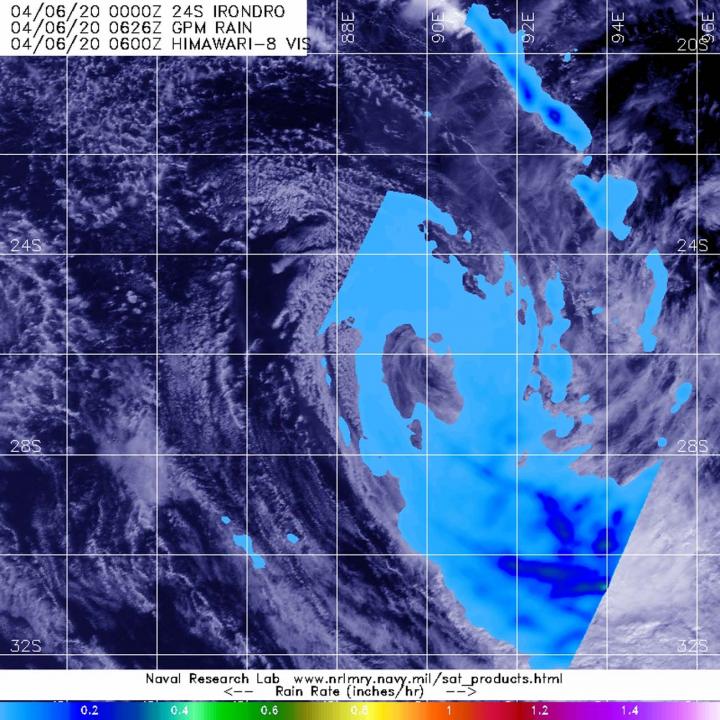
Credit: NASA/JAXA/NRL

NASA analyzed Tropical Storm Irondro’s rainfall and found heaviest rainfall was being pushed far southeast of the center because of strong wind shear.

NASA has the unique capability of peering under the clouds in storms and measuring the rate in which rain is falling. Global Precipitation Measurement mission or GPM core passed over Irondro from its orbit in space and measured rainfall rates throughout the storm on Apr. 6 at 2:26 a.m. EDT (0626 UTC). Heaviest rainfall was being pushed southeast of the center where it was falling at a rate of 1 inch (25 mm) per hour. Light rain was found throughout the rest of the storm.

In general, wind shear is a measure of how the speed and direction of winds change with altitude. Tropical cyclones are like rotating cylinders of winds. Each level needs to be stacked on top each other vertically in order for the storm to maintain strength or intensify. Wind shear occurs when winds at different levels of the atmosphere push against the rotating cylinder of winds, weakening the rotation by pushing it apart at different levels. Winds from the northwest were pushing against the storm and displacing the heaviest rainfall southeast of the center.

On Apr. 6 at 4 a.m. EDT (0900 UTC), the Joint Typhoon Warning Center issued their final warning on Irondro. Despite the wind shear, Tropical Storm Irondro had maximum sustained winds near 40 knots (46 mph/74 kph). Irondro was located near latitude 26.7 degrees south and longitude 89.5 degrees east. Irondro is becoming extra-tropical and is expected to become a cold core low pressure area later in the day.

Typhoons/hurricanes are the most powerful weather events on Earth. NASA’s expertise in space and scientific exploration contributes to essential services provided to the American people by other federal agencies, such as hurricane weather forecasting.

Both the Japan Aerospace Exploration Agency, JAXA and NASA manage GPM.

###

Media Contact
Rob Gutro
[email protected]

Original Source

https://blogs.nasa.gov/hurricanes/2020/04/06/irondro-southern-indian-ocean-3/

Tags: Atmospheric ChemistryAtmospheric ScienceClimate ChangeClimate ScienceEarth ScienceMeteorologyTechnology/Engineering/Computer ScienceTemperature-Dependent PhenomenaWeather/Storms
Share12Tweet8Share2ShareShareShare2

Related Posts

Social Marginalization Limits Access to Ontario Home Care

July 1, 2026
Revolutionary Soft Robotic Heart Paves the Way for Advanced Disease Research and Medical Device Testing — Technology and Engineering

Revolutionary Soft Robotic Heart Paves the Way for Advanced Disease Research and Medical Device Testing

July 1, 2026

Gut Microbiome: The Secret Architect Shaping Liver Cancer Immunotherapy Outcomes

July 1, 2026

Non-Toxic Lyme Disease Protection May Soon Be a Common Purchase

July 1, 2026
Please login to join discussion

POPULAR NEWS

  • Detection of EDCs in Breast Milk and Infant Urine Up to Six Months Highlights Early Exposure Risks

    77 shares
    Share 31 Tweet 19
  • Saying Goodbye to PGY-6: Pediatric Fellowship Realities

    103 shares
    Share 41 Tweet 26
  • New Drug Candidate Developed at McMaster Shows Potential for Treating Brain Cancer

    58 shares
    Share 23 Tweet 15
  • KTU Researchers Explore Ultrasound’s Role in Enhancing Blood Flow Beyond Diagnostics

    53 shares
    Share 21 Tweet 13

About

We bring you the latest biotechnology news from best research centers and universities around the world. Check our website.

Follow us

Recent News

Social Marginalization Limits Access to Ontario Home Care

Revolutionary Soft Robotic Heart Paves the Way for Advanced Disease Research and Medical Device Testing

Gut Microbiome: The Secret Architect Shaping Liver Cancer Immunotherapy Outcomes

Subscribe to Blog via Email

Enter your email address to subscribe to this blog and receive notifications of new posts by email.

Join 82 other subscribers
  • Contact Us

Bioengineer.org © Copyright 2023 All Rights Reserved.

Welcome Back!

Login to your account below

Forgotten Password?

Retrieve your password

Please enter your username or email address to reset your password.

Log In
No Result
View All Result
  • Homepages
    • Home Page 1
    • Home Page 2
  • News
  • National
  • Business
  • Health
  • Lifestyle
  • Science

Bioengineer.org © Copyright 2023 All Rights Reserved.