• HOME
  • NEWS
  • EXPLORE
    • CAREER
      • Companies
      • Jobs
    • EVENTS
    • iGEM
      • News
      • Team
    • PHOTOS
    • VIDEO
    • WIKI
  • BLOG
  • COMMUNITY
    • FACEBOOK
    • INSTAGRAM
    • TWITTER
Wednesday, December 17, 2025
BIOENGINEER.ORG
No Result
View All Result
  • Login
  • HOME
  • NEWS
  • EXPLORE
    • CAREER
      • Companies
      • Jobs
        • Lecturer
        • PhD Studentship
        • Postdoc
        • Research Assistant
    • EVENTS
    • iGEM
      • News
      • Team
    • PHOTOS
    • VIDEO
    • WIKI
  • BLOG
  • COMMUNITY
    • FACEBOOK
    • INSTAGRAM
    • TWITTER
  • HOME
  • NEWS
  • EXPLORE
    • CAREER
      • Companies
      • Jobs
        • Lecturer
        • PhD Studentship
        • Postdoc
        • Research Assistant
    • EVENTS
    • iGEM
      • News
      • Team
    • PHOTOS
    • VIDEO
    • WIKI
  • BLOG
  • COMMUNITY
    • FACEBOOK
    • INSTAGRAM
    • TWITTER
No Result
View All Result
Bioengineer.org
No Result
View All Result
Home NEWS Science News

NASA data stares into the eye of powerful hurricane Lorenzo

Bioengineer by Bioengineer
September 27, 2019
in Science News
Reading Time: 2 mins read
0
IMAGE
Share on FacebookShare on TwitterShare on LinkedinShare on RedditShare on Telegram

IMAGE

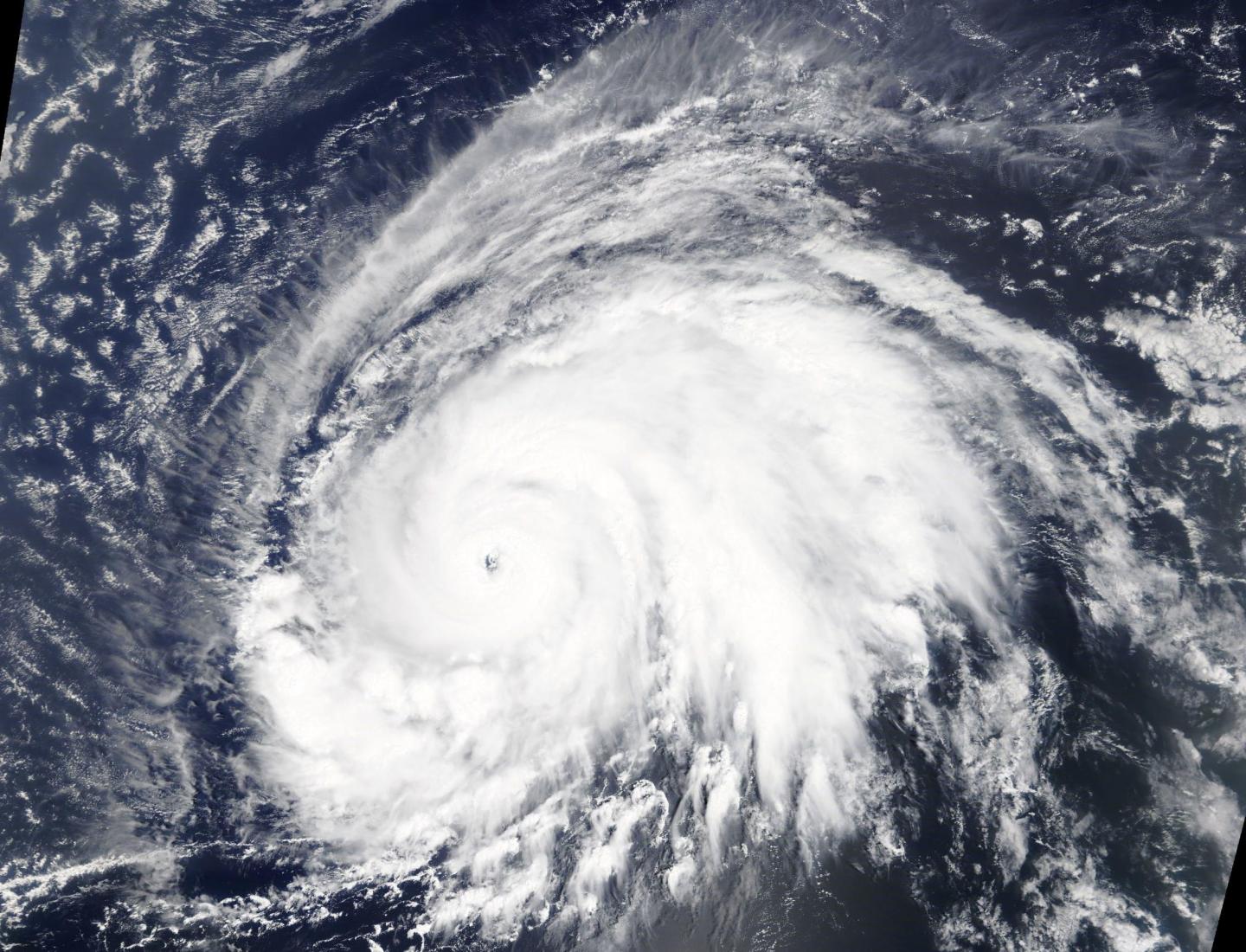
Credit: Credit: NASA Worldview, Earth Observing System Data and Information System (EOSDIS).

Satellite data has confirmed that Lorenzo is a major hurricane in the eastern North Atlantic Ocean with an impressive structure. NASA’s Terra Satellite provided a visible image of Lorenzo that revealed a clear eye and a solid structure of thunderstorms around the eye.

On Sept. 26, the Moderate Imaging Spectroradiometer or MODIS instrument that flies aboard NASA’s Terra satellite provided a visible image of Lorenzo as a major hurricane. The image and other satellite images showed a well-defined eye. The MODIS image revealed powerful thunderstorms around the eyewall, extending high into the troposphere. The circular shape of the storm indicated an organized and powerful storm.

At 5 a.m. EDT (0900 UTC), on Sept. 27 the center of Hurricane Lorenzo was located near latitude 18.6 degrees north and longitude 42.1 degrees west. Lorenzo is moving toward the north-northwest near 14 mph (22 km/h), and this general motion is forecast to continue today. A turn toward the north is expected on Saturday, followed by a turn toward the northeast on Sunday. Maximum sustained winds remain near 145 mph (230 kph) with higher gusts. Lorenzo is a category 4 hurricane on the Saffir-Simpson Hurricane Wind Scale. Some fluctuations in strength are possible today. Slow weakening is forecast to begin by the weekend.

Lorenzo is a large hurricane. Hurricane-force winds extend outward up to 45 miles (75 km) from the center and tropical-storm-force winds extend outward up to 265 miles (425 km).

Lorenzo, as a Category 4 hurricane has a long reach with ocean swells. Swells generated by Lorenzo are affecting portions of the northeastern coast of South America and will affect portions of the Windward Islands beginning today.

The estimated minimum central pressure is 937 mb (27.67 inches).

Hurricanes are the most powerful weather event on Earth. NASA’s expertise in space and scientific exploration contributes to essential services provided to the American people by other federal agencies, such as hurricane weather forecasting.

###

For updated forecasts, visit: http://www.nhc.noaa.gov

By Rob Gutro

NASA’s Goddard Space Flight Center

Media Contact
Rob Gutro
[email protected]

Original Source

https://blogs.nasa.gov/hurricanes/2019/09/27/lorenzo-atlantic-ocean-5/

Tags: Atmospheric ChemistryAtmospheric ScienceClimate ChangeClimate ScienceEarth ScienceMeteorologyTechnology/Engineering/Computer ScienceTemperature-Dependent PhenomenaWeather/Storms
Share14Tweet9Share2ShareShareShare2

Related Posts

Exploring Medical Error Reporting in Kenyan Hospitals

December 17, 2025
New Scaled Antimony Contacts Enhance 2D Transistor Performance

New Scaled Antimony Contacts Enhance 2D Transistor Performance

December 17, 2025

Neuronal Structure Change Alters Calcium Dynamics

December 17, 2025

Boosting Cassava Yield and Drought Resilience via Vascular Potassium

December 17, 2025
Please login to join discussion

POPULAR NEWS

  • Nurses’ Views on Online Learning: Effects on Performance

    Nurses’ Views on Online Learning: Effects on Performance

    70 shares
    Share 28 Tweet 18
  • NSF funds machine-learning research at UNO and UNL to study energy requirements of walking in older adults

    70 shares
    Share 28 Tweet 18
  • MoCK2 Kinase Shapes Mitochondrial Dynamics in Rice Fungal Pathogen

    72 shares
    Share 29 Tweet 18
  • Unraveling Levofloxacin’s Impact on Brain Function

    52 shares
    Share 21 Tweet 13

About

BIOENGINEER.ORG

We bring you the latest biotechnology news from best research centers and universities around the world. Check our website.

Follow us

Recent News

Exploring Medical Error Reporting in Kenyan Hospitals

New Scaled Antimony Contacts Enhance 2D Transistor Performance

Neuronal Structure Change Alters Calcium Dynamics

Subscribe to Blog via Email

Enter your email address to subscribe to this blog and receive notifications of new posts by email.

Join 70 other subscribers
  • Contact Us

Bioengineer.org © Copyright 2023 All Rights Reserved.

Welcome Back!

Login to your account below

Forgotten Password?

Retrieve your password

Please enter your username or email address to reset your password.

Log In
No Result
View All Result
  • Homepages
    • Home Page 1
    • Home Page 2
  • News
  • National
  • Business
  • Health
  • Lifestyle
  • Science

Bioengineer.org © Copyright 2023 All Rights Reserved.