• HOME
  • NEWS
  • EXPLORE
    • CAREER
      • Companies
      • Jobs
    • EVENTS
    • iGEM
      • News
      • Team
    • PHOTOS
    • VIDEO
    • WIKI
  • BLOG
  • COMMUNITY
    • FACEBOOK
    • INSTAGRAM
    • TWITTER
Monday, August 17, 2026
BIOENGINEER.ORG
No Result
View All Result
  • Login
  • HOME
  • NEWS
  • EXPLORE
    • CAREER
      • Companies
      • Jobs
        • Lecturer
        • PhD Studentship
        • Postdoc
        • Research Assistant
    • EVENTS
    • iGEM
      • News
      • Team
    • PHOTOS
    • VIDEO
    • WIKI
  • BLOG
  • COMMUNITY
    • FACEBOOK
    • INSTAGRAM
    • TWITTER
  • HOME
  • NEWS
  • EXPLORE
    • CAREER
      • Companies
      • Jobs
        • Lecturer
        • PhD Studentship
        • Postdoc
        • Research Assistant
    • EVENTS
    • iGEM
      • News
      • Team
    • PHOTOS
    • VIDEO
    • WIKI
  • BLOG
  • COMMUNITY
    • FACEBOOK
    • INSTAGRAM
    • TWITTER
No Result
View All Result
Bioengineer.org
No Result
View All Result
Home NEWS Science News

NASA catches development of Tropical Cyclone Nuri in South China Sea

Bioengineer by Bioengineer
June 12, 2020
in Science News
Reading Time: 2 mins read
0
IMAGE
Share on FacebookShare on TwitterShare on LinkedinShare on RedditShare on Telegram

IMAGE

Credit: NASA/Worldview

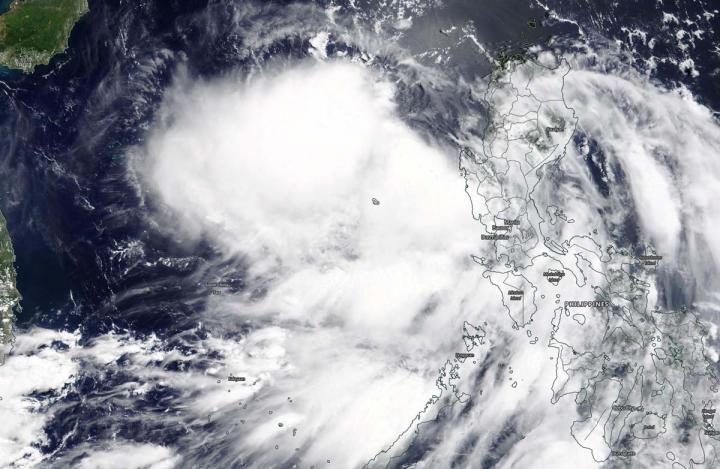
A low-pressure system that developed in the Philippine Sea and tracked over the central Philippines has moved into the South China Sea and become a depression. NASA’s Terra satellite provided an image of the newly formed storm.

Tropical Depression Nuri (also known as 02W) formed by 5 a.m. EDT (0900 UTC) after passing over Luzon, Philippines and moved into the South China Sea. On June 12, 2020, the Moderate Resolution Imaging Spectroradiometer or MODIS instrument that flies aboard NASA’s Terra satellite provided a visible image of the newly developed Nuri. The image showed a cluster of thunderstorms surrounding the center of circulation and located between the Philippines and Hainan Island, China.

The Joint Typhoon Warning Center noted, “Animated enhanced infrared satellite imagery depicts discrete clusters of deep convection flaring around the periphery of a broad low-level circulation center. A microwave image indicates a broad weakly defined low level center with formative shallow banding [of thunderstorms] wrapping into the center.”

By 11 a.m. EDT (1500 UTC), it was located approximately 329 nautical miles south-southeast of Hong Kong, China, near latitude 17.9 degrees north and longitude 116.8 degrees east. Maximum sustained winds were 30 knots (34.5 mph/55.5 kph) and strengthening is forecast. Nuri has tracked west northwestward at 13 knots (15 mph/24 kph).

The storm is forecast to make landfall to the southwest of Hong Kong, China on June 14.

###

NASA’s Terra satellite is one in a fleet of NASA satellites that provide data for hurricane research.

Tropical cyclones/hurricanes are the most powerful weather events on Earth. NASA’s expertise in space and scientific exploration contributes to essential services provided to the American people by other federal agencies, such as hurricane weather forecasting.

By Rob Gutro

NASA’s Goddard Space Flight Center

Media Contact
Rob Gutro
[email protected]

Original Source

https://blogs.nasa.gov/hurricanes/2020/06/12/nuri-south-china-sea/

Tags: Atmospheric ChemistryAtmospheric ScienceClimate ChangeClimate ScienceEarth ScienceMeteorologyTechnology/Engineering/Computer ScienceTemperature-Dependent PhenomenaWeather/Storms
Share12Tweet8Share2ShareShareShare2

Related Posts

PD-1 Balances Brain Viral Control and Neuroinflammation by Regulating T Cell Responses

August 17, 2026
Digital Twins Accelerate Oxide Transistor Optimization, Overcoming Performance–Reliability Trade-offs

Digital Twins Accelerate Oxide Transistor Optimization, Overcoming Performance–Reliability Trade-offs

August 17, 2026

Pilot Study Examines Personal Care Use, Social Media Engagement Among NJ Students

August 17, 2026

KAIST develops semiconductor neuron that harnesses noise to selectively process signals

August 16, 2026
Please login to join discussion

POPULAR NEWS

  • PD-1 Balances Brain Viral Control and Neuroinflammation by Regulating T Cell Responses

    29 shares
    Share 12 Tweet 7
  • Digital Twins Accelerate Oxide Transistor Optimization, Overcoming Performance–Reliability Trade-offs

    29 shares
    Share 12 Tweet 7
  • Pilot Study Examines Personal Care Use, Social Media Engagement Among NJ Students

    29 shares
    Share 12 Tweet 7
  • KAIST develops semiconductor neuron that harnesses noise to selectively process signals

    29 shares
    Share 12 Tweet 7

About

BIOENGINEER.ORG

We bring you the latest biotechnology news from best research centers and universities around the world. Check our website.

Follow us

Recent News

PD-1 Balances Brain Viral Control and Neuroinflammation by Regulating T Cell Responses

Digital Twins Accelerate Oxide Transistor Optimization, Overcoming Performance–Reliability Trade-offs

Pilot Study Examines Personal Care Use, Social Media Engagement Among NJ Students

Subscribe to Blog via Email

Enter your email address to subscribe to this blog and receive notifications of new posts by email.

Join 85 other subscribers
  • Contact Us

Bioengineer.org © Copyright 2023 All Rights Reserved.

Welcome Back!

Login to your account below

Forgotten Password?

Retrieve your password

Please enter your username or email address to reset your password.

Log In
No Result
View All Result
  • Homepages
    • Home Page 1
    • Home Page 2
  • News
  • National
  • Business
  • Health
  • Lifestyle
  • Science

Bioengineer.org © Copyright 2023 All Rights Reserved.