• HOME
  • NEWS
  • EXPLORE
    • CAREER
      • Companies
      • Jobs
    • EVENTS
    • iGEM
      • News
      • Team
    • PHOTOS
    • VIDEO
    • WIKI
  • BLOG
  • COMMUNITY
    • FACEBOOK
    • INSTAGRAM
    • TWITTER
Monday, October 5, 2026
BIOENGINEER.ORG
No Result
View All Result
  • Login
  • HOME
  • NEWS
  • EXPLORE
    • CAREER
      • Companies
      • Jobs
        • Lecturer
        • PhD Studentship
        • Postdoc
        • Research Assistant
    • EVENTS
    • iGEM
      • News
      • Team
    • PHOTOS
    • VIDEO
    • WIKI
  • BLOG
  • COMMUNITY
    • FACEBOOK
    • INSTAGRAM
    • TWITTER
  • HOME
  • NEWS
  • EXPLORE
    • CAREER
      • Companies
      • Jobs
        • Lecturer
        • PhD Studentship
        • Postdoc
        • Research Assistant
    • EVENTS
    • iGEM
      • News
      • Team
    • PHOTOS
    • VIDEO
    • WIKI
  • BLOG
  • COMMUNITY
    • FACEBOOK
    • INSTAGRAM
    • TWITTER
No Result
View All Result
Bioengineer.org
No Result
View All Result
Home NEWS Science News

NASA analyzes Tropical Cyclone Phanfone’s water vapor concentration

Bioengineer by Bioengineer
December 23, 2019
in Science News
Reading Time: 2 mins read
0
IMAGE
Share on FacebookShare on TwitterShare on LinkedinShare on RedditShare on Telegram

IMAGE

Credit: NASA/NRL


When NASA’s Aqua satellite passed over the Northwestern Pacific Ocean, water vapor data provided information about the intensity of Tropical Cyclone Phanfone. In the Philippines, the storm is known locally as Ursula.

Tropical Depression 30W formed early on Dec. 22 and strengthened into a tropical storm. By 4 a.m. EST (0900 UTC), the storm was renamed Phanfone.

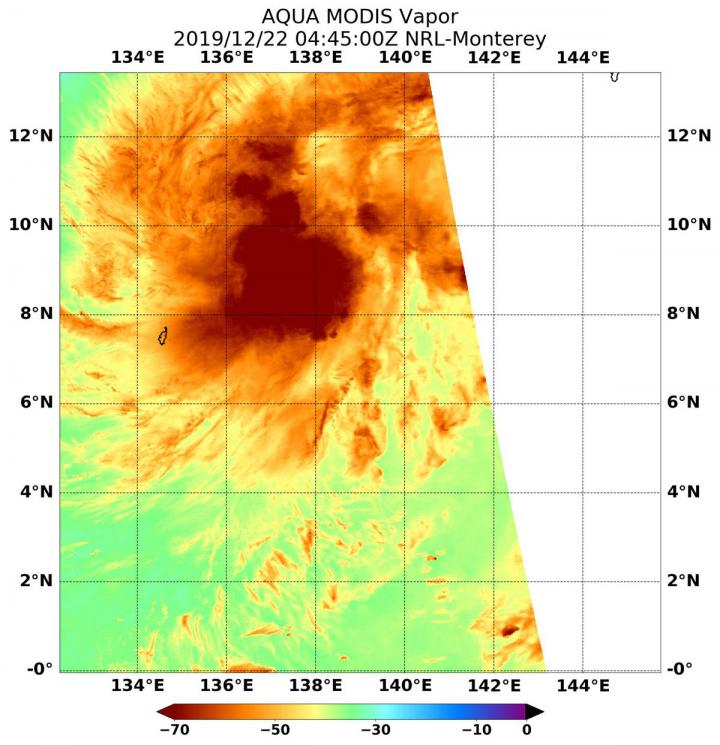
NASA’s Aqua satellite passed over Tropical Cyclone on Dec. 22 at 0445 UTC (Dec. 21 at 11:45 p.m. EST) and the Moderate Resolution Imaging Spectroradiometer or MODIS instrument gathered water vapor content and temperature information. The MODIS image showed highest concentrations of water vapor and coldest cloud top temperatures were around the center of circulation.

MODIS data also showed coldest cloud top temperatures were as cold as or colder than minus 70 degrees Fahrenheit (minus 56.6 degrees Celsius) in those storms. Storms with cloud top temperatures that cold have the capability to produce heavy rainfall.

Water vapor analysis of tropical cyclones tells forecasters how much potential a storm has to develop. Water vapor releases latent heat as it condenses into liquid. That liquid becomes clouds and thunderstorms that make up a tropical cyclone. Temperature is important when trying to understand how strong storms can be. The higher the cloud tops, the colder and the stronger the storms.

On Dec. 23 at 4 a.m. EST (0900 UTC), Tropical Storm Phanfone (Philippines designation Ursula) was located near latitude 9.8 degrees north and longitude 132.2 degrees east, about 717 nautical miles east-southeast of Manila, Philippines. Phanfone is moving to the west-northwest and had maximum sustained winds near 40 knots (46 mph/74 kph).

On Dec. 23 at 10 a.m. EST (1500 UTC), the GMI or Microwave Imager sensor aboard NASA and the Japan Aerospace Exploration Agency’s Global Precipitation Measurement mission or GPM core satellite, showed an eye was developing in Phanfone’s center.

Forecasters at the Joint Typhoon Warning Center expect Phanfone will move west-northwest toward and through the central Philippine archipelago and the Visayas and Mindanao regions on Dec. 24 and 25.

NASA’s Aqua satellite is one in a fleet of NASA satellites that provide data for hurricane research.

Typhoons and hurricanes are the most powerful weather event on Earth. NASA’s expertise in space and scientific exploration contributes to essential services provided to the American people by other federal agencies, such as hurricane weather forecasting.

###

Media Contact
Rob Gutro
[email protected]

Original Source

https://blogs.nasa.gov/hurricanes/2019/12/23/phanfone-northwestern-pacific-ocean/

Tags: Atmospheric ChemistryAtmospheric ScienceClimate ChangeClimate ScienceEarth ScienceMeteorologyTechnology/Engineering/Computer ScienceTemperature-Dependent PhenomenaWeather/Storms
Share12Tweet8Share2ShareShareShare2

Related Posts

New Geometry Study Reveals Why Simple Flutter Controllers Fall Short on Flexible Wings

New Geometry Study Reveals Why Simple Flutter Controllers Fall Short on Flexible Wings

October 5, 2026
Exercise Boosts Attention and Slows Epigenetic Aging in Breast Cancer Survivors

Exercise Boosts Attention and Slows Epigenetic Aging in Breast Cancer Survivors

October 5, 2026

Stem Cell Transplant Deepens Myeloma Response, and a Year of MRD Negativity May Signal Lasting Remission

October 5, 2026

Clove-Derived Flame Retardant Gives Polyester Fabrics a Fire-Resistant, Eco-Friendly Coat

October 5, 2026
Please login to join discussion

POPULAR NEWS

  • Alloys That Shrink Their Own Grains: New PIX Mechanism Refines Metals With Heat Alone

    Alloys That Shrink Their Own Grains: New PIX Mechanism Refines Metals With Heat Alone

    29 shares
    Share 12 Tweet 7
  • Endurance Exercise Reshapes the Liver in Males and Females Through Distinct Molecular Routes

    29 shares
    Share 12 Tweet 7
  • Single Transcription Factor PU.1 Rapidly Converts Fibroblasts into Macrophage-Lineage Cells

    29 shares
    Share 12 Tweet 7
  • New Scale Measures How Ready Nurse Educators Really Are for the AI Era

    29 shares
    Share 12 Tweet 7

About

We bring you the latest biotechnology news from best research centers and universities around the world. Check our website.

Follow us

Recent News

Alloys That Shrink Their Own Grains: New PIX Mechanism Refines Metals With Heat Alone

Endurance Exercise Reshapes the Liver in Males and Females Through Distinct Molecular Routes

Single Transcription Factor PU.1 Rapidly Converts Fibroblasts into Macrophage-Lineage Cells

Subscribe to Blog via Email

Success! An email was just sent to confirm your subscription. Please find the email now and click 'Confirm' to start subscribing.

Join 85 other subscribers
  • Contact Us

Bioengineer.org © Copyright 2023 All Rights Reserved.

Welcome Back!

Login to your account below

Forgotten Password?

Retrieve your password

Please enter your username or email address to reset your password.

Log In
No Result
View All Result
  • Homepages
    • Home Page 1
    • Home Page 2
  • News
  • National
  • Business
  • Health
  • Lifestyle
  • Science

Bioengineer.org © Copyright 2023 All Rights Reserved.