• HOME
  • NEWS
  • EXPLORE
    • CAREER
      • Companies
      • Jobs
    • EVENTS
    • iGEM
      • News
      • Team
    • PHOTOS
    • VIDEO
    • WIKI
  • BLOG
  • COMMUNITY
    • FACEBOOK
    • INSTAGRAM
    • TWITTER
Tuesday, October 20, 2026
BIOENGINEER.ORG
No Result
View All Result
  • Login
  • HOME
  • NEWS
  • EXPLORE
    • CAREER
      • Companies
      • Jobs
        • Lecturer
        • PhD Studentship
        • Postdoc
        • Research Assistant
    • EVENTS
    • iGEM
      • News
      • Team
    • PHOTOS
    • VIDEO
    • WIKI
  • BLOG
  • COMMUNITY
    • FACEBOOK
    • INSTAGRAM
    • TWITTER
No Result
View All Result
Bioengineer.org
No Result
View All Result
Home NEWS Science News Biology

Narrative review maps copper’s context-dependent role in oral fibrosis

by
October 20, 2026
in Biology
Reading Time: 2 mins read
0
Narrative review maps copper’s context-dependent role in oral fibrosis

Narrative review maps copper’s context-dependent role in oral fibrosis

Share on FacebookShare on TwitterShare on LinkedinShare on RedditShare on Telegram

A narrative review concludes that copper may have a context-dependent role in oral submucous fibrosis, a condition associated with the development of oral squamous cell carcinoma, but direct evidence that copper itself drives malignant transformation remains limited. The review, published in Molecular Biology Reports, examined literature concerning copper metabolism in oral submucous fibrosis and oral squamous cell carcinoma.

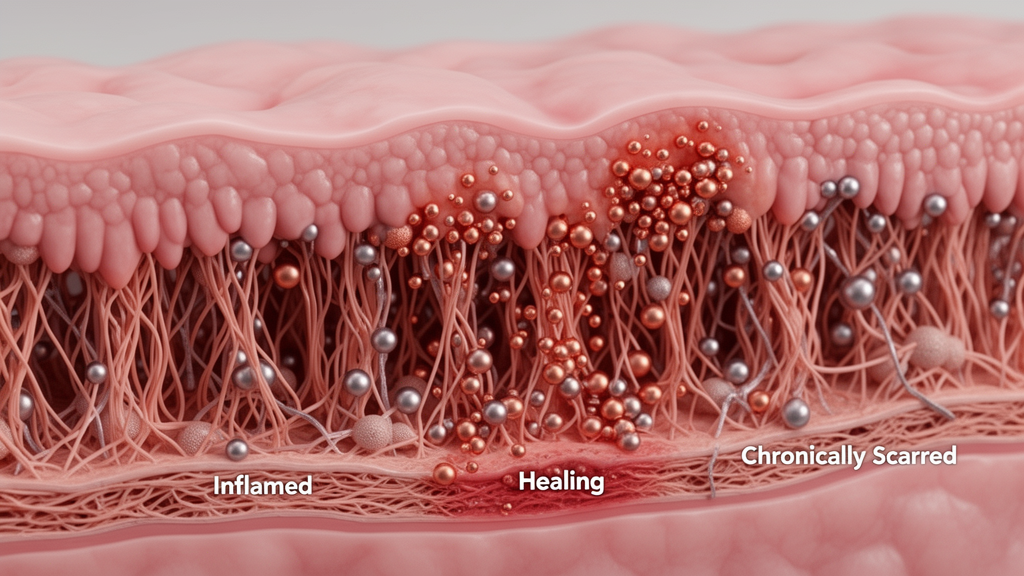
Oral submucous fibrosis is characterized by collagen accumulation and extracellular matrix deposition in the oral mucosa. The review identifies lysyl oxidase as a key mechanistic link: increased copper can enhance this enzyme’s activity, promoting greater collagen cross-linking. This process is consistent with the fibrosis seen in the condition. The authors describe copper as a contributor to the pathological environment rather than as a proven independent cause of malignancy.

Copper may also influence the cellular conditions that accompany fibrosis. Evidence summarized in the review indicates that excess copper can induce oxidative stress and epithelial injury. Together, these changes may create a microenvironment favorable to malignant transformation. However, the magnitude of these effects can vary with copper concentration, and the available findings do not establish a simple dose-response pathway from oral submucous fibrosis to oral squamous cell carcinoma.

At moderate elevations in intracellular copper, studies have associated copper with increased cellular proliferation, metabolic activity, and angiogenesis in oral squamous cell carcinoma. These are cellular and tumor-associated observations, not proof that copper produces the same effects in every patient or clinical setting. The review further notes that higher copper concentrations can be cytotoxic, suggesting that copper may shift from supporting proliferation and tissue remodeling to damaging cells when its intracellular level becomes sufficiently high.

The central limitation is the scarcity of direct evidence for copper-driven malignant transformation of oral submucous fibrosis. Most of the proposed connections are drawn from separate lines of research concerning collagen cross-linking, oxidative stress, epithelial injury, cancer-cell behavior, and angiogenesis. The narrative-review method synthesizes this literature but does not itself test causation, quantify risk, or demonstrate that a particular copper concentration predicts cancer. The findings therefore support continued investigation of copper homeostasis as a possible research avenue, including the development of candidate biomarkers and therapeutic strategies that adjust copper levels, while those clinical applications remain to be established.

Subject of Research: Copper metabolism in oral submucous fibrosis and malignant transformation

Article Title: Dual facets of copper in the malignant transformation of oral submucous fibrosis: A narrative review

Article References: S, G. P., Bose, D., Thayalan, D., AE, N., Krishnan, R., & A, R. (2026). Dual facets of copper in the malignant transformation of oral submucous fibrosis: A narrative review. Molecular Biology Reports, 53(1), Article 1505. https://doi.org/10.1007/s11033-026-12663-4

Image Credits: AI Generated

DOI: 10.1007/s11033-026-12663-4

Keywords: copper metabolism, oral submucous fibrosis, oral squamous cell carcinoma, collagen cross-linking, lysyl oxidase, oxidative stress, malignant transformation, angiogenesis, fibrosis, narrative review, Dual, facets

News Source: Drew Townsend. (October 20, 2026). Narrative review maps copper’s context-dependent role in oral fibrosis. Scienmag.


Tags: angiogenesiscollagen cross-linkingcopper metabolismdualfacetsFibrosislysyl oxidasemalignant transformationNarrative reviewOral squamous cell carcinomaoral submucous fibrosisoxidative stress
Share12Tweet7Share2ShareShareShare1

Related Posts

Morphology and DNA barcodes identify two captive-bred zoo millipedes as Spiropoeus fischeri

Morphology and DNA barcodes identify two captive-bred zoo millipedes as Spiropoeus fischeri

October 20, 2026
Field and genetic study identifies new Chinese horned toad in western Guangdong

Field and genetic study identifies new Chinese horned toad in western Guangdong

October 20, 2026

Review finds most fungal species-description introductions lack explicit hypotheses

October 20, 2026

Field observations document Mexican garter snake predation and an unsuccessful rattlesnake attempt on endangered Altamirano’s salamander

October 20, 2026

POPULAR NEWS

  • Morphology and DNA barcodes identify two captive-bred zoo millipedes as Spiropoeus fischeri

    Morphology and DNA barcodes identify two captive-bred zoo millipedes as Spiropoeus fischeri

    29 shares
    Share 12 Tweet 7
  • Field and genetic study identifies new Chinese horned toad in western Guangdong

    29 shares
    Share 12 Tweet 7
  • Narrative review maps copper’s context-dependent role in oral fibrosis

    29 shares
    Share 12 Tweet 7
  • Review finds most fungal species-description introductions lack explicit hypotheses

    29 shares
    Share 12 Tweet 7

About

We bring you the latest biotechnology news from best research centers and universities around the world. Check our website.

Follow us

Recent News

Morphology and DNA barcodes identify two captive-bred zoo millipedes as Spiropoeus fischeri

Field and genetic study identifies new Chinese horned toad in western Guangdong

Narrative review maps copper’s context-dependent role in oral fibrosis

Subscribe to Blog via Email

Enter your email address to subscribe to this blog and receive notifications of new posts by email.

Join 85 other subscribers
  • Contact Us

Bioengineer.org © Copyright 2023 All Rights Reserved.

Welcome Back!

Login to your account below

Forgotten Password?

Retrieve your password

Please enter your username or email address to reset your password.

Log In
No Result
View All Result
  • Homepages
    • Home Page 1
    • Home Page 2
  • News
  • National
  • Business
  • Health
  • Lifestyle
  • Science

Bioengineer.org © Copyright 2023 All Rights Reserved.