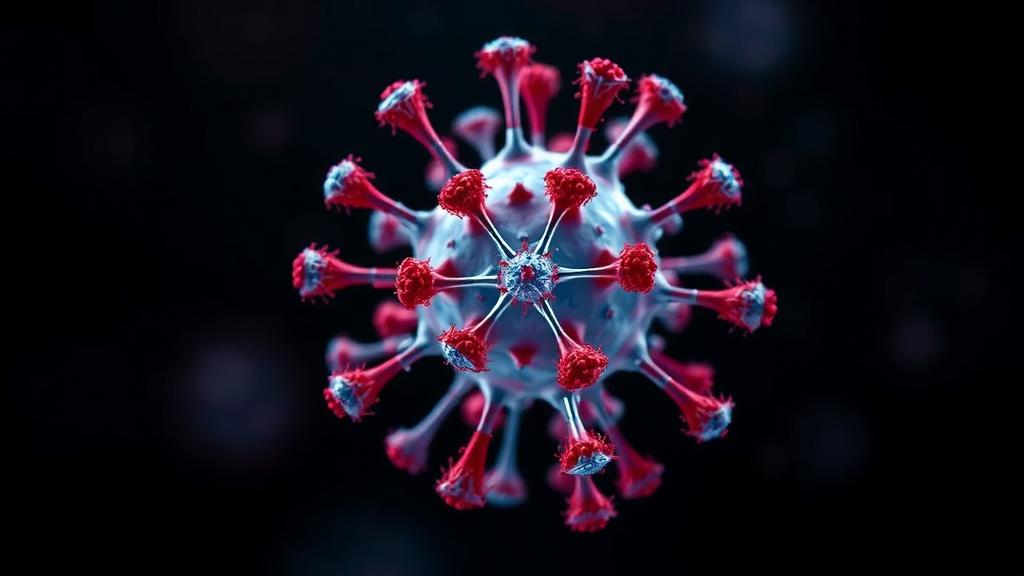
A cancer vaccine built from a remarkably simple piece of chemistry—a lattice of metal ions and organic linkers, no larger than a virus—has shown the ability to shrink tumours across five different cancer types in mice, eradicate distant lesions it never touched, and leave behind immune memory that blocks metastasis. The platform, called MOF-Vac, was developed by a team led by Xiaomin Jiang, Chaoyu Wang and Wenbin Lin at Westlake University and the University of Chicago, and is described in a study published in Nature Biomedical Engineering. Its promise lies not in a single clever trick but in solving a problem that has haunted therapeutic cancer vaccines for decades: getting the immune system not just to notice a tumour, but to keep attacking it long enough to matter.
Therapeutic vaccines against cancer have long struggled with a fundamental delivery problem. To work, a vaccine must accomplish two things at once: deliver a tumour antigen—the molecular signature the immune system should learn to attack—and deliver an adjuvant, a danger signal that tells innate immune cells the antigen is worth responding to. Most formulations manage one or the other well. Peptide antigens are cheap and easy to manufacture but poorly immunogenic on their own; potent adjuvants such as STING agonists, which mimic microbial DNA and switch on innate antiviral defences, often fail to reach the right cells at the right dose when injected free in solution. Co-delivering both cargo types to the same immune cell, at controlled ratios, has remained an elusive engineering goal.
MOF-Vac approaches the problem with nanoscale metal–organic frameworks, or MOFs—crystalline materials in which metal clusters are connected by organic struts into porous, sponge-like architectures. The team built their framework from hafnium clusters and an organic linker, creating particles with internal pores measuring roughly 12 to 18 angstroms. Through a sequence of chemical surface modifications, the researchers first decorated the framework with phosphate groups, then loaded its channels with trimerized peptide antigens—three copies of the antigen linked together. The result is a single nanoparticle that carries an unusually high payload of both antigen and a STING agonist, with the two components physically co-packaged so that whichever immune cell takes up the particle receives both signals simultaneously.
The release mechanism is elegantly simple. The phosphate-rich environment inside cells—particularly within intracellular compartments—triggers dissolution of the hafnium-phosphate coordination chemistry, spilling the antigen and adjuvant cargo directly into the cell’s processing machinery. This phosphate-triggered intracellular release means the vaccine largely stays intact until it has been swallowed by an antigen-presenting cell, minimizing wasteful leakage into the bloodstream and reducing off-target inflammation. In safety experiments, mice injected with MOF-Vac showed no significant weight loss, no elevation of the inflammatory cytokines IL-6, TNF-alpha and IL-1beta beyond controlled levels, and no liver toxicity measurable by ALT and AST enzymes up to a week after treatment.
When tested in mouse models of melanoma, colorectal cancer, triple-negative breast cancer, lung cancer and HPV-driven oropharyngeal cancer, MOF-Vac did something striking: injected directly into one tumour, it triggered regression not only of that tumour but of a second, untreated tumour elsewhere in the same animal. This systemic effect—the holy grail of cancer immunotherapy—means the vaccine was training the immune system to recognize and hunt tumour cells throughout the body, not just at the injection site. The treated animals also developed immune memory: when later challenged with tumour cells, vaccinated mice resisted engraftment, indicating that the vaccine had generated a durable population of memory T cells capable of responding to future threats.
The platform also proved to be a powerful team player. Combined with radiotherapy, MOF-Vac eradicated both primary and distant tumours, an effect consistent with the well-documented ability of radiation to release tumour antigens and inflammatory signals that vaccines can amplify. Combined with immune checkpoint blockade—antibodies that release the molecular brakes on T cells—the vaccine synergized to eliminate tumours that neither approach could clear alone. This compatibility matters clinically, because most patients with advanced disease will already be candidates for radiation or checkpoint inhibitors; a vaccine that slots into existing treatment regimens rather than replacing them has a far shorter path to the clinic.
Perhaps the most surprising finding came from the mechanistic work. Using single-cell RNA sequencing of tumour-infiltrating immune cells, the researchers discovered that the therapeutic effect of MOF-Vac depended less on dendritic cells—the conventional stars of vaccine immunology—than on macrophages, the abundant scavenger cells that populate tumours and are often blamed for suppressing immunity. Immune depletion experiments confirmed the dependence: when macrophages were removed, the vaccine’s efficacy collapsed. Instead of being immunosuppressive saboteurs, the tumour-associated macrophages in MOF-Vac-treated animals became antigen-presenting instructors, displaying tumour peptides to T cells and remodelling the tumour microenvironment into a proinflammatory, immune-active state. Network analysis of intercellular signalling showed that CD86 and macrophage migration inhibitory factor pathways were rewired in the treated tumours, converting a communication network that normally protects the tumour into one that coordinates its destruction.
Single-cell analysis also revealed that MOF-Vac engages pre-existing T cells—those that already recognize tumour antigens but have been rendered inert by the tumour’s suppressive environment—reactivating them into locally acting effector cells. This is a mechanistically important distinction from vaccines that must generate entirely new T cell responses from scratch. The trimerized antigen format proved superior to monomeric antigen in bilateral tumour models, suggesting that multivalent display of antigen on the framework enhances cross-presentation and T-cell priming. Because the platform is modular, the researchers showed it can be loaded with clinically relevant shared tumour antigens for off-the-shelf use, or with patient-specific neoantigens—the unique mutation-derived peptides of an individual’s tumour—for fully personalized vaccination.
The work arrives amid a renaissance in therapeutic cancer vaccinology, driven by recent successes with mRNA neoantigen vaccines in pancreatic and renal cancers and by a growing appreciation that adjuvant choice and delivery format can make or break clinical efficacy. MOF-Vac adds a distinct technological option to that landscape: a chemically defined, high-capacity, co-delivering particle whose release is triggered by a ubiquitous intracellular signal rather than by engineered stimuli. Metal–organic frameworks have been maturing as biomedical materials for over a decade, with prior work from the same groups demonstrating their use in radiotherapy, radiodynamic therapy and STING-based immunotherapy; the new study extends the chemistry into the vaccine domain with unusually comprehensive evidence.
Substantial hurdles remain between mouse models and human patients. Dose translation, manufacturing consistency at pharmaceutical scale, immunogenicity of the hafnium framework itself, and the notoriously different immunobiology of human tumours all await testing. The disclosure that Wenbin Lin founded a company, Coordination Pharmaceuticals, that has licensed the MOF technology from the University of Chicago signals that commercial development is already underway. Still, the breadth of the preclinical data—five tumour types, two combination regimens, mechanistic dissection at single-cell resolution and a safety profile without red flags—makes MOF-Vac one of the most complete demonstrations yet that a synthetic nanovaccine can convert cold, immunologically quiet tumours into sites of sustained immune attack, and that the key to doing so may lie in the humble macrophage.
Subject of Research: Metal–organic framework nanovaccine platform for cancer immunotherapy
Article Title: Metal–organic framework nanovaccines for systemic tumour regression
Article References: Jiang, X., Wang, C., Yang, K., Tillman, L., Lin, E. J., Piffkó, A., Wen, C., Germanas, T., Li, J., Ma, X., Liang, H. L., Weichselbaum, R. R., & Lin, W. (2026). Metal–organic framework nanovaccines for systemic tumour regression. Nature Biomedical Engineering. https://doi.org/10.1038/s41551-026-01786-5
Image Credits: AI Generated
DOI: 10.1038/s41551-026-01786-5
Keywords: cancer vaccine, metal–organic frameworks, nanoparticles, STING agonist, immunotherapy, macrophages, antigen presentation, tumour microenvironment, radiotherapy, immune checkpoint blockade, neoantigens, T cells
News Source: Nathaniel Bowman. (October 6, 2026). Nanovaccine Built From Metal–Organic Frameworks Drives Tumours Into Full Retreat. Scienmag.