


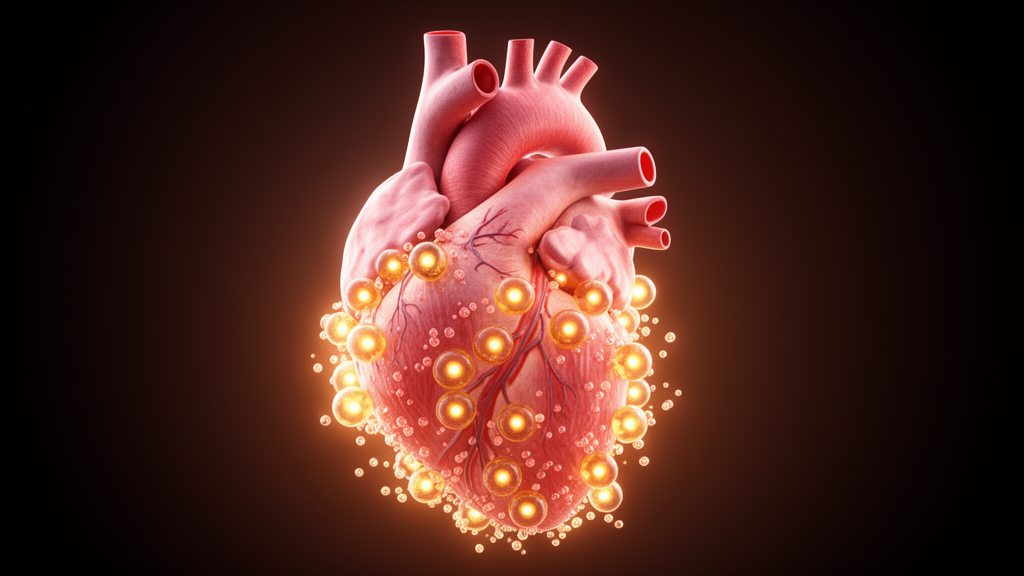
Doxorubicin is one of the most effective chemotherapy agents in use, deployed against breast cancer, lymphomas, sarcomas and many solid tumors. Yet its power comes with a well-known cost: cumulative and often irreversible damage to the heart, including left ventricular dysfunction, heart failure and arrhythmias. A new review published in the journal Cardio-Oncology examines how nanoparticle-based drug delivery systems, known as nanocarriers, are being developed to keep this life-saving drug working against tumors while sparing the myocardium from injury.
The review, authored by Tamjid Islam, Md Hasif Sinha and colleagues with Md. Shenuarin Bhuiyan among the senior authors, lays out the mechanistic landscape of doxorubicin-induced cardiomyopathy. According to the authors, the damage involves Top2β-mediated DNA damage, mitochondrial dysfunction, excessive generation of reactive oxygen species, iron-dependent redox cycling and impaired autophagy. Despite extensive mechanistic understanding accumulated over decades, the review notes that conventional pharmacological strategies have been largely unsuccessful in preventing cardiac injury, underscoring the need for approaches that preserve cardiovascular function without compromising antitumor efficacy.
Nanocarriers offer a different route to cardioprotection. Rather than altering the drug molecule itself, these systems modulate pharmacokinetics and tissue biodistribution, changing where doxorubicin travels in the body and how much of it reaches the heart. The review identifies several sources of cardioprotection from these platforms: reduced circulating free doxorubicin, decreased myocardial accumulation, tumor-selective release, and restricted nuclear and mitochondrial exposure within cardiomyocytes. In other words, the goal is to keep the drug concentrated where it kills cancer cells and away from the subcellular compartments in heart cells where it does its worst damage.
The strongest clinical evidence to date comes from PEGylated liposomal doxorubicin, which the review describes as providing clinical proof-of-concept for the nanocarrier approach. However, the authors emphasize that most next-generation nanocarriers remain preclinical, meaning they have not yet been tested in patients and their clinical value is still unproven.
Among the review’s highlights, the authors state that nanocarrier-based doxorubicin delivery can reduce myocardial exposure and cardiotoxicity while preserving antitumor efficacy, and that precision control of the drug’s biodistribution, release and intracellular trafficking represents a promising strategy for integrating tumor targeting with myocardial protection.
The review is published as an open-access article and is being shared early to provide faster access to peer-reviewed, accepted research; the publisher notes that this version is subject to further edits and will be replaced by the final Version of Record. The authors close with a translational message: rigorous cardiovascular phenotyping and long-term clinical outcomes are essential for moving next-generation doxorubicin nanocarriers from the laboratory into cardio-oncology practice. Until such studies are completed, the promise of nanoparticle-enabled cardioprotection rests on preclinical evidence, with PEGylated liposomal doxorubicin standing as the one formulation that has already reached the clinic.
Subject of Research: Nanoparticle-based drug delivery strategies to reduce doxorubicin-induced cardiotoxicity
Article Title: Nanoparticle-enabled strategies to reduce doxorubicin-induced cardiotoxicity
Article References: Islam, T., Sinha, M. H., Miah, M. S., Dhar, P., Aishwarya, R., Abdullah, C. S., Fakhruddin, M., Sultan, T., Magdy, T., Orr, A. W., Quadir, M., & Bhuiyan, M. S. (2026). Nanoparticle-enabled strategies to reduce doxorubicin-induced cardiotoxicity. Cardio-Oncology. https://doi.org/10.1186/s40959-026-00584-x
Image Credits: AI Generated
DOI: 10.1186/s40959-026-00584-x
Keywords: doxorubicin, cardiotoxicity, nanocarriers, drug delivery, cardio-oncology, PEGylated liposomal doxorubicin, reactive oxygen species, mitochondrial dysfunction, cardioprotection, anthracyclines, heart failure, cancer survivorship
News Source: Nathaniel Bowman. (October 29, 2026). Nanoparticle drug delivery shows promise for shielding the heart from doxorubicin. Scienmag.



