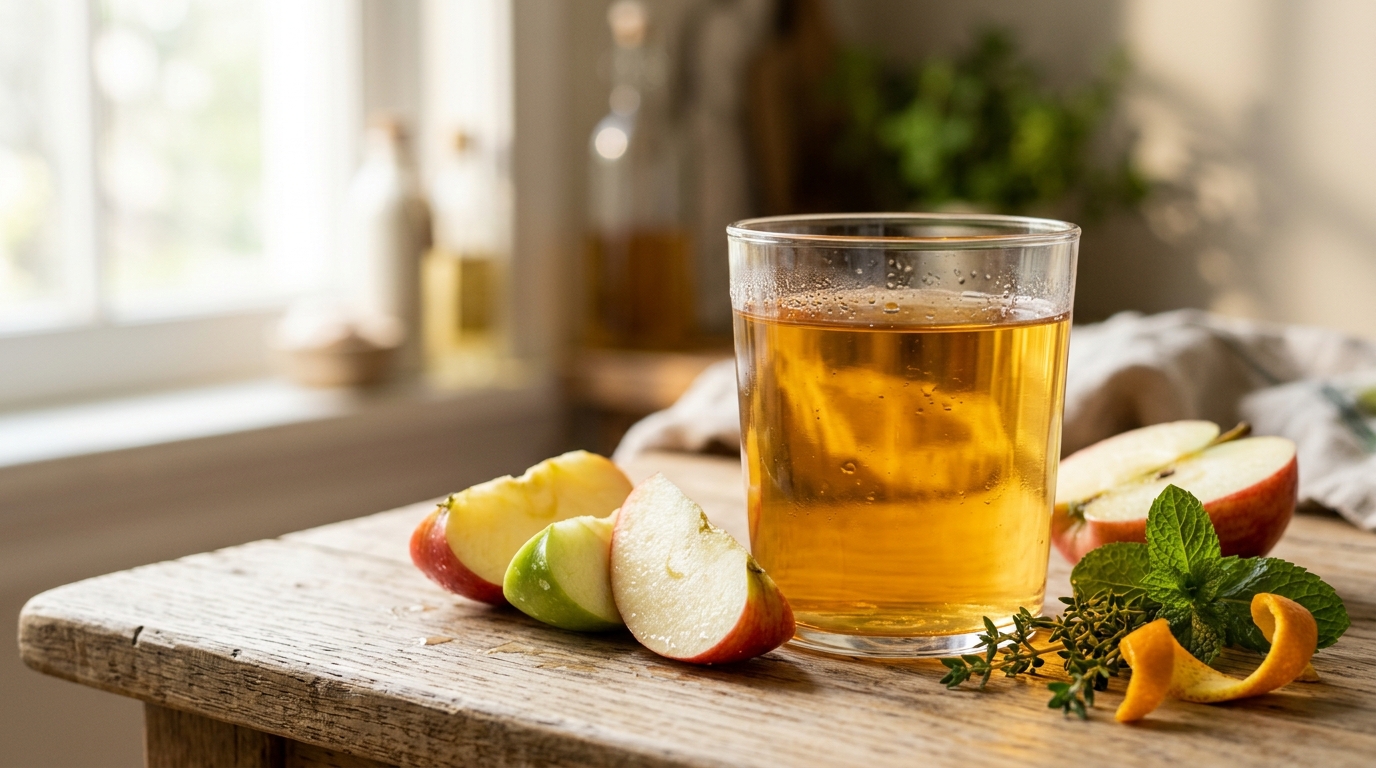
Delivering essential oils through nanoemulsions improves both the physicochemical stability and sensory acceptability of enriched Gala apple juice compared to direct homogenized oil dispersion. In a comparative investigation published in Discover Food, researchers Ilyes Dammak and Carlos Adam Conte-Junior evaluated two distinct incorporation techniques across four different plant essential oils: cinnamon bark (Cinnamomum verum), lemon (Citrus limon), grapefruit (Citrus paradisi), and ginger (Zingiber officinale). Each essential oil was initially characterized using gas chromatography–mass spectrometry (GC–MS) before being incorporated at equivalent concentrations into a Gala apple juice matrix.
The two processing pathways differed fundamentally in their preparation methods and structural properties. For the nanoemulsion delivery system, formulations were fabricated using a combination of Tween 80 and gum arabic at a 1:3 ratio, processed via high-shear mixing followed by ultrasonication. In contrast, the homogenized oil dispersion method dispersed the neat essential oils directly into the juice using high-shear homogenization without any nanoemulsification step. Physical measurements confirmed that the prepared nanoemulsions achieved hydrodynamic droplet sizes ranging from 125 to 156 nm, narrow size distributions with a polydispersity index below 0.25, and negative zeta potential values below −25 mV.
Storage testing demonstrated substantial differences in physical stability between the two incorporation methods when held under refrigerated conditions at 4 °C. The nanoemulsion formulations successfully maintained colloidal stability throughout 21 days of storage without displaying any phase separation. By contrast, the homogenized oil dispersion samples proved unstable under identical storage conditions, exhibiting visible phase separation and 20% to 35% creaming within just 24 hours of preparation.
Sensory profiling by human panels revealed that nanoemulsion delivery also produced superior sensory characteristics compared to direct homogenization. The comprehensive sensory evaluation protocol incorporated triangle discrimination tests, quantitative descriptive analysis (QDA), and consumer hedonic testing. In the triangle tests, evaluators found the nanoemulsion formulations significantly less distinguishable from the unenriched control juice than the homogenized dispersions (p < 0.05). Quantitative descriptive analysis performed by a trained panel of eight assessors showed that nanoemulsion delivery enhanced fruity aroma by 29%, reinforced citrus notes, and decreased astringency by 25% relative to homogenized oil dispersion. In contrast, the homogenized oil dispersion samples produced excessive spiciness and an undesirable oily mouthfeel.
Multivariate statistical analysis further highlighted the sensory divergence between the two delivery techniques. Principal component analysis accounted for 95.8% of the total variance across the evaluated sensory attributes, clearly segregating the balanced sensory profiles of the nanoemulsion formulations from the intense, unbalanced profiles generated by the homogenized dispersions. Consumer hedonic testing involving thirty participants yielded significantly higher overall liking scores for the nanoemulsion formulations, which ranged between 6.5 and 7.3 on a 9-point scale, whereas the homogenized oil dispersions received much lower ratings between 4.8 and 5.4 on the same 9-point scale.
Among the specific formulations tested, grapefruit and lemon nanoemulsions achieved the highest consumer acceptance ratings, earning hedonic scores of 7.3 and 7.2 out of 9, respectively, which closely approached the acceptability rating of the unenriched control juice. Partial least squares regression analysis identified sweetness and fruity aroma as positive drivers of overall consumer acceptability, whereas astringency and acidity were determined to be negative predictors. Based on these findings, the authors concluded that under the experimental conditions evaluated, nanoemulsions provided a more effective delivery system than homogenized oil dispersion for the specific essential oils, concentrations, and apple-juice matrix investigated.
Subject of Research: Nanoemulsion delivery of essential oils in apple juice
Article Title: Nanoemulsion delivery improves the physicochemical stability and sensory acceptability of essential-oil-enriched apple juice compared with homogenized oil dispersion
Article References: Dammak, I., & Conte-Junior, C. A. (2026). Nanoemulsion delivery improves the physicochemical stability and sensory acceptability of essential-oil-enriched apple juice compared with homogenized oil dispersion. Discover Food. https://doi.org/10.1007/s44187-026-01333-w
Image Credits: AI Generated
DOI: 10.1007/s44187-026-01333-w
Keywords: nanoemulsions, essential oils, apple juice, colloidal stability, sensory evaluation, food science, homogenization, flavor delivery, Nanoemulsion, delivery, improves, physicochemical
News Source: Alan Morgan. (November 6, 2026). Nanoemulsions Improve Stability and Sensory Acceptance of Essential-Oil-Enriched Apple Juice. Scienmag.