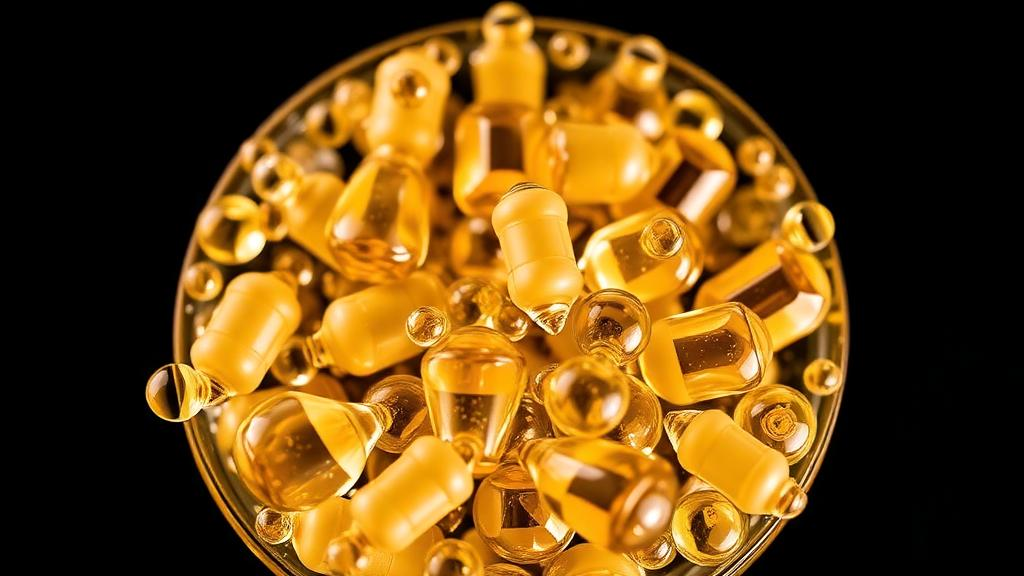
Invisible droplets, thousands of times thinner than a human hair, are becoming one of the most consequential tools in modern food science. A comprehensive review published in Current Research in Food Science by Zhi-Hong Zhang, Kaiwei Zhang, Xiaolan Li, Yuyue Qin, Jingkun Yan, and Xianli Gao maps the rapidly expanding field of food-grade nanoemulsions, the colloidal dispersions that promise to rescue fragile natural compounds from the twin enemies of nutrition: insolubility and degradation. Drawing on a bibliometric analysis of 7,909 publications indexed in Web of Science between 2016 and 2026, the review positions food science as the second-largest research discipline in the nanoemulsion literature, contributing 1,567 papers, or nearly 20 percent of the total, and traces a steady upward trajectory in annual output that shows no sign of slowing.
The problem nanoemulsions solve is deceptively simple to state and notoriously difficult to fix. Polyphenols, plant essential oils, lipophilic vitamins, and natural pigments carry impressive antioxidant and antibacterial credentials, yet their journey from laboratory bench to supermarket shelf is blocked by low water solubility, rapid thermal and photodegradation, and poor intestinal absorption. Traditional micron-scale emulsions fare little better, prone to aggregation and phase separation during long-term storage. Nanoemulsions, with droplet sizes typically below 500 nanometers, hold their ground through strong Brownian motion that counteracts gravitational separation, reinforced by electrostatic repulsion that depends on interfacial charge and solution conditions. The result is dramatically improved solubility and stability for hydrophobic bioactive compounds, along with enhanced bioavailability driven by the micellization efficiency of the lipid composition itself.
Crucially, the review insists on a rigorous definition: a food-grade nanoemulsion is a colloidal dispersion stabilized by a food-grade emulsifier in which every ingredient, from the oil phase and emulsifier to cosurfactants, solvents, polymers, and encapsulated bioactives, meets regulatory purity standards and falls within established acceptable daily intake limits. This is not an academic nicety. As nanoemulsions migrate from pharmaceutical contexts into edible products, the distinction between what works and what is legally and safely deployable becomes the central question of the field.
Because nanoemulsions are kinetically stable non-equilibrium colloids, they cannot form spontaneously from oil and water alone; they demand external energy or clever physicochemical manipulation. The review organizes fabrication strategies into two families. High-energy methods, including high-pressure homogenization, ultrasonic emulsification, microfluidization, and rotor-stator homogenization, use intense mechanical forces to shear, impact, and cavitate large droplets into nanoscale fragments, allowing emulsifiers to align in ordered fashion at the oil-water interface. Low-energy methods, including phase inversion temperature and composition techniques, self-emulsification, membrane emulsification, and solvent displacement, exploit spontaneous molecular interactions and interfacial energy minimization to assemble tiny droplets with minimal mechanical input.
Each technique carries a distinct industrial signature. High-pressure homogenization, the workhorse of large-scale production, pushes crude emulsions through narrow valves at 50 to 100 megapascals, routinely achieving droplets below 200 nanometers; researchers have used it to produce 125-nanometer pepper essential oil nanoemulsions with strengthened antibacterial activity and astaxanthin carriers with improved photostability and oral bioavailability. Its costs are equally clear: expensive equipment, high energy consumption, and shear and heat that can denature proteins, depolymerize polysaccharides, and oxidize lipids. Ultrasonic emulsification, by contrast, is cheap and simple, using cavitation bubble collapse to shatter droplets into the 50-to-150-nanometer range, but uneven acoustic energy distribution demands repeated cycles and risks localized overheating, confining it largely to laboratory research. Microfluidization, which collides pressurized fluid streams inside fixed-geometry interaction chambers, delivers precise size control and narrow distributions at 50 to 207 megapascals, yet hardware costs and microchannel blockage keep it at small scale. Rotor-stator homogenization, tolerant of viscous feedstocks and inexpensive to install, typically leaves droplets between 100 and 500 nanometers and requires supplementary homogenization to meet nanoemulsion specifications.
The low-energy family trades mechanical brutality for formulation finesse. The phase inversion temperature method exploits the temperature-dependent hydration of nonionic surfactants: as temperature rises toward the PIT, dehydration flips the surfactant’s affinity from water-loving to oil-loving, creating bicontinuous microemulsion intermediates with ultra-low interfacial tension, and rapid cooling then locks nanoscale droplets into place. The phase inversion composition method achieves the same kinetic trapping at constant temperature by systematically shifting oil, water, and surfactant ratios, yielding DHA and EPA carriers as small as 112 nanometers with narrow polydispersity. Self-emulsification, driven by chemical potential gradients when oil-surfactant mixtures contact water, offers ultra-low energy consumption and excellent scalability, with transparent sesame oil nanoemulsions around 67 nanometers demonstrating the approach’s precision. Membrane emulsification extrudes the dispersed phase through uniform nanoporous membranes to generate monodisperse droplets under mild conditions, preserving delicate bioactives, while solvent displacement dissolves lipophilic compounds in water-miscible organic solvents that diffuse away to trigger self-assembly, though residual solvent removal imposes regulatory and environmental burdens that limit food-grade scalability.
Characterization, the review argues, is where many studies fall short. Droplet size distribution and the polydispersity index, measured primarily by dynamic light scattering and laser diffraction, form the structural foundation: optimal food applications typically require droplets below 200 nanometers, generating ultrahigh specific surface area and strong electrostatic repulsion that suppress creaming and sedimentation. A curcumin nanoemulsion averaging just 19.92 nanometers with a PDI of 0.17 exemplified exceptional stability and bioavailability. Zeta potential quantifies interdroplet electrostatic repulsion, with absolute values above 30 millivolts conventionally signaling good stability, though the review cautions that sterically stabilized systems using nonionic surfactants, proteins, or polysaccharides can remain stable at low charge, so zeta potential must be read alongside interfacial composition, ionic strength, and pH. Advanced tools round out the picture: pendant-drop and spinning-drop tensiometry for interfacial tension, Fourier-transform infrared spectroscopy for molecular interactions, differential scanning calorimetry for lipid phase transitions, nuclear magnetic resonance for diffusion behavior, and X-ray photoelectron spectroscopy for surface chemistry, each with artifacts that demand careful interpretation.
The applications emerging from this toolkit span three strategic sectors. In food quality improvement, essential oil nanoemulsions have kept probiotic viability above 8 log CFU per gram in yogurt over 28 days of refrigerated storage, extended apple juice shelf life from 7 to 21 days when combined with high-pressure homogenization, delayed potato sprouting by roughly 9 days through sustained methyl salicylate release, and stretched duck meat shelf life from 14 to 35 days using ginger essential oil carriers. In packaging, nanoemulsion-loaded biodegradable films are replacing conventional plastics, which accounted for about 36 percent of global plastic production in 2015 and dominate beach litter; cinnamon essential oil films for pork now double as freshness indicators, shifting color from bright brown to saddle brown as spoilage progresses, while anthocyanin-loaded chitosan and carrageenan systems respond to ammonia from deteriorating food. In functional foods, curcumin nanoemulsions replacing margarine improved bread’s antioxidant capacity, crumb elasticity, and pore uniformity, and basil seed hydrogel nanoemulsions fortified milk powder with vitamin D3 at 115.63 international units, nearly twenty times the level in unfortified spray-dried powder.
The review’s most sobering contribution is its evidence-level honesty. Bioaccessibility measured in simulated digestion, cellular uptake in Caco-2 models, pharmacokinetics in rats, and human trials represent a hierarchy of robustness, and the field remains heavily weighted toward the preliminary end. Encouraging signals exist: excipient nanoemulsions raised quercetin bioaccessibility 1.73-fold under the INFOGEST protocol and boosted rat bioavailability by 46.6 percent with systemic antioxidant capacity up 1.47-fold, while nanoencapsulated essential oils outperformed free oils against foodborne pathogens. Yet the authors flag a pronounced translational gap for lipophilic natural pigments such as astaxanthin, lycopene, and chlorophyll, where industrial-scale validation, long-term stability data, and systematic in vivo safety evaluation are still missing. Their prescription is a formulation-to-translation framework that weighs processing stability, gastrointestinal performance, sensory quality, safety, scalability, energy demand, and production feasibility collectively rather than treating droplet size or encapsulation efficiency as standalone proof of application potential. If the field heeds that call, the tiny droplets now confined to laboratory beakers may soon determine how the world’s food stays fresh, nutritious, and honestly labeled.
Subject of Research: Fabrication, characterization, and food industry applications of food-grade nanoemulsions
Article Title: Food-related nanoemulsions: Fabrication approaches, characterization methods, and emerging applications
Article References: Zhang, Z.-H., Zhang, K., Li, X., Qin, Y., Yan, J., & Gao, X. (2026). Food-related nanoemulsions: Fabrication approaches, characterization methods, and emerging applications. Current Research in Food Science, Article 101591. https://doi.org/10.1016/j.crfs.2026.101591
Image Credits: AI Generated
DOI: Not provided
Keywords: nanoemulsions, food science, bioactive compounds, essential oils, high-pressure homogenization, phase inversion, bioavailability, food packaging, intelligent packaging, natural pigments, colloidal stability, functional foods
News Source: Alan Morgan. (October 10, 2026). Nanoemulsions Are Quietly Rewriting How Food Protects and Delivers Nutrients. Scienmag.