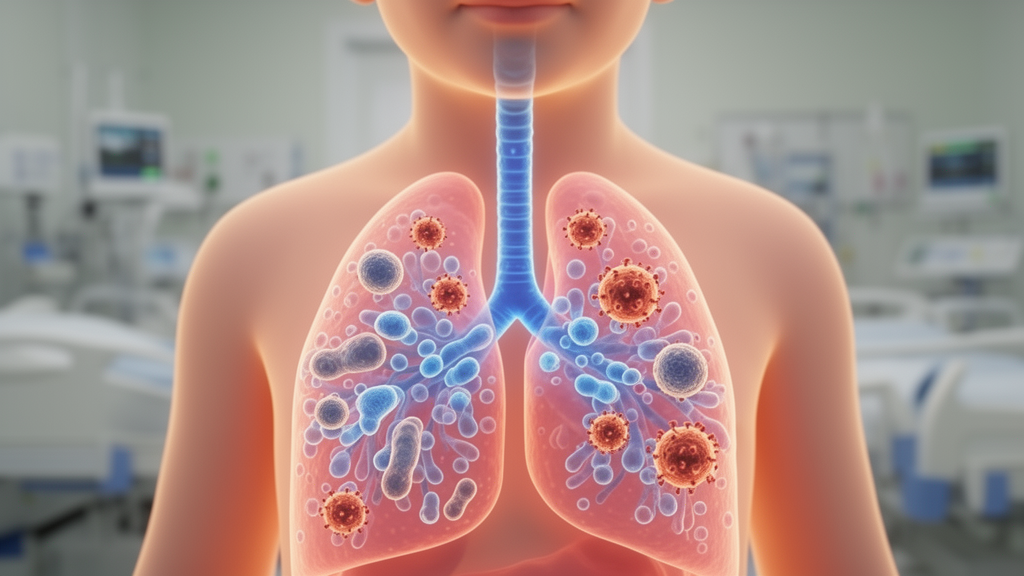
A single-center retrospective cohort study of children and adolescents with confirmed Mycoplasma pneumoniae infection found that several viral and bacterial co-infections were associated with more severe clinical outcomes, longer hospital stays and longer fever. The study included 1,499 patients treated in Guangzhou, China, from July 2023 through January 2024. Participants had a mean age of 6.39 years, with a standard deviation of 3.49 years, and 50.7% were male. Most were hospitalized: 1,020 of 1,499 patients, or 68%. Among the hospitalized group, 630 patients, or 62%, had severe infection according to the study’s criteria. Severe disease was particularly associated with the youngest age group, aged 0–5 years.
Human parainfluenza virus was the most common pathogen detected alongside M. pneumoniae, occurring in 7.5% of participants, followed by influenza virus in 7.2%. The temporal distributions of these co-infections differed. M. pneumoniae–human parainfluenza virus co-infection predominated from early July to late September 2023 and subsequently decreased, whereas M. pneumoniae–influenza virus co-infection remained common throughout the seven-month study period. These descriptive patterns show that the respiratory pathogens recorded alongside M. pneumoniae varied over time in the Guangzhou cohort. The retrospective observations do not establish the reasons for those changes.
Blood and/or respiratory specimens were collected for respiratory pathogen testing. Patients entered the multivariable analyses if they had completed testing for all eight viral and five bacterial pathogens assessed in the study. The researchers used multivariable logistic regression to examine co-infection patterns in relation to severe clinical outcomes and negative binomial regression to assess hospital stay and fever duration. Hospitalized patients had higher overall rates of both viral and bacterial co-infection with M. pneumoniae than outpatients. The analysis was conducted at one center, and the retrospective design limits how broadly the findings can be generalized beyond the population and clinical setting studied in Guangzhou.
After adjustment in the multivariable analyses, co-infection with adenovirus, human metapneumovirus, human parainfluenza virus, human rhinovirus, influenza A virus, influenza B virus, Klebsiella pneumoniae or Streptococcus pneumoniae was associated with a significantly higher risk of a severe clinical outcome, longer hospitalization and longer fever duration. These findings describe statistical associations rather than evidence that the additional pathogens caused the worsening or that detecting them necessarily changes clinical decisions. The authors concluded that age-adapted clinical management strategies for M. pneumoniae infection should be developed, with particular attention to specific co-infection patterns. The results are based on 1,499 pediatric and adolescent cases from a single Guangzhou center over a defined seven-month period, and the study did not directly test the effects of any management strategy.
Subject of Research: Respiratory pathogen co-infections and clinical severity in pediatric Mycoplasma pneumoniae infection
Article Title: Clinical severity and co-infection of respiratory pathogens among children and adolescents with Mycoplasma pneumoniae infection in Guangzhou, China: a single-center retrospective cohort study
Article References: Yuan, Z., Huang, H., Guo, Z., Mok, C. K. P., Lu, W., Hui, D. S. C., Hao, Y., Zhao, S., Chong, K. C., & Huang, J. (2026). Clinical severity and co-infection of respiratory pathogens among children and adolescents with Mycoplasma pneumoniae infection in Guangzhou, China: a single-center retrospective cohort study. BMC Infectious Diseases. https://doi.org/10.1186/s12879-026-14372-6
Image Credits: AI Generated
DOI: 10.1186/s12879-026-14372-6
Keywords: Mycoplasma pneumoniae, pediatric infection, respiratory co-infection, severe clinical outcomes, human parainfluenza virus, influenza virus, adenovirus, bacterial co-infection, Guangzhou, retrospective cohort, Clinical, severity
News Source: Kristina Jarvis. (October 26, 2026). Mycoplasma pneumoniae co-infections linked to severe pediatric illness in Guangzhou. Scienmag.