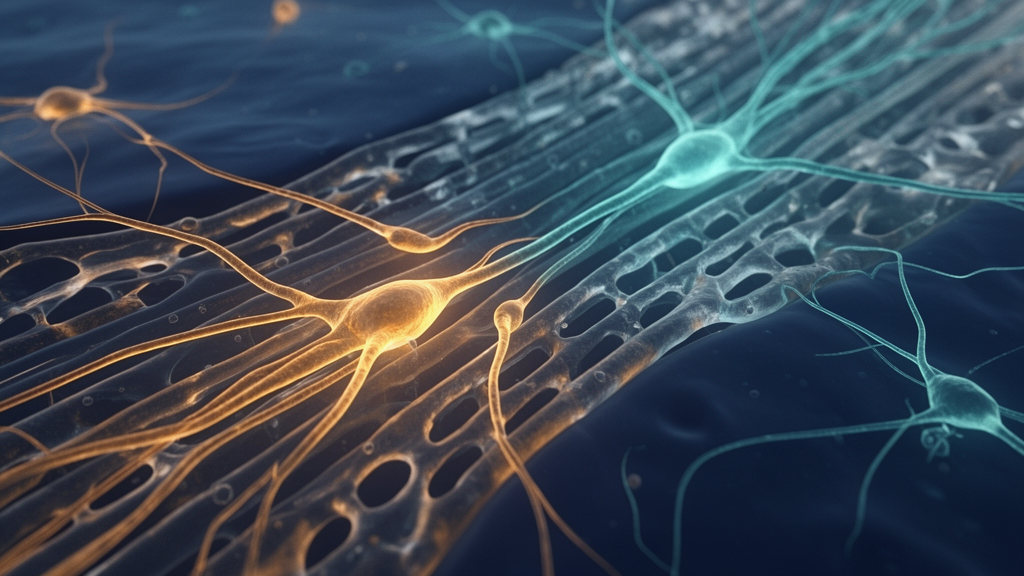
In an extensive evaluation of modern neurobiology, researchers have synthesized the recent technological revolutions driving repair and functional recovery within the central nervous system, an anatomical domain where intrinsic regenerative capacity remains inherently limited. The mammalian central nervous system exhibits minimal spontaneous recovery following traumatic injuries such as spinal cord trauma and stroke, as well as progressive neurodegenerative conditions including Alzheimer’s disease and Parkinson’s disease. Historically, mechanistic exploration and therapeutic translation have been severely impeded by the intricate architectural and functional complexity of neural tissue. However, the convergence of multidisciplinary innovations spanning genetic engineering, materials science, advanced biomaterials, multi-omics profiling, and high-resolution imaging has transformed contemporary neuroregeneration research from observational histology into precise, active molecular and circuit-level interventions.
At the molecular intervention level, neuromodulation approaches have been redefined through the application of optogenetics and chemogenetics, providing distinct mechanisms for manipulating neuronal activity during structural repair. Optogenetics integrates principles of optics and genetics by expressing engineered, light-sensitive proteins in target cells to trigger or suppress neuronal signaling in response to targeted light stimuli with millisecond precision and subcellular resolution. In experimental models of spinal cord injury, optogenetic stimulation has served as an essential analytical tool to verify synaptic formation and evaluate whether regenerating corticospinal tract axons achieve genuine functional reconnection across lesion sites. Moreover, selective optical stimulation of primary motor cortex neurons expressing channelrhodopsin-2 has demonstrated the ability to promote functional recovery. Despite these strengths, the clinical translation of optogenetics faces physical hurdles, including the tissue damage associated with invasive intracranial optical fiber implantation, photothermal side effects, and transient efficacy that ceases immediately upon light termination.
Complementing optical approaches, chemogenetics—often termed pharmacogenetic technology—employs bioengineered proteins tailored to interact selectively with synthetic small-molecule ligands. The most prevalent systems utilize engineered G protein-coupled receptors known as designer receptors exclusively activated by designer drugs, or DREADDs, to establish controllable, reversible regulation of cellular activity over extended durations ranging from hours to days. In preclinical models of spinal cord injury, activating DREADDs alongside ligands such as clozapine enhances neuroplasticity and functional regeneration, an effect further magnified when combined with genetic interventions such as the dual deletion of RhoA and Pten in corticospinal neurons. Chemogenetic activation has likewise stimulated the targeted, long-distance regeneration of retinal ganglion cell axons following optic nerve damage, resulting in measurable visual recovery in experimental systems. Furthermore, chemogenetic inhibition in the primary motor cortex following ischemic stroke has been observed to mitigate post-injury neuroinflammation and enhance neuronal survival, while non-neuronal applications in microglial cells have demonstrated that regulating Gi signaling can modulate circuit homeostasis and restore synaptic pruning deficits.
Progress in cellular modeling has simultaneously challenged the historical reliance on conventional two-dimensional cell cultures, which fail to recreate the complex three-dimensional extracellular matrix interactions and structural cues of living tissue. Three-dimensional neuronal culture platforms preserve critical physiological attributes including cellular polarity, morphological complexity, dynamic cytoskeleton behavior within axonal growth cones, and accelerated neurite elongation. By engineering advanced biomaterials such as hydrogels and nanofibers, researchers have constructed specialized microenvironments that incorporate magnetic nanoparticles for dynamic mechanical remodeling or conductive scaffolds that deliver electrical stimulation mimicking endogenous neural impulses. These platforms facilitate disease modeling in vitro; for example, three-dimensional cultures seeded with human neural stem cells successfully recapitulate key pathological hallmarks of Alzheimer’s disease, including beta-amyloid aggregation, phosphorylated tau accumulation, and inflammatory responses, while three-dimensional bioprinted stem cell constructs loaded into spinal cord injury models provide porous scaffolds that guide axonal guidance and functional recovery.
Parallel developments in microfluidic engineering and cellular microarrays, commonly described as cell-on-a-chip systems, have established tightly regulated microenvironments for investigating axonal biology and high-throughput drug evaluation. Utilizing microgroove architectures, these platforms physically compartmentalize neuronal cell bodies away from extending axons, permitting researchers to deliver localized physical or biochemical stimuli, model localized axotomy, and measure isolated degenerative responses characteristic of disorders like amyotrophic lateral sclerosis. In conjunction with microfluidics, self-organizing three-dimensional organoids derived from induced pluripotent stem cells or primary stem cells have expanded into sophisticated representations of human neurodevelopment. Neural organoids replicate microscale tissue architecture and have facilitated genetic investigations into neurodevelopmental deficits, such as impaired neuronal growth linked to EIF4A3 mutations in Richieri-Costa-Pereira syndrome, as well as therapeutic discoveries showing that small-molecule-induced epigenetic rejuvenation in human myelin organoids can stimulate central nervous system remyelination.
Targeted genomic interventions have equally accelerated through iterative improvements in gene editing platforms, evolving from early zinc finger nucleases and transcription activator-like effector nucleases into versatile CRISPR-Cas systems. By introducing precise double-stranded DNA breaks repaired via homologous recombination or non-homologous end joining, the CRISPR-Cas9 platform enables targeted knockouts, while newer variants—such as catalytically inactive dCas9 coupled to activation or interference domains, base editors, and prime editors—facilitate targeted transcriptional modulation or single-nucleotide conversions without causing double-stranded DNA cleavage. In regeneration studies, CRISPR-Cas9 screens have systematically identified regeneration-associated genes, uncovering sets of regeneration-limiting genes whose disruption substantially improves in vivo axonal regrowth. Furthermore, CRISPR engineering has enabled human embryonic stem cell-derived oligodendrocyte progenitor cells with targeted deletions of NRP1 to overcome inhibitory microenvironmental signals and promote remyelination in rodent models of demyelinating lesions relevant to multiple sclerosis.
At the transcriptomic and structural systems level, single-cell RNA sequencing and multi-modal single-cell omics have deconstructed the profound cellular heterogeneity underlying differential regenerative capacities across neuronal subpopulations. Following axonal injury, individual neuronal subclasses exhibit widely disparate survival and growth potentials; for instance, comprehensive single-cell transcriptomic mapping across 46 subtypes of retinal ganglion cells has revealed subtype-specific survival trajectories and exposed regulatory pathways governing cell vulnerability. When integrated with spatial transcriptomics, single-cell analysis maps complex ligand-receptor interactions between damaged axons and surrounding glial populations within the lesion microenvironment. To process the immense dimensionality of these datasets, machine learning and artificial intelligence architectures—including convolutional neural networks, generative adversarial networks, and feedforward networks—are utilized to automate sub-micron three-dimensional axonal tracing from whole-brain imaging datasets, construct predictive regeneration classifiers across developmental timelines, and simulate post-injury tissue microenvironmental dynamics.
Complementing molecular analysis, modern optical clearing methodologies combined with light-sheet fluorescence microscopy have resolved longstanding trade-offs between imaging resolution and tissue penetration in opaque neural structures. Specialized optical clearing techniques—including BABB, SeeDB, CLARITY, DISCO, Scale, and CUBIC—equilibrate refractive indices throughout biological specimens to eliminate light scattering without requiring mechanical sectioning. When coupled with light-sheet microscopy, which projects a thin sheet of illumination perpendicular to detection objectives, cleared neural tissues can be imaged rapidly across cubic millimeters or whole organs with minimal photobleaching and background noise. Recent innovations combining clearing methods, physical tissue expansion, and tiling light-sheet microscopy have achieved spatial resolutions extending below 100 nanometers, enabling uninterrupted three-dimensional tracking of regenerating axon trajectories and synaptic connectivity across complex neural circuits.
Translational bioengineering is concurrently advancing electrophysiological restoration through brain-computer interfaces, which establish bidirectional communication channels between damaged neural circuits and external bioelectronic systems. By decoding complex neurophysiological signals in real time and providing sensory or electrical feedback, brain-computer interfaces offer avenues to control assistive prosthetics or drive therapeutic stimulation protocols that enhance synaptic plasticity in individuals experiencing spinal cord injury or stroke. To circumvent the foreign body reactions and mechanical mismatch inherent to conventional rigid electrode arrays, wireless miniature platforms such as neural dust utilize ultrasonic backscatter communication to record neural activity without onboard batteries or transcutaneous wiring. Similarly, closed-loop deep brain stimulation paradigms guided by real-time biomarker identification are emerging to personalize neuromodulation protocols for refractory neuropsychiatric conditions including major depressive disorder.
Despite the rapid experimental progress documented across these integrated disciplines, substantial translational hurdles continue to restrict most neural regeneration technologies to preclinical evaluation. Therapeutic gene delivery systems reliant on adeno-associated virus vectors face significant neutralization from pre-existing host immunity and vector cross-reactivity, requiring engineered capsids with improved cell-type tropism and evasion capabilities. Similarly, clinical translation of permanently integrating CRISPR nucleases demands stringent mitigation of potential off-target genomic cleavage, while neural organoid platforms require standardized manufacturing to overcome biological variability. Moreover, chronic electrophysiological interfaces must overcome foreign-body immune responses, fibrous encapsulation, and mechanical tissue shearing to maintain long-term stability. The authors conclude that overcoming these biological and bioengineering bottlenecks through unified, cross-disciplinary approaches will remain crucial to translating laboratory innovations into reliable, restorative therapies for human neurological trauma and disease.
Subject of Research: Cutting-edge technologies and multidisciplinary advances in central nervous system regeneration
Article Title: Cutting-edge technologies in neural regeneration
Article References: Li, C.-P., Wang, Y.-Y., Zhou, C.-W., Ding, C.-Y., Teng, P., Nie, R., & Yang, S.-G. (2025). Cutting-edge technologies in neural regeneration. Cell Regeneration, 14(1), Article 38. https://doi.org/10.1186/s13619-025-00260-y
Image Credits: AI Generated
DOI: 10.1186/s13619-025-00260-y
Keywords: neural regeneration, optogenetics, chemogenetics, CRISPR-Cas9, single-cell RNA sequencing, tissue clearing, light-sheet microscopy, 3D cell culture, neural organoids, microfluidics, brain-computer interfaces, central nervous system, biomaterials, DREADDs, axon regeneration, translational neuroscience
News Source: Cassandra Pierce. (November 14, 2026). Multidisciplinary Technologies Accelerate Strategies for Central Nervous System Neural Regeneration. Scienmag.