An integrated multi-omics investigation of healthy and infected leaf and branch tissues of Pyrus betulifolia has elucidated the molecular defense mechanisms the wild pear deploys against fire blight caused by Erwinia amylovora. Combining transcriptomic, proteomic, and metabolomic analyses, researchers identified numerous differentially expressed genes, proteins, and metabolites in infected tissues, isolating 36 shared differentially expressed gene-protein pairs and 89 shared differentially expressed metabolites across both leaves and branches.
Kyoto Encyclopedia of Genes and Genomes enrichment revealed distinct tissue-specific responses, where infected leaves predominantly activated plant-pathogen interaction pathways, whereas branches relied on metabolic reprogramming of terpenoids, amino acids, and lipids. Critical regulatory components identified within the plant-pathogen interaction pathway included transcription factor WRKY25, pathogenesis-related genes, and mitogen-activated protein kinase MPK3 alongside their corresponding proteins. Furthermore, pathogen infection strongly stimulated flavonoid biosynthesis pathways, driving significant upregulation of key structural genes including PAL, 4CL, CHS, and CHI.
This activation led to a massive accumulation of antibacterial flavonoids, with flavones such as chrysin and galangin demonstrating uniform and robust induction in both leaves and branches, exhibiting markedly higher induction levels in branches. By systematically clarifying both conserved and tissue-specific molecular defenses in Pyrus betulifolia, the study delivers multi-omics insights and a theoretical framework to support breeding fire blight-resistant pear cultivars.
Subject of Research: Molecular defense mechanisms of Pyrus betulifolia against fire blight
Article Title: Multi‑omics analysis of fire blight infection in Pyrus betulifolia provides insights into genes, proteins and metabolites involved in pathogenesis
Article References: Jiang, Y., Chen, P., Liang, X., Sang, M., Cui, L., Wang, Y., Xing, J., Wei, J., & Jiang, S. (2026). Multi‑omics analysis of fire blight infection in Pyrus betulifolia provides insights into genes, proteins and metabolites involved in pathogenesis. Chemical and Biological Technologies in Agriculture. https://doi.org/10.1186/s40538-026-01139-z
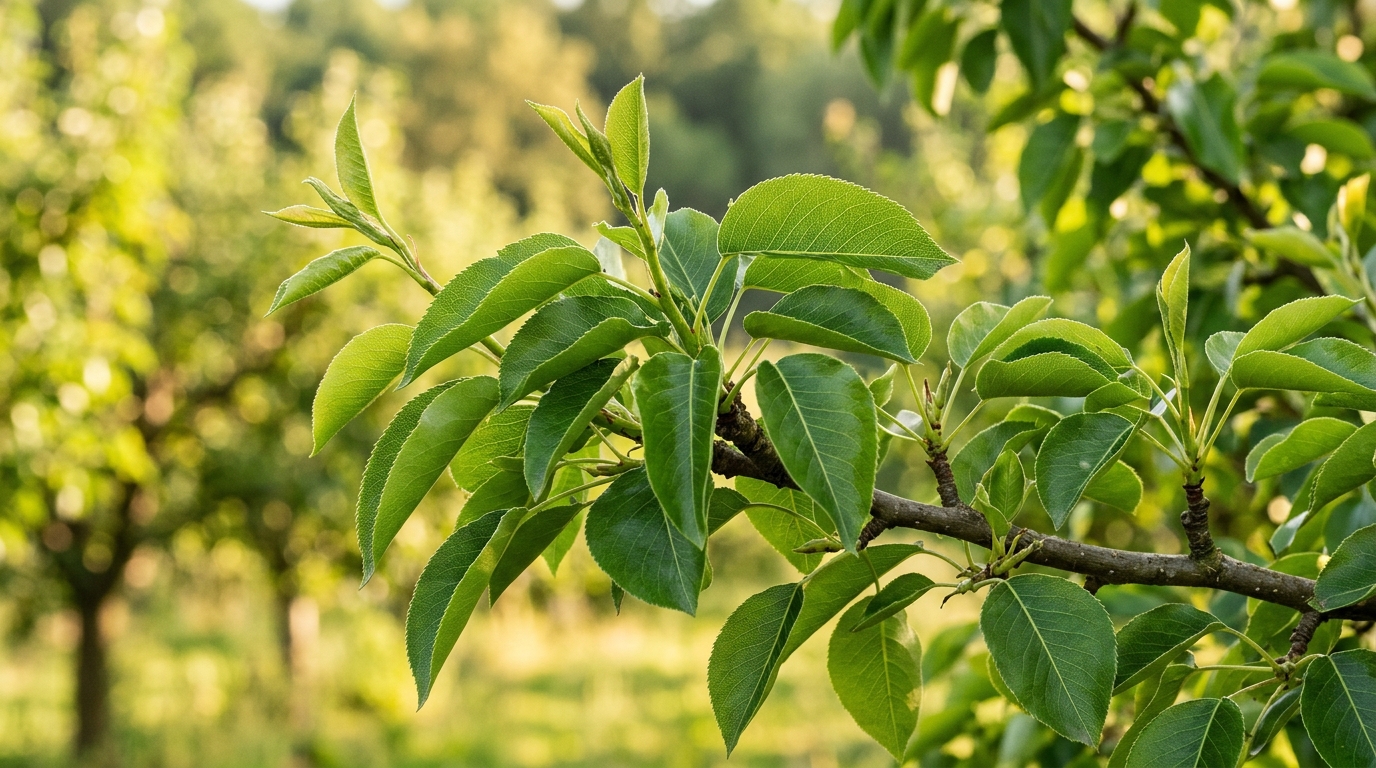
Image Credits: AI Generated
DOI: 10.1186/s40538-026-01139-z
Keywords: Pyrus betulifolia, fire blight, Erwinia amylovora, multi-omics, transcriptomics, proteomics, metabolomics, flavonoid biosynthesis, Multi, omics, analysis, fire
News Source: Gregory Coleman. (November 6, 2026). Multi-Omics Study Reveals How Pyrus betulifolia Defends Against Fire Blight. Scienmag.