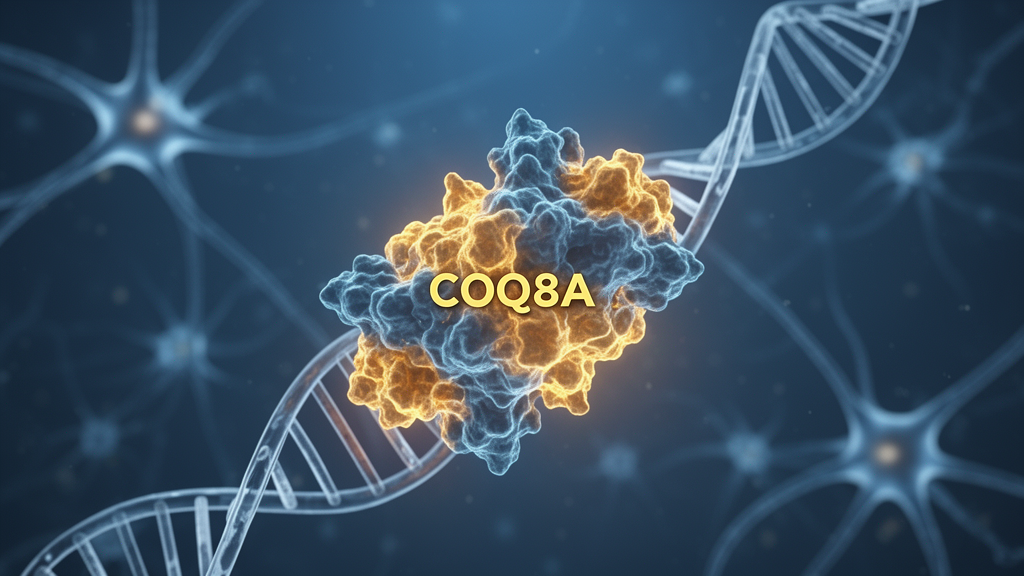
An integrative multi-omics study published in the journal Translational Psychiatry has identified COQ8A in excitatory neurons of the prefrontal cortex as a key protective gene in major depressive disorder. By combining large-scale genomic datasets with single-nucleus transcriptomic profiling, the investigation resolved cellular differences that had previously eluded conventional analytical approaches. The findings demonstrate that expression of COQ8A is substantially suppressed in specific neuronal populations among affected individuals, establishing a direct link between cell-specific gene regulation and depressive pathology while highlighting a potential target for therapeutic intervention.
To overcome the resolution limits of bulk tissue profiling, the research team constructed an analytical framework combining three distinct categories of molecular data. The investigators integrated brain cell-type-specific expression quantitative trait loci data, summary statistics from genome-wide association studies focused on major depressive disorder, and single-nucleus RNA sequencing data derived from clinical cohorts.
To identify candidate genes with potential causal relevance, the researchers implemented both summary-based Mendelian randomization and two-sample Mendelian randomization analyses. This computational screening resulted in the identification of 26 candidate genes associated with major depressive disorder.
By cross-referencing these colocalized candidates with single-nucleus RNA sequencing data, the team pinpointed pronounced cell-type-specific transcriptional alterations in patients diagnosed with major depressive disorder. Most notably, the analysis discovered that COQ8A is down-regulated in excitatory neurons, whereas another candidate, LATS1, is up-regulated in oligodendrocytes.
The investigators next evaluated whether these human transcriptomic observations could be replicated in an experimental setting using mice subjected to chronic social defeat stress models. Consistent with the clinical findings, the animal models demonstrated significant downregulation of COQ8A within excitatory neurons of the prefrontal cortex. Downstream functional analysis suggested a relationship between the down-regulated expression of COQ8A in excitatory neurons from the depressive group and impaired energy metabolism, compromised mitochondrial function, and disrupted protein synthesis.
To explore the translational and pharmacological relevance of these findings, the authors performed computational molecular docking and molecular dynamics simulations to evaluate drug-protein interactions. The simulations indicated that eight conventional antidepressants bind to the COQ8A protein with high affinity, with Escitalopram and Paroxetine demonstrating the ability to effectively stabilize its active sites. The authors conclude that COQ8A in prefrontal excitatory neurons serves as a protective gene in major depressive disorder and represents a promising target for precision antidepressant treatment.
Subject of Research: Multi-omics identification of cell-type-specific protective genes in major depressive disorder
Article Title: Multi-omics integration identifies COQ8A in excitatory neurons as a protective gene in major depressive disorder
Article References: Dong, C.-L., Liu, X.-Y., Wang, X.-C., Kuang, L., Wang, W., Jiang, Z.-H., & Ran, L.-Y. (2026). Multi-omics integration identifies COQ8A in excitatory neurons as a protective gene in major depressive disorder. Translational Psychiatry. https://doi.org/10.1038/s41398-026-04474-9
Image Credits: AI Generated
DOI: 10.1038/s41398-026-04474-9
Keywords: major depressive disorder, COQ8A, excitatory neurons, prefrontal cortex, single-nucleus RNA sequencing, expression quantitative trait loci, genome-wide association studies, mendelian randomization, LATS1, oligodendrocytes, chronic social defeat stress, mitochondrial function, energy metabolism, protein synthesis, escitalopram, paroxetine, molecular dynamics simulations, molecular docking
News Source: Juliet Wilcox. (November 16, 2026). Multi-Omics Study Identifies COQ8A as Protective Gene in Major Depressive Disorder. Scienmag.