

• HOME
  • NEWS
  • EXPLORE
    • CAREER
      • Companies
      • Jobs
    • EVENTS
    • iGEM
      • News
      • Team
    • PHOTOS
    • VIDEO
    • WIKI
  • BLOG
  • COMMUNITY
    • FACEBOOK
    • INSTAGRAM
    • TWITTER
Monday, July 13, 2026
BIOENGINEER.ORG
No Result
View All Result
  • Login
  • HOME
  • NEWS
  • EXPLORE
    • CAREER
      • Companies
      • Jobs
        • Lecturer
        • PhD Studentship
        • Postdoc
        • Research Assistant
    • EVENTS
    • iGEM
      • News
      • Team
    • PHOTOS
    • VIDEO
    • WIKI
  • BLOG
  • COMMUNITY
    • FACEBOOK
    • INSTAGRAM
    • TWITTER
  • HOME
  • NEWS
  • EXPLORE
    • CAREER
      • Companies
      • Jobs
        • Lecturer
        • PhD Studentship
        • Postdoc
        • Research Assistant
    • EVENTS
    • iGEM
      • News
      • Team
    • PHOTOS
    • VIDEO
    • WIKI
  • BLOG
  • COMMUNITY
    • FACEBOOK
    • INSTAGRAM
    • TWITTER
No Result
View All Result
Bioengineer.org
No Result
View All Result
Home NEWS Science News Cancer

MRI technology quantifies liver response in nonalcoholic steatohepatitis patients

Bioengineer by Bioengineer
August 20, 2016
in Cancer
Reading Time: 2 mins read
0
Share on FacebookShare on TwitterShare on LinkedinShare on RedditShare on Telegram

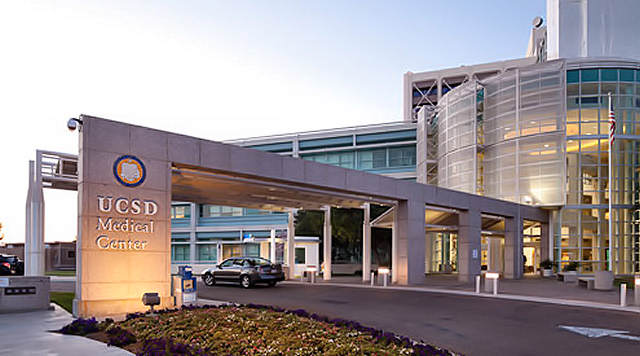
ucsd

Researchers at the University of California San Diego School of Medicine have found that a form of magnetic resonance imaging (MRI) that non-invasively measures fat density in the liver corresponds with histological (microscopic tissue analyses) responses in patients with nonalcoholic steatohepatitis (NASH).

The finding, published in the journal Therapeutic Advances in Gastroenterology, suggests the imaging technique can be useful in future NASH clinical trials and in treatment.

NASH is an advanced form of nonalcoholic fatty liver disease (NAFLD), which occurs when fat accumulates in liver cells due to causes other than excessive alcohol use. The precise cause is not known, but diet and genetics play substantial roles. The condition is relatively common. NAFLD occurs in roughly 20 percent of non-obese persons and in more than 60 percent of obese persons.

NAFLD often has no symptoms, but can progress to NASH and, ultimately, to cirrhosis or liver cancer.

“NAFLD and NASH are invisible diseases. In most cases, adverse effects are not noticeable until the disease is well-advanced,” said senior author Rohit Loomba, MD, professor of medicine at UC San Diego School of Medicine and director of the Nonalcoholic Fatty Liver Disease Research Center at UC San Diego Health. “The ability to accurately quantify liver fat content, without resorting to needle biopsies, represents a significant advance, in the lab and in the clinic.”

Loomba and colleagues in the NAFLD Translational Research Unit and Liver Imaging Group looked at how a form of MRI, called magnetic resonance imaging-estimated proton-density-fat-fraction (MRI-PDFF), compared to liver biopsies in 35 patients with confirmed NASH diagnoses. Some patients received treatment for their condition, some received a placebo. All were assessed with both techniques before and after the treatment period.

The researchers found that a 29 percent reduction in liver fat, as measured by MRI-PDFF, translated to a clinically important improvement in liver histology. “MRI-PDFF has the potential to be a cost-effective and convenient method for liver fat quantification. It requires only a single, 20-second breath hold and an estimated time of about five minutes in an MRI scanner,” said Loomba.

Study authors noted that further external validation by independent research groups is needed.

###

Co-authors include: Janki Patel, Rikki Bettencourt, Jeffrey Cui, Joanie Salotti, Jonathan Hooker, Archana Bhatt, Carolyn Hernandez, Phirum Nguyen, Hamed Aryafar, Mark Valasek, William Haufe, Catherine Hooker, Lisa Richards, and Claude B. Sirlin, all at UC San Diego.

Media Contact

Scott LaFee
[email protected]
858-249-0456
@UCSanDiego

http://www.ucsd.edu

The post MRI technology quantifies liver response in nonalcoholic steatohepatitis patients appeared first on Scienmag.

Share23Tweet8Share2ShareShareShare2

Related Posts

YEARS Algorithm Enhances Pulmonary Embolism Diagnosis in Cancer Patients

July 12, 2026

Anthropometric Traits and Metabolic Biomarkers Linked to Pancreatic Cancer Risk

July 12, 2026

TP53 Mutation Triggers CD8+ T Cell Exhaustion Causing Therapy-Resistant Urothelial Cancer

July 11, 2026

UCSF Study Finds Rapid Rise in Breast Cancer Among Asian American Women

July 10, 2026
Please login to join discussion

POPULAR NEWS

  • Detection of EDCs in Breast Milk and Infant Urine Up to Six Months Highlights Early Exposure Risks

    77 shares
    Share 31 Tweet 19
  • New Drug Candidate Developed at McMaster Shows Potential for Treating Brain Cancer

    58 shares
    Share 23 Tweet 15
  • KTU Researchers Explore Ultrasound’s Role in Enhancing Blood Flow Beyond Diagnostics

    53 shares
    Share 21 Tweet 13
  • Experimental Therapy Simultaneously Destroys Prostate Tumor Cells and Reactivates Antitumor Immunity

    46 shares
    Share 18 Tweet 12

About

BIOENGINEER.ORG

We bring you the latest biotechnology news from best research centers and universities around the world. Check our website.

Follow us

Recent News

How Particle Shape and Spin Affect Optical Manipulation Efficiency

New Tick-Borne Threat: Anaplasmosis Spreads in Canada

Paid Work Linked to Cognitive Benefits in Older Chinese Adults

Subscribe to Blog via Email

Success! An email was just sent to confirm your subscription. Please find the email now and click 'Confirm' to start subscribing.

Join 85 other subscribers
  • Contact Us

Bioengineer.org © Copyright 2023 All Rights Reserved.

Welcome Back!

Login to your account below

Forgotten Password?

Retrieve your password

Please enter your username or email address to reset your password.

Log In
No Result
View All Result
  • Homepages
    • Home Page 1
    • Home Page 2
  • News
  • National
  • Business
  • Health
  • Lifestyle
  • Science

Bioengineer.org © Copyright 2023 All Rights Reserved.
