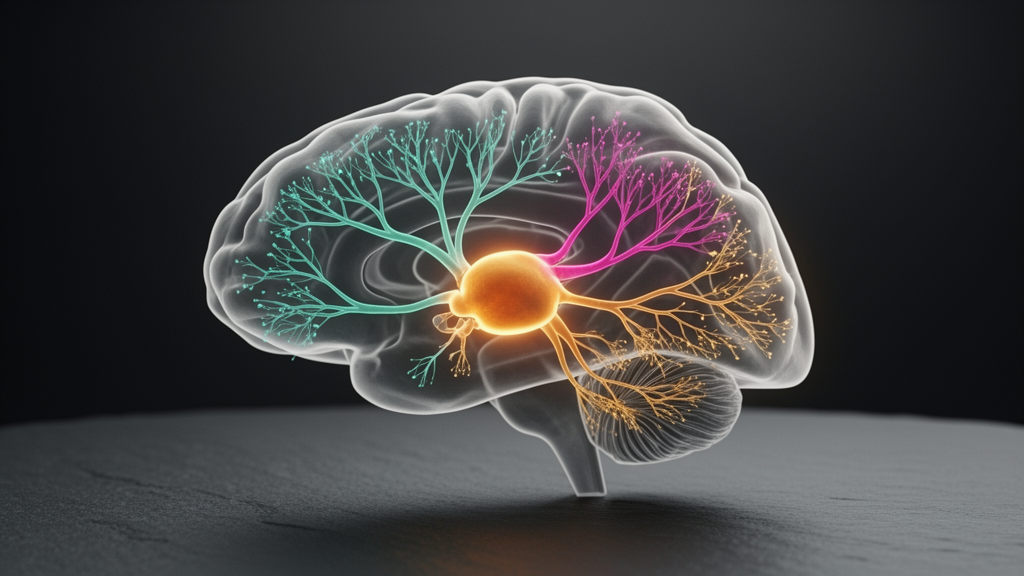
Scientists at the Institute for Neurosciences, a joint centre of the Spanish National Research Council (CSIC) and Miguel Hernández University of Elche (UMH), have constructed the first multi-omic atlas of the mouse embryonic thalamus. Published in Nature Neuroscience, this experimental study provides a detailed reconstruction of how distinct neuronal cell types emerge during early brain development. The research reveals that sensory neurons and those involved in motor and associative functions follow divergent developmental trajectories from very early stages. By mapping these paths, the team offers new insights into the genetic mechanisms that drive the formation of specialized brain nuclei in the mouse model.
The thalamus is a key brain structure that not only relays information to the cerebral cortex but also integrates sensory signals and contributes to the organisation of sensory maps. This brain region is made up of distinct nuclei, each containing groups of neurons specialised in sensory, motor and associative functions. However, questions remained about how these nuclei form during embryonic development and what determines the identity of their neurons. This new atlas addresses those questions by tracing the lineage of thousands of neurons from their earliest progenitor stages to their final specialized forms in the developing mouse brain.
To achieve this detailed mapping, the research team employed a single-cell approach to analyze individual cells from the embryonic mouse brain at various developmental stages. This method allowed them to determine which genes were active in each cell and identify which regions of DNA were accessible for gene regulation. By integrating these two layers of information, the researchers were able to reconstruct the temporal dynamics of cell differentiation. This multi-omic perspective provided a framework for identifying the specific gene regulatory programmes that control the developmental trajectories of thalamic neurons.
One of the main findings of the study is the early divergence of thalamic cell lineages. The data indicate that thalamic neurons do not follow a single, uniform path towards specialization. Instead, two major cell lineages separate very early in embryonic development. One lineage gives rise to the sensory nuclei, while the other forms nuclei associated with motor and associative functions. Furthermore, these two genetic programmes progress at different rates, with sensory circuits reaching certain developmental milestones earlier than those involved in cognitive and motor functions.
Within the sensory pathway, the researchers discovered an intermediate stage. Before specializing into distinct sensory neurons, some cells pass through a molecular state that resembles that of neurons forming the higher-order nuclei of the thalamus. Higher-order nuclei participate in more complex communication circuits between brain regions, distinct from first-order nuclei that relay direct sensory information from the outside world, such as visual or tactile signals. This finding indicates a specific sequence of identity acquisition within the sensory lineage.
To validate these computational predictions, the team utilized a genetic labelling technique that allowed them to track the fate of progenitor cells and the neurons they generate. This experimental approach confirmed the relationships between cells predicted by the atlas. The results showed that, within the sensory lineage, cells first pass through a state resembling that of higher-order nuclei before becoming specialized sensory neurons, such as visual or somatosensory neurons. This experimental validation confirmed the predicted relationships between cells in the developing thalamus.
Building on the genetic programmes identified in the atlas, the researchers pinpointed the gene Sp9 as a key regulator of visual neuron identity. The Sp9 gene contains the instructions for producing the SP9 protein, a transcription factor that regulates the activity of other genes. To investigate its specific role, the team experimentally reduced Sp9 activity during mouse embryonic development. They found that when Sp9 activity was diminished, visual neurons did not properly acquire their specific identity. This demonstrates that Sp9 plays an essential role in establishing the characteristics that distinguish visual neurons during development.
The findings of this study provide a new resource for studying how the thalamus is organised during development and how its circuits and functions are established. By understanding the precise genetic and cellular mechanisms that drive thalamic differentiation, researchers can better comprehend the origins of certain alterations associated with neurodevelopmental disorders and neurological diseases. This work provides a framework for investigating the developmental origins of thalamic function in the mouse model.
The research was conducted by a collaborative team led by Guillermina López-Bendito, head of the Development, Plasticity and Reprogramming of Sensory Circuits laboratory, and José López-Atalaya, head of the Cellular Plasticity and Neuropathology laboratory, both at the IN CSIC-UMH. Lorenzo Puche-Aroca, the first author of the study, played a key role in the experimental validation of the cell trajectories. The project was supported by funding from the Spanish Ministry of Science, Innovation and Universities, the Spanish State Research Agency, the European Research Council, the “la Caixa” Foundation, the PROMETEO programme of the Generalitat Valenciana, and the Severo Ochoa Programme for Centres of Excellence.
The ability to map developmental trajectories at single-cell resolution provides a detailed view of how genetic variations influence brain structure. By identifying key regulatory genes like Sp9, the study provides potential targets for future research into disorders affecting the thalamus. This work underscores the dynamic nature of brain development and the intricate interplay between genetics and cellular identity in the formation of specialized neuronal nuclei.
Subject of Research: Multi-omic atlas of the developing mouse thalamus
Article Title: Researchers create the first multi-omic atlas of the developing thalamus, revealing how its neuronal nuclei form
Article References: Researchers create the first multi-omic atlas of the developing thalamus, revealing how its neuronal nuclei form. Original publication (Bibliographic details unavailable.)
Image Credits: AI Generated
DOI: Not provided
Keywords: thalamus, neurodevelopment, single-cell atlas, cell lineage, Sp9 gene, brain development, sensory circuits, mouse model, Nature Neuroscience, CSIC-UMH, Researchers, create
News Source: Cassandra Pierce. (October 26, 2026). Mouse Thalamus Atlas Maps Early Cell Lineage Divergence. Scienmag.