

• HOME
  • NEWS
  • EXPLORE
    • CAREER
      • Companies
      • Jobs
    • EVENTS
    • iGEM
      • News
      • Team
    • PHOTOS
    • VIDEO
    • WIKI
  • BLOG
  • COMMUNITY
    • FACEBOOK
    • INSTAGRAM
    • TWITTER
Wednesday, October 28, 2026
BIOENGINEER.ORG
No Result
View All Result
  • Login
  • HOME
  • NEWS
  • EXPLORE
    • CAREER
      • Companies
      • Jobs
        • Lecturer
        • PhD Studentship
        • Postdoc
        • Research Assistant
    • EVENTS
    • iGEM
      • News
      • Team
    • PHOTOS
    • VIDEO
    • WIKI
  • BLOG
  • COMMUNITY
    • FACEBOOK
    • INSTAGRAM
    • TWITTER
No Result
View All Result
Bioengineer.org
No Result
View All Result
Home NEWS Science News Health

Most pharmacists fail to give athletes accurate anti-doping advice, study finds

by
October 28, 2026
in Health
Reading Time: 2 mins read
0
Most pharmacists fail to give athletes accurate anti-doping advice, study finds

Most pharmacists fail to give athletes accurate anti-doping advice, study finds

Share on FacebookShare on TwitterShare on LinkedinShare on RedditShare on Telegram

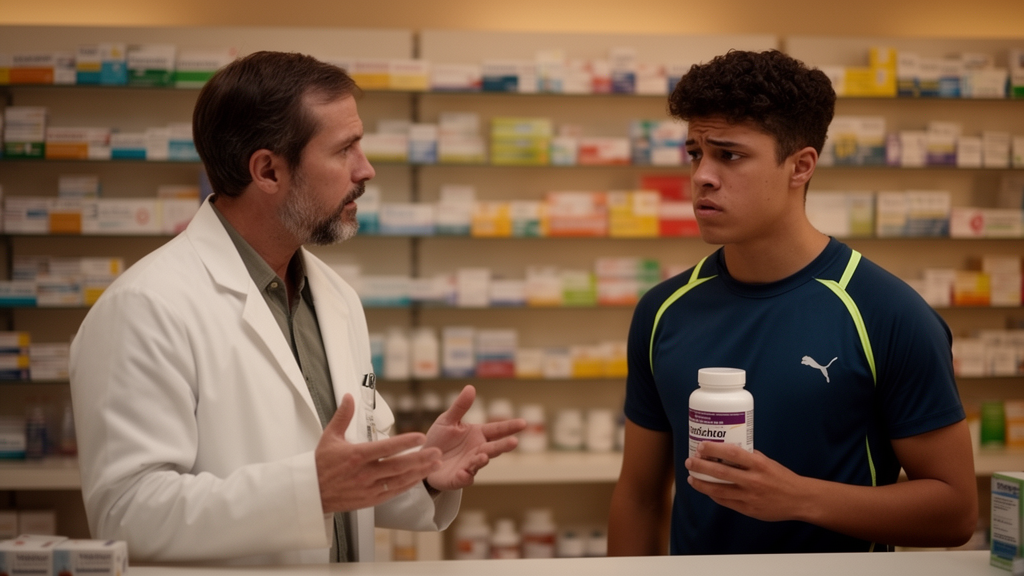
When a professional athlete telephones a community pharmacy to ask whether a medication is allowed in competition, the answer can determine whether that athlete inadvertently breaks anti-doping rules. A new study suggests that, in Croatia at least, the answer is often wrong. In a simulated-patient telephone study conducted in July 2024, only 10% of pharmacists provided fully accurate, comprehensive advice consistent with World Anti-Doping Agency regulations.

The research, published in Harm Reduction Journal, involved calls to 99 randomly selected community pharmacies across Croatia. A trained professional athlete made the calls, asking about the permissibility of continued inhaled salbutamol use in international competition. Valid interactions were completed with 80 of the pharmacies.

The findings point to a gap between policy and practice. Under the World Anti-Doping Code, pharmacists are formally recognised as Athlete Support Personnel, yet the study found that most pharmacists failed to elicit clinically relevant patient information, with 70% not asking such questions. Referral-based responses were common, used by 57.5% of pharmacists, predominantly directing athletes to physicians (37.0%).

Statistical analysis of the responses revealed patterns in which approaches were associated with better advice. Referral was associated with lower odds of adequate advice (OR = 0.2, p = 0.046), while asking patient-related questions showed a borderline positive association (OR = 4.9, p = 0.051). Group differences were analysed using χ²/Fisher tests, and exploratory predictors of adequate advice were examined using binary logistic regression. As an exploratory analysis of a single simulated scenario, these associations indicate tendencies rather than established causal effects.

The authors conclude that the study identifies a critical gap between anti-doping policy and its execution in pharmaceutical care. Although pharmacists are strategically positioned to safeguard athletes from unintentional doping, limited clinical engagement and inconsistent application of regulatory rules constrain their effectiveness, according to the paper. The study was conducted as a simulated-patient design in one country and one medication scenario, so the results reflect that specific context.

The paper argues that systematic integration of anti-doping responsibilities into pharmacy education, professional training, and routine practice is essential to reduce preventable doping risk and strengthen athlete support systems. The article was published open access on 17 October 2026 as a peer-reviewed, accepted research version carrying a permanent DOI, subject to further edits before the final Version of Record.

Subject of Research: Pharmacists' anti-doping counselling in community pharmacy practice

Article Title: Anti-doping counselling as an unimplemented professional responsibility: a potential paradox in community pharmacy practice

Article References: Petričević, M., & Gujinović, D. (2026). Anti-doping counselling as an unimplemented professional responsibility: a potential paradox in community pharmacy practice. Harm Reduction Journal. https://doi.org/10.1186/s12954-026-01561-4

Image Credits: AI Generated

DOI: 10.1186/s12954-026-01561-4

Keywords: anti-doping, pharmacists, community pharmacy, World Anti-Doping Code, salbutamol, simulated patient, Croatia, athlete support personnel, doping prevention, pharmacy education, Harm Reduction Journal, referral

News Source: Glenn Wilkins. (October 28, 2026). Most pharmacists fail to give athletes accurate anti-doping advice, study finds. Scienmag.


Tags: anti-dopingathlete support personnelcommunity pharmacyCroatiadoping preventionHarm Reduction Journalpharmacistspharmacy educationreferralsalbutamolsimulated patientWorld Anti-Doping Code
Share12Tweet7Share2ShareShareShare1

Related Posts

Breast cancer surgery performed on full ECMELLA support after HER2-drug cardiogenic shock

Breast cancer surgery performed on full ECMELLA support after HER2-drug cardiogenic shock

October 28, 2026
Venetoclax Combinations Show Promise in High-Risk MDS Despite Trial Setback

Venetoclax Combinations Show Promise in High-Risk MDS Despite Trial Setback

October 28, 2026

Sepsis Research Pushes Toward Predictive AI, Molecular Subtypes and Hydrogen Therapy

October 28, 2026

Three-drug regimen puts five Ph-positive mixed-phenotype leukemia patients in remission

October 28, 2026

POPULAR NEWS

  • Fear and pressure can tip a plankton-fish model into collapse

    Fear and pressure can tip a plankton-fish model into collapse

    29 shares
    Share 12 Tweet 7
  • Military zones may shelter sensitive mammals in South Korean national park

    29 shares
    Share 12 Tweet 7
  • CRISPR Screen Reveals How Ovarian Cancer Cells Resist Niraparib

    29 shares
    Share 12 Tweet 7
  • Indonesia’s production network is organized around multiple Java-centered rich cores

    29 shares
    Share 12 Tweet 7

About

We bring you the latest biotechnology news from best research centers and universities around the world. Check our website.

Follow us

Recent News

Breast cancer surgery performed on full ECMELLA support after HER2-drug cardiogenic shock

Venetoclax Combinations Show Promise in High-Risk MDS Despite Trial Setback

Neighboring molecules steer where radicals sit and how far they roam

Subscribe to Blog via Email

Enter your email address to subscribe to this blog and receive notifications of new posts by email.

Join 85 other subscribers
  • Contact Us

Bioengineer.org © Copyright 2023 All Rights Reserved.

Welcome Back!

Login to your account below

Forgotten Password?

Retrieve your password

Please enter your username or email address to reset your password.

Log In
No Result
View All Result
  • Homepages
    • Home Page 1
    • Home Page 2
  • News
  • National
  • Business
  • Health
  • Lifestyle
  • Science

Bioengineer.org © Copyright 2023 All Rights Reserved.
