Sylvatic yellow fever virus vectors captured in urban forest fragments of the Serra da Cantareira in São Paulo State fed predominantly on humans, according to a study investigating mosquito feeding patterns during and after the 2017–2018 outbreak. Host identification using Nanopore sequencing revealed that 74.8 percent (107 of 143) of blood-engorged female mosquito samples contained detectable vertebrate host DNA, with human blood accounting for 76.6 percent (82 of 107) of all identified blood meals. Furthermore, untargeted genomic sequencing successfully recovered a complete yellow fever virus genome from an engorged Haemagogus leucocelaenus mosquito containing human blood, providing direct physical evidence of active viral circulation within the study area.
The study was conducted in Alberto Löfgren State Park (PEAL), located within the Serra da Cantareira, recognized as one of the largest urban forests in the world. The investigation was initiated following the broader 2016–2019 sylvatic yellow fever epidemic across Brazil, which expanded into peri-urban sections of São Paulo State and heightened scientific concern regarding the resurgence of urban yellow fever transmission across the Americas. Within PEAL itself, a short-lived outbreak led to the local extinction of southern brown howler monkeys in early January 2018. To examine vector feeding dynamics across the epidemic and post-epidemic period, researchers collected 5,001 female mosquitoes between December 2017 and March 2020, selecting 143 blood-engorged specimens for molecular screening.
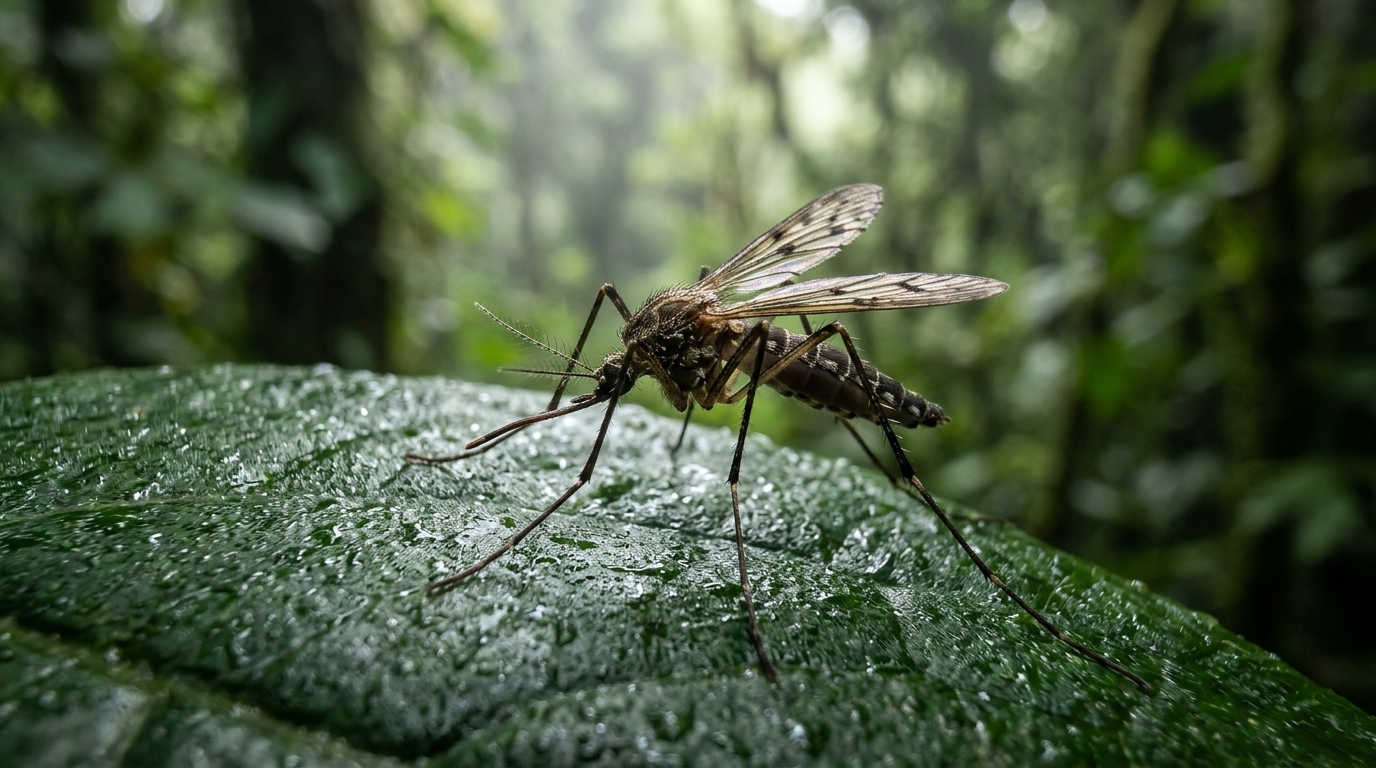
Analysis of the blood meals demonstrated that the sampled mosquitoes fed primarily on mammals, which constituted 83.2 percent (89 of 107) of the identified meals, while birds represented 10.3 percent (11 of 107) and multiple host feeding was detected in 6.5 percent (7 of 107) of specimens. In addition to human hosts, the screened mosquitoes took blood meals from non-human primates, dogs, opossums, mice, and passerine birds. Human feeding was especially dominant among confirmed vector species: in Haemagogus leucocelaenus, identified as the primary yellow fever virus vector at PEAL, 94.6 percent (35 of 37) of blood meals were human-derived, whereas 5.4 percent (2 of 37) contained non-human primate blood. In addition, two engorged specimens of Haemagogus capricornii, another competent yellow fever vector, both fed exclusively on humans (100 percent, 2 of 2).
The authors reported that the pronounced anthropophilic feeding behaviour of sylvatic yellow fever vectors captured in these fragmented forest habitats highlights a serious risk of vector-mediated viral spillover into the densely populated metropolitan area of São Paulo. These findings emphasize an urgent requirement for sustained population vaccination coverage combined with continuous entomological and virological surveillance to detect and manage yellow fever outbreaks in peri-urban environments.
Subject of Research: Vertebrate host identification of mosquito blood meals following a yellow fever outbreak
Article Title: Identification of vertebrate hosts of mosquito blood meals following the 2017–2018 yellow fever outbreak in São Paulo State
Article References: Coelho-Rocha, E., Fernandes, L. N., Valença, I. N., Mirza, J. D., Mucci, L. F., Pereira, M., Bergo, E., Claro, I. M., dos Santos Andrade, P., de Paula, M. B., de Souza, W. M., Faria, N. R., Sabino, E. C., Telles-de-Deus, J., & Lima-Camara, T. N. (2026). Identification of vertebrate hosts of mosquito blood meals following the 2017–2018 yellow fever outbreak in São Paulo State. Parasites & Vectors. https://doi.org/10.1186/s13071-026-07760-z
Image Credits: AI Generated
DOI: 10.1186/s13071-026-07760-z
Keywords: yellow fever, mosquito blood meals, Haemagogus leucocelaenus, Haemagogus capricornii, São Paulo, Serra da Cantareira, Nanopore sequencing, viral spillover, Identification, vertebrate, hosts, mosquito
News Source: Drew Townsend. (November 6, 2026). Mosquito Vectors in São Paulo Forest Fed Chiefly on Humans. Scienmag.