• HOME
  • NEWS
  • EXPLORE
    • CAREER
      • Companies
      • Jobs
    • EVENTS
    • iGEM
      • News
      • Team
    • PHOTOS
    • VIDEO
    • WIKI
  • BLOG
  • COMMUNITY
    • FACEBOOK
    • INSTAGRAM
    • TWITTER
Sunday, May 10, 2026
BIOENGINEER.ORG
No Result
View All Result
  • Login
  • HOME
  • NEWS
  • EXPLORE
    • CAREER
      • Companies
      • Jobs
        • Lecturer
        • PhD Studentship
        • Postdoc
        • Research Assistant
    • EVENTS
    • iGEM
      • News
      • Team
    • PHOTOS
    • VIDEO
    • WIKI
  • BLOG
  • COMMUNITY
    • FACEBOOK
    • INSTAGRAM
    • TWITTER
  • HOME
  • NEWS
  • EXPLORE
    • CAREER
      • Companies
      • Jobs
        • Lecturer
        • PhD Studentship
        • Postdoc
        • Research Assistant
    • EVENTS
    • iGEM
      • News
      • Team
    • PHOTOS
    • VIDEO
    • WIKI
  • BLOG
  • COMMUNITY
    • FACEBOOK
    • INSTAGRAM
    • TWITTER
No Result
View All Result
Bioengineer.org
No Result
View All Result
Home NEWS Science News Science

Modern beer yeast emerged from mix of European grape wine, Asian rice wine yeast

Bioengineer by Bioengineer
March 5, 2019
in Science
Reading Time: 2 mins read
0
Share on FacebookShare on TwitterShare on LinkedinShare on RedditShare on Telegram

For thousands of years brewers made beer using specialized strains of the budding yeast Saccharomyces cerevisiae. The historical origins of brewer’s yeast are not well understood, however, as brewing predates the discovery of microbes. A new study publishing March 5 in the open-access journal PLOS Biology, led by Justin Fay at the University of Rochester, shows that modern brewing strains were derived from a mixture of European grape wine and Asian rice wine strains. This finding points to the emergence of beer yeast from a historical East-West transfer of fermentation technology, similar to the transfer of domesticated plants and animals by way of the Silk Route.

The historical origins of any domesticated organism are often clouded by recent migration, gene flow and mixing with other groups. While analysis of ancient DNA has been a boon to reconstructing many historical events, ancient fermented beverages and the microbes used to produce them are not available. However, many beer strains are known to be polyploid–having more than two copies of their genome–which allows them to remain isolated from other populations and provides researchers with a living relic of their ancestors.

To reconstruct the history of beer strains, the researchers sequenced and compared the genomes of beer strains to a panel of reference strains from around the world. The beer strains formed four related groups: two ale, one lager and one group containing both beer and baking strains. All of these groups show mixed ancestry from both European grape wine strains and Asian rice wine strains. The strains also contain novel gene variants not present in any other population. The origin of these novel variants is less clear, but their abundance suggests they were derived from an uncharacterized or extinct population. A complete reconstruction of the order and timing of events during the evolution of beer strains is difficult since their polyploid genome is not static. Changes in their polyploid genome have occurred during cell divisions, generating beer strain diversity and likely playing an important role in specialization to various brewing styles.

###

Peer-reviewed / Experimental Study / Cells

In your coverage please use this URL to provide access to the freely available article in PLOS Biology: http://journals.plos.org/plosbiology/article?id=10.1371/journal.pbio.3000147

Citation: Fay JC, Liu P, Ong GT, Dunham MJ, Cromie GA, Jeffery EW, et al. (2019) A polyploid admixed origin of beer yeasts derived from European and Asian wine populations. PLoS Biol 17(3): e3000147. https://doi.org/10.1371/journal.pbio.3000147

Funding: This work was supported by a National Institutes of Health grant (GM080669) to J. Fay, the Rita Allen Foundation, a gift from Karl Handelsman, and a National Science Foundation grant (1516330) to M. Dunham. The funders had no role in study design, data collection and analysis, decision to publish, or preparation of the manuscript.

Competing Interests: The authors have declared that no competing interests exist.

Media Contact
Justin C. Fay
[email protected]
http://dx.doi.org/10.1371/journal.pbio.3000147

Tags: Agricultural Production/EconomicsAgricultureBiologyBiomedical/Environmental/Chemical EngineeringBiotechnologyFood/Food ScienceGenesGeneticsMycologyNutrition/Nutrients
Share13Tweet8Share2ShareShareShare2

Related Posts

Five or more hours of smartphone usage per day may increase obesity

July 25, 2019
IMAGE

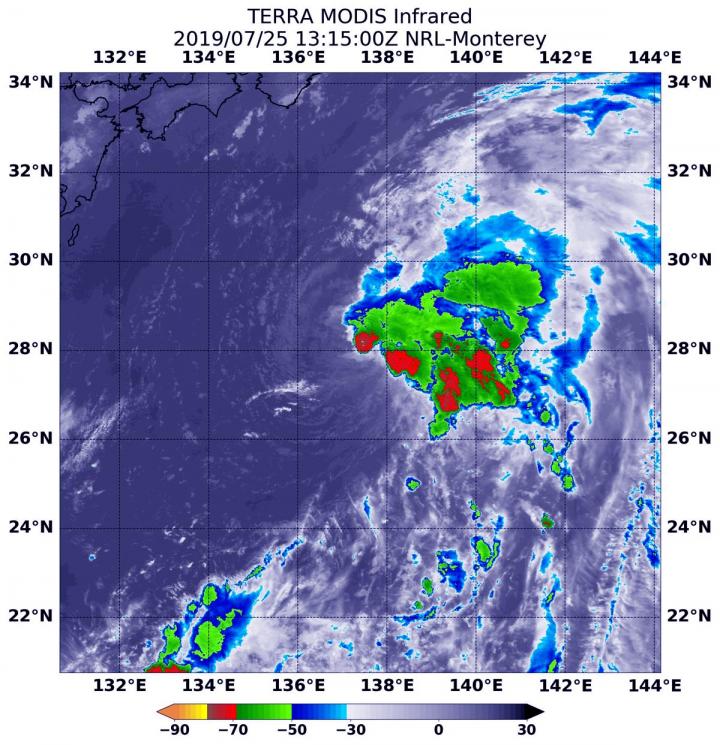
NASA’s terra satellite finds tropical storm 07W’s strength on the side

July 25, 2019

NASA finds one burst of energy in weakening Depression Dalila

July 25, 2019

Researcher’s innovative flood mapping helps water and emergency management officials

July 25, 2019
Please login to join discussion

POPULAR NEWS

  • Research Indicates Potential Connection Between Prenatal Medication Exposure and Elevated Autism Risk

    840 shares
    Share 336 Tweet 210
  • New Study Reveals Plants Can Detect the Sound of Rain

    727 shares
    Share 290 Tweet 181
  • Scientists Investigate Possible Connection Between COVID-19 and Increased Lung Cancer Risk

    68 shares
    Share 27 Tweet 17
  • Salmonella Haem Blocks Macrophages, Boosts Infection

    61 shares
    Share 24 Tweet 15

About

We bring you the latest biotechnology news from best research centers and universities around the world. Check our website.

Follow us

Recent News

Evaluating Digoxin Use in Patients with Symptomatic Rheumatic Heart Disease

Evaluating the Effectiveness and Safety of Digitalis Glycosides in Treating Heart Failure

Urdu Fall Risk Questionnaire Adapted for Elderly

Subscribe to Blog via Email

Success! An email was just sent to confirm your subscription. Please find the email now and click 'Confirm' to start subscribing.

Join 82 other subscribers
  • Contact Us

Bioengineer.org © Copyright 2023 All Rights Reserved.

Welcome Back!

Login to your account below

Forgotten Password?

Retrieve your password

Please enter your username or email address to reset your password.

Log In
No Result
View All Result
  • Homepages
    • Home Page 1
    • Home Page 2
  • News
  • National
  • Business
  • Health
  • Lifestyle
  • Science

Bioengineer.org © Copyright 2023 All Rights Reserved.